Search any supplement store and you’ll see pre-workouts labeled “for her.”
You know the type: pink packaging, slightly less caffeine, and more “feminine” branding.
This is a marketing gimmick—there’s no such thing as a special category of ingredients that only work for women. The compounds that improve strength, endurance, focus, and power work the same way regardless of sex.
What actually matters is quality.
In practical terms, that means looking for a product with:
- Proven ingredients—not trendy or exotic ones with little scientific support
- A sensible amount of caffeine—not an extreme dose
- A clean, transparent formula
- Independent testing to ensure safety and accuracy
This guide will show you exactly how to evaluate each of those factors so you can choose confidently.
Table of Contents
+
Key Takeaways
- There’s no special category of pre-workout that only works for women—the best options use the same proven ingredients and doses that work for anyone.
- Look for formulas with clinically effective doses, transparent labels, and independent testing to ensure safety and accuracy.
- Most performance benefits come from a small number of well-researched ingredients like caffeine, citrulline malate, beta-alanine, and betaine.
- Choose a serving size that matches your caffeine tolerance, and consider stim-free or thermogenic options based on your goals.
- For a pre-workout containing proven ingredients in effective doses, no unnecessary junk, and that’s verified by independent lab testing, try Pulse, stim-free Pulse, or Pulse+ Burn.
Do Women Need a Specific Type of Pre-Workout?
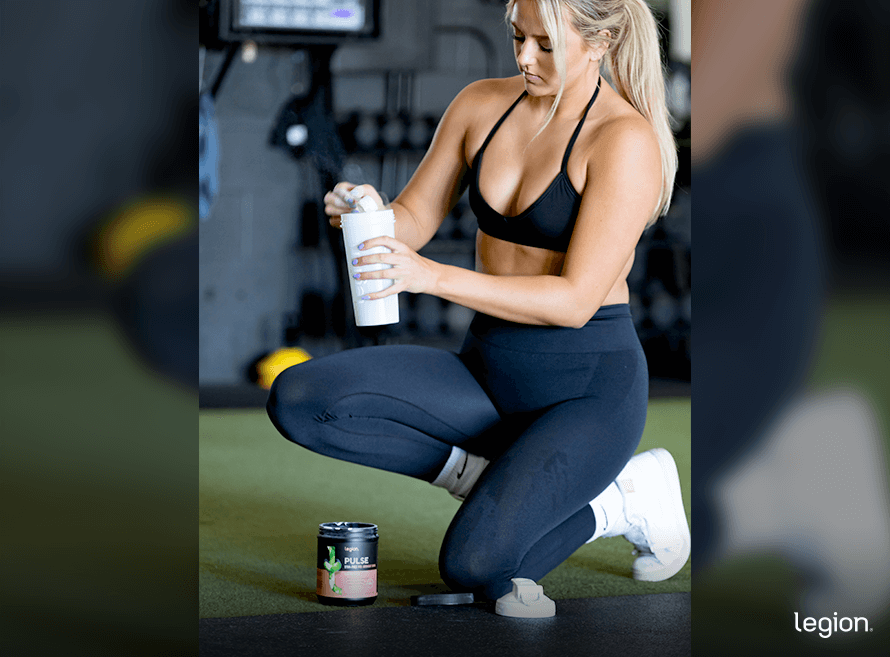
The first thing to understand about pre-workout for women is that there’s really no such thing as “pre-workout for women.”
There aren’t magical ingredients that somehow work better just because you’re female.
There are good pre-workouts and bad pre-workouts, and women generally do best with the same things men do: effective ingredients, proven doses, and clean formulations.
That said, most people searching for the best pre-workout for women are really looking for three things:
- A pre-workout that contains effective doses of science-backed ingredients (without overdosing stimulants like caffeine)
- A formula with a clean, transparent label so you know exactly what you’re taking
- Options that meet those criteria but also match different goals or preferences, like fat loss support or going stim-free
We’ll cover how to find products that meet these criteria in the following sections, starting with what actually makes a pre-workout effective.
What Makes a Pre-Workout Effective?
Most people assume a pre-workout is effective if it contains the right ingredients.
That’s essential—but it’s not the whole story.
To choose a pre-workout that actually works (and not just one that looks good on a label), you also need to consider how transparent the formula is, whether the doses are sensible, and whether the product has been independently verified.
Let’s go through each of these.
Transparent Labels (No Proprietary Blends)
Label transparency refers to how easily you can look at a label and understand exactly what’s in a product. In other words, whether it gives you all the information you need about what you’re about to put in your body.
The biggest obstacle to label transparency is proprietary blends.
When manufacturers use a proprietary blend (sometimes called a “complex” or “matrix”), they group several ingredients together under one total weight but don’t list how much of each is included.
They claim this prevents copycat products.
In reality, it allows manufacturers to underdose expensive ingredients and pad their formulas with cheaper, less effective ones—without you being able to verify anything.
And when you’re trying to choose a pre-workout that’s actually effective (not just well-marketed), that lack of transparency is a problem.
Because if you can’t see the doses, you can’t tell whether a product is properly formulated.
Clinically Effective Doses of Proven Ingredients
Because proprietary blends have gotten so much criticism, many companies now list every ingredient with its dose. Technically, this is transparent—but it doesn’t mean the doses are large enough to work.
Manufacturers frequently include ingredients at a fraction of the amounts shown to be effective, betting that most people won’t know or check.
The best way to spot effective dosing is to compare the label to the research the company cites—which should be easy to find if they’re confident in their formulation.
If you don’t want to dig through studies yourself, resources like the Legion blog and Examine’s website summarize the evidence and list effective doses for hundreds of ingredients.
It’s also sensible to be skeptical of formulas built around “new,” exotic-sounding ingredients.
If a compound doesn’t have multiple high-quality human studies—or, ideally, a meta-analysis or two—showing it improves strength, power, endurance, or focus, it’s probably not doing much for your workouts.
A Sensible Stimulant Dose
Some pre-workouts include very large doses of caffeine and suggest that more is always better. That isn’t what the research shows.
Studies consistently find that 3–6 mg of caffeine per kilogram of body weight is the clinically effective range, with 5–6 mg/kg often considered the sweet spot for maximizing performance benefits.
Once total intake climbs much beyond about 6 mg per kilogram per day from all sources, benefits tend to level off while the risk of side effects increases.
For a 160-pound woman, that means roughly 360–430 mg of caffeine per day for maximal benefits. That means your pre-workout shouldn’t single-handedly push you past that range—especially if you also drink coffee or other caffeinated beverages
Third-Party Testing
It’s also smart to stick with brands that have independent, third-party labs test their products to ensure they contain only the listed ingredients at the stated doses, and no risky contaminants or banned substances that could harm your health or get you disqualified from competition.
That said, some shady companies have been caught using “third-party tested” on their marketing without proof. So to be absolutely sure a product is trustworthy, look for two things: a certification seal from a reputable lab printed on the label, and access to the lab’s results.
That way you know the testing happened and the product passed.
The Pre-Workout Ingredients That Improve Women’s Performance
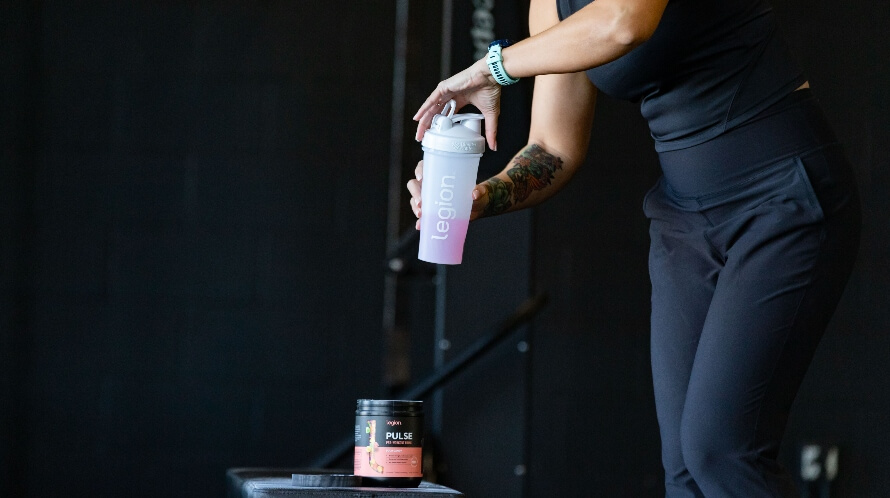
A good women’s pre-workout doesn’t need dozens of ingredients. It needs a small number of proven compounds included in amounts that actually work.
Below are the ones worth paying attention to.
Caffeine
Caffeine is the main stimulant in most pre-workouts. It increases resistance to fatigue, boosts strength, enhances power, reduces perceived effort, and improves cognition and alertness.
Research shows that the clinically effective dose of caffeine is 3–6 mg per kilogram of body weight, with 5–6 mg per kilogram generally accepted as the “optimal” dose for maximizing benefits while avoiding unwanted side effects.
L-Theanine
L-theanine is an amino acid often paired with caffeine. It reduces the effects of mental stress, promotes relaxation and restful sleep, and improves mood, memory performance, and attention when paired with caffeine.
The clinically effective dose of L-theanine is 100–400 mg per day. When paired with caffeine, aim for a 1:1 to 2:1 theanine-to-caffeine ratio.
Citrulline Malate
Citrulline malate is a combination of the amino acid L-citrulline and malic acid. It improves muscle endurance, relieves muscle soreness, and boosts aerobic performance.
The clinically effective dose of citrulline malate is between 4 and 10 grams, with most research showing doses at the higher end of this range are best.
Beta-Alanine
Beta-alanine is an amino acid that increases the amount of work muscles can do before they fatigue, improves anaerobic exercise capacity, and increases muscle endurance.
The clinically effective dose of beta-alanine is between 2.6 and 6.4 grams, with most research showing that you can get the majority of the benefits with the lower end of this range (around 3–4 grams).
Alpha-GPC
Alpha-GPC is a compound that increases power output and also mitigates cognitive decline as we age
The clinically effective dose of alpha-GPC is between 150 and 1,200 mg, with 250–500 mg sufficient for ergogenic and cognitive benefits, and higher doses required for reducing the symptoms of dementia.
Betaine
Betaine is an amino acid that boosts muscle endurance and increases strength. The clinically effective dose of betaine is between 1.25 and 2.5 grams.
Is Pre-Workout Safe for Women?
For healthy women, pre-workout supplements are generally safe when used responsibly and in appropriate doses.
The main thing that can cause problems is taking more caffeine (or other stimulants) than your body handles well.
That’s why the most important safety factor isn’t whether a pre-workout is “for women.” It’s whether the dose—especially the stimulant dose—matches your tolerance.
Caffeine Tolerance and Serving Size
The best way to avoid side effects when taking a stimulant-based pre-workout is to start with a smaller dose and assess your tolerance.
Here’s a protocol that works well:
The first time you use a pre-workout, take half a serving.
If the label says one scoop, take half a scoop. This lets you see how your body responds before committing to a full dose.
Then adjust based on how you feel:
- If you feel fine (and you slept normally), increase next time to ¾ of a serving if you want to be extra cautious, or go straight to a full serving.
- If you feel a little jittery, nauseous, or “wired,” stick with the lower dose for another workout or two. Those side effects often fade as your tolerance builds.
Who Should Avoid or Limit Pre-Workout
Pre-workout supplements are safe for most healthy adults when used responsibly (no dry-scooping, for example).
That said, they’re not appropriate for everyone. You may want to avoid or limit pre-workouts containing caffeine if you:
- Are pregnant or currently breastfeeding
- Have uncontrolled high blood pressure
- Have a heart condition
- Are sensitive to stimulants
- Are taking medications that interact with caffeine or other stimulants
If you’re unsure, talk to your doctor before using one.
It’s also worth remembering that pre-workout is optional. It can help you train harder, but it isn’t required for progress. If you already feel energized going into workouts, you may not need it at all.
Best Pre-Workout for Women Overall
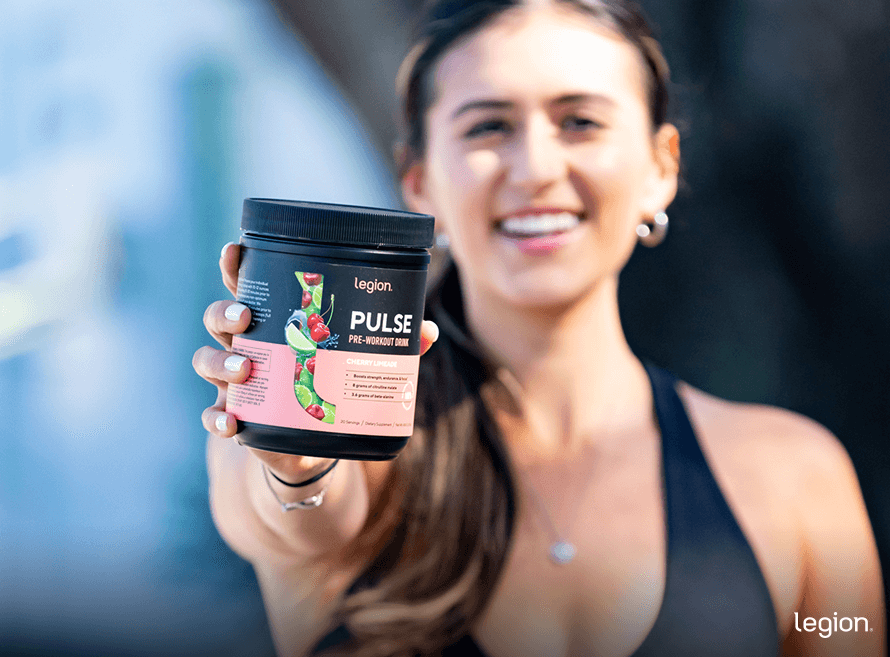
The best pre-workouts for women check all the boxes we’ve discussed: they contain clinically effective doses of proven ingredients and are independently tested to verify that what’s on the label is actually in the product.
If you want a pre-workout that meets those criteria, try Pulse.
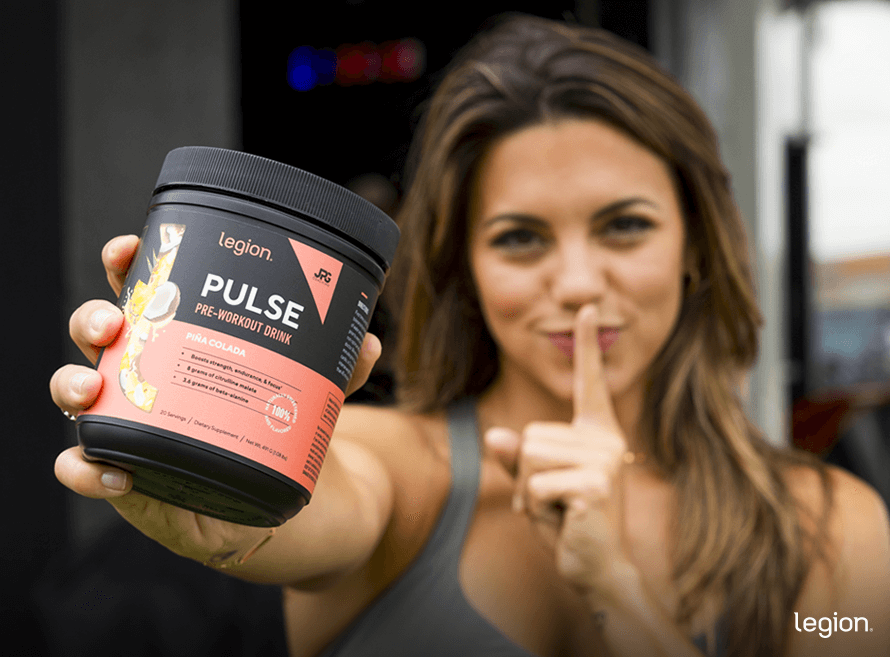
Pulse is naturally sweetened and flavored and contains clinically effective doses of caffeine, L-theanine, citrulline malate, beta-alanine, alpha-GPC, and betaine—ingredients with more than 450 peer-reviewed studies supporting their efficacy.
Pulse also contains no added sugars, artificial sweeteners, flavors, dyes, fillers, or other unnecessary junk. And unlike most supplements on the market, every batch of Pulse is lab-tested for purity and accuracy and independently certified by Labdoor™ to meet or exceed FDA and WADA safety guidelines.
(If you’re uncertain whether Pulse suits your needs and budget, take the Legion Supplement Finder Quiz to learn what supplements are right for you. Click here to check it out.)
Best Pre-Workout for Female Weight Loss
If your goal is to lose fat as well as boost performance, a thermogenic pre-workout can make more sense than a standard formula.
These products combine performance ingredients with compounds that increase thermogenesis—the process by which your body produces heat. Because heat production is tied to energy expenditure, increasing thermogenesis can increase the number of calories you burn.
When choosing a thermogenic pre-workout, the same quality standards still apply. You still want clinically effective doses, proven ingredients, and independent testing.
If you want a formula that meets those criteria, try Pulse+ Burn.
Pulse+ Burn contains caffeine, L-theanine, L-carnitine L-tartrate, Capsimax™ capsaicinoids, grains of paradise extract, citrulline malate, beta-alanine, and betaine at doses shown by peer-reviewed scientific research to have clear benefits in healthy humans.
Like the standard formula, it’s naturally sweetened and flavored, contains no added sugars or artificial dyes, and is third-party tested to verify purity and label accuracy.
Best Stim-Free Pre-Workout for Women
If you want the performance benefits of a pre-workout without caffeine or other stimulants, a stim-free formula is the best choice.
The evaluation criteria don’t change. You still want clinically effective doses of proven ingredients, a transparent label, and independent testing. The only difference is that stimulants are removed.
In some ways, testing matters even more with stimulant-free products. Without verification, there’s no way to be sure a formula is truly free of caffeine or other stimulants that could affect sleep, heart rate, or anxiety.
If you want a stim-free option that meets those standards, stim-free Pulse fits the bill.
Stim-free Pulse contains the same performance ingredients as the standard version—just without caffeine—so you can enjoy more strength, endurance, and focus without stimulant effects.
When to Take Pre-Workout (Timing) and What to Expect
Take your pre-workout 30–60 minutes before you train to ensure the ingredients kick in as you begin your hard sets.
The only exception to this rule is if you train late in the day. Caffeine’s effects last for several hours, so taking pre-workout in the evening can disrupt your sleep. In that case, it’s usually better to avoid stimulant-based pre-workouts and use a stim-free option instead.
As for what it feels like, pre-workout doesn’t usually produce a dramatic, all-at-once sensation. Most people notice a gradual shift in how they feel and perform.
Typically, within 30–60 minutes of taking it:
- You feel more awake and mentally engaged
- It’s easier to start training
- You stay focused longer
- Fatigue feels less limiting as the workout goes on
The Bottom Line on Best Pre Workout for Women
The first thing to know about pre-workout for women is that there’s no such thing as “pre-workout for women.”
The right choice is simply one that contains proven ingredients in effective doses, has a transparent label, includes sensible amounts of caffeine, and is independently tested. Pick a formula that fits your goals and tolerance, and it’ll work just as well for women as it does for men.
FAQ #1: Should females take pre-workout?
Women don’t need pre-workout if they already have enough energy, focus, and motivation to train. But if an extra boost in any of those areas would help, a well-formulated pre-workout can be an effective way to train harder and get more out of your workouts.
FAQ #2: Can pre-workout help you lose weight?
Regular pre-workout doesn’t directly cause fat loss, but it can support it indirectly by helping you train harder, which may increase the number of calories you burn.
Thermogenic formulas can have a larger effect on energy expenditure because they include ingredients specifically designed to increase calorie burn. If that’s your goal, a thermogenic pre-workout like Pulse+ Burn may be worth considering.
FAQ #3: What is the healthiest pre-workout?
Pre-workout supplements aren’t inherently healthy or unhealthy, so there’s no single “healthiest” option.
Generally, the safest choice is a formula that contains proven ingredients in sensible doses, has a transparent label, and is third-party tested for potency, accuracy, and purity. Products that meet those standards—like Pulse, stim-free Pulse, and Pulse+ Burn—tend to be the most reliable.
Want More Content Like This?
Check out these articles:
- Does Honey and Salt Pre-Workout Actually Work?
- Creatine vs. Pre-Workout: Key Differences & Which to Take
- Does Pre-Workout Break a Fast?
Scientific References +
- Guest, Nanci S., et al. “International Society of Sports Nutrition Position Stand: Caffeine and Exercise Performance.” Journal of the International Society of Sports Nutrition, vol. 18, no. 1, 2 Jan. 2021, jissn.biomedcentral.com/articles/10.1186/s12970-020-00383-4, https://doi.org/10.1186/s12970-020-00383-4.
- Warren, Gordon L, et al. “Effect of Caffeine Ingestion on Muscular Strength and Endurance: A Meta-Analysis.” Medicine and Science in Sports and Exercise, vol. 42, no. 7, 2010, pp. 1375–87, https://doi.org/10.1249/MSS.0b013e3181cabbd8.
- Jacobson, B H, et al. “Effect of Caffeine on Maximal Strength and Power in Elite Male Athletes.” British Journal of Sports Medicine, vol. 26, no. 4, 1 Dec. 1992, pp. 276–280, https://doi.org/10.1136/bjsm.26.4.276.
- Richardson, Darren L., and Neil D. Clarke. “Effect of Coffee and Caffeine Ingestion on Resistance Exercise Performance.” Journal of Strength and Conditioning Research, vol. 30, no. 10, Oct. 2016, pp. 2892–2900, https://doi.org/10.1519/jsc.0000000000001382.
- Doherty, M., and P. M. Smith. “Effects of Caffeine Ingestion on Rating of Perceived Exertion during and after Exercise: A Meta-Analysis.” Scandinavian Journal of Medicine and Science in Sports, vol. 15, no. 2, Apr. 2005, pp. 69–78, https://doi.org/10.1111/j.1600-0838.2005.00445.x.
- A, Nehlig. “Is Caffeine a Cognitive Enhancer?” Journal of Alzheimer’s Disease : JAD, 2010, pubmed.ncbi.nlm.nih.gov/20182035/.
- Ganio, Matthew S, et al. “Effect of Caffeine on Sport-Specific Endurance Performance: A Systematic Review.” Journal of Strength and Conditioning Research, vol. 23, no. 1, 2009, pp. 315–24, www.ncbi.nlm.nih.gov/pubmed/19077738, https://doi.org/10.1519/JSC.0b013e31818b979a.
- Del Coso, Juan, et al. “Dose Response Effects of a Caffeine-Containing Energy Drink on Muscle Performance: A Repeated Measures Design.” Journal of the International Society of Sports Nutrition, vol. 9, no. 1, 8 May 2012, https://doi.org/10.1186/1550-2783-9-21.
- ASTORINO, TODD A., et al. “Effect of Two Doses of Caffeine on Muscular Function during Isokinetic Exercise.” Medicine & Science in Sports & Exercise, vol. 42, no. 12, Dec. 2010, pp. 2205–2210, https://doi.org/10.1249/mss.0b013e3181e3a11d.
- Kimura, Kenta, et al. “L-Theanine Reduces Psychological and Physiological Stress Responses.” Biological Psychology, vol. 74, no. 1, Jan. 2007, pp. 39–45, https://doi.org/10.1016/j.biopsycho.2006.06.006.
- Rao, Theertham P., et al. “In Search of a Safe Natural Sleep Aid.” Journal of the American College of Nutrition, vol. 34, no. 5, 11 Mar. 2015, pp. 436–447, https://doi.org/10.1080/07315724.2014.926153.
- Bulman, Amanda, et al. “The Effects of L-Theanine Consumption on Sleep Outcomes: A Systematic Review and Meta-Analysis.” Sleep Medicine Reviews, vol. 81, 25 Feb. 2025, p. 102076, www.sciencedirect.com/science/article/pii/S1087079225000292?utm_source=chatgpt.com, https://doi.org/10.1016/j.smrv.2025.102076.
- Bryan, Janet. “Psychological Effects of Dietary Components of Tea: Caffeine and L-Theanine.” Nutrition Reviews, vol. 66, no. 2, 4 Feb. 2008, pp. 82–90, https://doi.org/10.1111/j.1753-4887.2007.00011.x.
- Einöther, Suzanne J.L., et al. “L-Theanine and Caffeine Improve Task Switching but Not Intersensory Attention or Subjective Alertness.” Appetite, vol. 54, no. 2, Apr. 2010, pp. 406–409, https://doi.org/10.1016/j.appet.2010.01.003.
- Gomez-Ramirez, Manuel, et al. “The Effects of L-Theanine on Alpha-Band Oscillatory Brain Activity during a Visuo-Spatial Attention Task.” Brain Topography, vol. 22, no. 1, 1 June 2009, pp. 44–51, www.ncbi.nlm.nih.gov/pubmed/18841456, https://doi.org/10.1007/s10548-008-0068-z.
- Pérez-Guisado, Joaquín, and Philip M Jakeman. “Citrulline Malate Enhances Athletic Anaerobic Performance and Relieves Muscle Soreness.” Journal of Strength and Conditioning Research, vol. 24, no. 5, 2010, pp. 1215–22, www.ncbi.nlm.nih.gov/pubmed/20386132, https://doi.org/10.1519/JSC.0b013e3181cb28e0.
- Glenn, Jordan M., et al. “Acute Citrulline Malate Supplementation Improves Upper- and Lower-Body Submaximal Weightlifting Exercise Performance in Resistance-Trained Females.” European Journal of Nutrition, vol. 56, no. 2, 11 Dec. 2015, pp. 775–784, https://doi.org/10.1007/s00394-015-1124-6.
- Glenn, Jordan M., et al. “Acute Citrulline-Malate Supplementation Improves Maximal Strength and Anaerobic Power in Female, Masters Athletes Tennis Players.” European Journal of Sport Science, vol. 16, no. 8, 28 Mar. 2016, pp. 1095–1103, https://doi.org/10.1080/17461391.2016.1158321.
- Bendahan, D. “Citrulline/Malate Promotes Aerobic Energy Production in Human Exercising Muscle.” British Journal of Sports Medicine, vol. 36, no. 4, 1 Aug. 2002, pp. 282–289, https://doi.org/10.1136/bjsm.36.4.282.
- Suzuki, Takashi, et al. “Oral L-Citrulline Supplementation Enhances Cycling Time Trial Performance in Healthy Trained Men: Double-Blind Randomized Placebo-Controlled 2-Way Crossover Study.” Journal of the International Society of Sports Nutrition, vol. 13, no. 1, 19 Feb. 2016, https://doi.org/10.1186/s12970-016-0117-z.
- Ament, Wim, and Gijsbertus J Verkerke. “Exercise and Fatigue.” Sports Medicine (Auckland, N.Z.), vol. 39, no. 5, 2009, pp. 389–422, www.ncbi.nlm.nih.gov/pubmed/19402743, https://doi.org/10.2165/00007256-200939050-00005.
- Hill, C. A., et al. “Influence of β-Alanine Supplementation on Skeletal Muscle Carnosine Concentrations and High Intensity Cycling Capacity.” Amino Acids, vol. 32, no. 2, 28 July 2006, pp. 225–233, pubmed.ncbi.nlm.nih.gov/16868650/, https://doi.org/10.1007/s00726-006-0364-4.
- Sale, Craig, et al. “Effect of β-Alanine plus Sodium Bicarbonate on High-Intensity Cycling Capacity.” Medicine & Science in Sports & Exercise, Mar. 2011, p. 1, https://doi.org/10.1249/mss.0b013e3182188501.
- Smith, Abbie E, et al. “Effects of β-Alanine Supplementation and High-Intensity Interval Training on Endurance Performance and Body Composition in Men; a Double-Blind Trial.” Journal of the International Society of Sports Nutrition, vol. 6, no. 1, 2009, p. 5, www.ncbi.nlm.nih.gov/pmc/articles/PMC2649036/, https://doi.org/10.1186/1550-2783-6-5.
- Kern, Ben D, and Tracey L Robinson. “Effects of β-Alanine Supplementation on Performance and Body Composition in Collegiate Wrestlers and Football Players.” Journal of Strength and Conditioning Research, vol. 25, no. 7, 2011, pp. 1804–15, www.ncbi.nlm.nih.gov/pubmed/21659893/, https://doi.org/10.1519/JSC.0b013e3181e741cf.
- Culbertson, Julie Y., et al. “Effects of Beta-Alanine on Muscle Carnosine and Exercise Performance: A Review of the Current Literature.” Nutrients, vol. 2, no. 1, 25 Jan. 2010, pp. 75–98, www.ncbi.nlm.nih.gov/pmc/articles/PMC3257613/, https://doi.org/10.3390/nu2010075.
- Hobson, R. M., et al. “Effects of β-Alanine Supplementation on Exercise Performance: A Meta-Analysis.” Amino Acids, vol. 43, no. 1, 24 Jan. 2012, pp. 25–37, www.ncbi.nlm.nih.gov/pmc/articles/PMC3374095/, https://doi.org/10.1007/s00726-011-1200-z.
- Ziegenfuss, Tim, et al. “Acute Supplementation with Alpha-Glycerylphosphorylcholine Augments Growth Hormone Response To, and Peak Force Production During, Resistance Exercise.” Journal of the International Society of Sports Nutrition, vol. 5, no. S1, Sept. 2008, https://doi.org/10.1186/1550-2783-5-s1-p15.
- Harrington, R. “Effects of Branched Chain Amino Acids, L-Citrulline, and Alpha-Glycerylphosphorylcholine Supplementation on Exercise Performance in Trained Cyclists: A Randomized Crossover Trial.” Journal of the International Society of Sports Nutrition, vol. 20, no. 1, 25 May 2023, https://doi.org/10.1080/15502783.2023.2214112.
- Bellar, David, et al. “The Effect of 6 Days of Alpha Glycerylphosphorylcholine on Isometric Strength.” Journal of the International Society of Sports Nutrition, vol. 12, no. 42, 17 Nov. 2015, www.ncbi.nlm.nih.gov/pmc/articles/PMC4650143/, https://doi.org/10.1186/s12970-015-0103-x.
- De Jesus Moreno Moreno, Maria. “Cognitive Improvement in Mild to Moderate Alzheimer’s Dementia after Treatment with the Acetylcholine Precursor Choline Alfoscerate: A Multicenter, Double-Blind, Randomized, Placebo-Controlled Trial.” Clinical Therapeutics, vol. 25, no. 1, 1 Jan. 2003, pp. 178–193, pubmed.ncbi.nlm.nih.gov/12637119/, https://doi.org/10.1016/s0149-2918(03)90023-3.
- Kerksick, Chad M. “Acute Alpha-Glycerylphosphorylcholine Supplementation Enhances Cognitive Performance in Healthy Men.” Nutrients, vol. 16, no. 23, 9 Dec. 2024, pp. 4240–4240, www.mdpi.com/2072-6643/16/23/4240, https://doi.org/10.3390/nu16234240.
- Marcus, Lena, et al. “Evaluation of the Effects of Two Doses of Alpha Glycerylphosphorylcholine on Physical and Psychomotor Performance.” Journal of the International Society of Sports Nutrition, vol. 14, no. 1, 5 Oct. 2017, https://doi.org/10.1186/s12970-017-0196-5.
- Trepanowski, John F, et al. “The Effects of Chronic Betaine Supplementation on Exercise Performance, Skeletal Muscle Oxygen Saturation and Associated Biochemical Parameters in Resistance Trained Men.” Journal of Strength and Conditioning Research, vol. 25, no. 12, Dec. 2011, pp. 3461–3471, https://doi.org/10.1519/jsc.0b013e318217d48d.
- Lee, Elaine C, et al. “Ergogenic Effects of Betaine Supplementation on Strength and Power Performance.” Journal of the International Society of Sports Nutrition, vol. 7, no. 1, 2010, p. 27, https://doi.org/10.1186/1550-2783-7-27.