The Legion Body Fat Percentage Calculator estimates the percentage of your body weight that is fat.
Enter your preferred unit of measurement (imperial or metric), sex, weight, and age, then choose the body fat formula you’d like to use. Take a few simple tape or skinfold measurements, plug in the numbers, and you’ll get an estimate of your body fat percentage.
Our calculator also helps you interpret your result—so you can see how you compare to healthy ranges and track changes over time.
What Is a Healthy Body Fat Percentage?
Once you’ve calculated your body fat, the next step is understanding what the number means.
These ranges are based on guidelines from the American Council on Exercise (ACE).
Table of Contents
+
Body Fat Percentage Ranges for Men
Body Fat Percentage Ranges for Men
| Description | Men |
|---|---|
| Essential Fat | 2%–5% |
| Athletes | 6%–13% |
| Fitness | 14%–17% |
| Acceptable | 18%–24% |
| Obese | Over 25% |

Body Fat Percentage Ranges for Women
Body Fat Percentage Ranges for Women
| Description | Women |
|---|---|
| Essential Fat | 10%–13% |
| Athletes | 14%–20% |
| Fitness | 21%–24% |
| Acceptable | 25%–31% |
| Obese | Over 32% |
How to Interpret Your Body Fat Percentage
Your body fat percentage is a useful datapoint that gives you insight into your body composition, but it’s still just an estimate.
That means the exact number isn’t as important as which range you fall into and how your body fat changes over time. If your body fat percentage is trending down, you’re losing fat. If it’s trending up, you’re gaining fat.
For that reason, don’t focus too much on any single reading. What matters is whether you’re generally within a healthy range and moving in the right direction over time.
Which Body Fat Calculator Method Should You Use?
If you’re not sure which method to choose, here’s a simple rule of thumb:
- Use the Navy tape method if you want something quick, easy, and you likely already have what you need to do it now. It’s slightly less precise, but good enough for tracking changes over time.
- Use skinfold (caliper) measurements if you’re willing to take a bit more time to get a more precise estimate.
Whichever method you choose, use it the same way each time so your results are comparable.
How to Measure Body Fat for the Most Accurate Result
Your result is only as accurate as your measurements, so getting these right matters.
Body Fat Measurement Methods Compared
A quick comparison of the most common ways to measure body fat:
Body Fat Measurement Methods Compared
| Method | Best For | Accuracy | Cost | Difficulty |
|---|---|---|---|---|
| Navy tape method | Quick at-home tracking | Low to moderate | Low | Easy |
| Skinfold calipers | More precise at-home tracking | Moderate | Low | Moderate |
| BIA scales/devices | Convenience | Low | Low to moderate | Easy |
| Visual estimates (mirror/photos) | Rough visual assessment | Low | Free | Easy |
| DXA | One-off lab testing | Moderate to high | High | Moderate |
| Bod Pod | One-off lab testing | Moderate to high | High | Moderate |
| Hydrostatic weighing | Lab testing (less common) | Moderate | High | Difficult |
| MRI | Research or clinical use | High | Very high | Difficult |
Tape Measurements vs. Skinfold Measurements
The two most practical ways to measure body fat at home are tape measurements and skinfold (caliper) measurements. Both can be accurate enough for tracking progress when done correctly.
Tape measurements are simpler and faster, while skinfold measurements require more precision but can be more consistent—if done correctly.
Skinfold (Caliper) Measurements
Calipers measure the thickness of your skin at specific body points during skinfold testing. These measurements are used to estimate your body fat percentage, but there are a few ways this can go wrong.
Grabbing too little or too much skin and fat will give falsely low or high readings. The equations that convert skin thickness into a body fat percentage can also generate inaccurate results, though this typically only affects individuals with low body fat levels (generally under 15% or 25% for men and women, respectively).1
Given the practicality and relative cheapness of body fat calipers, using skinfold measurements is one of the primary ways I recommend tracking your body composition.
How to Take Skinfold Measurements:
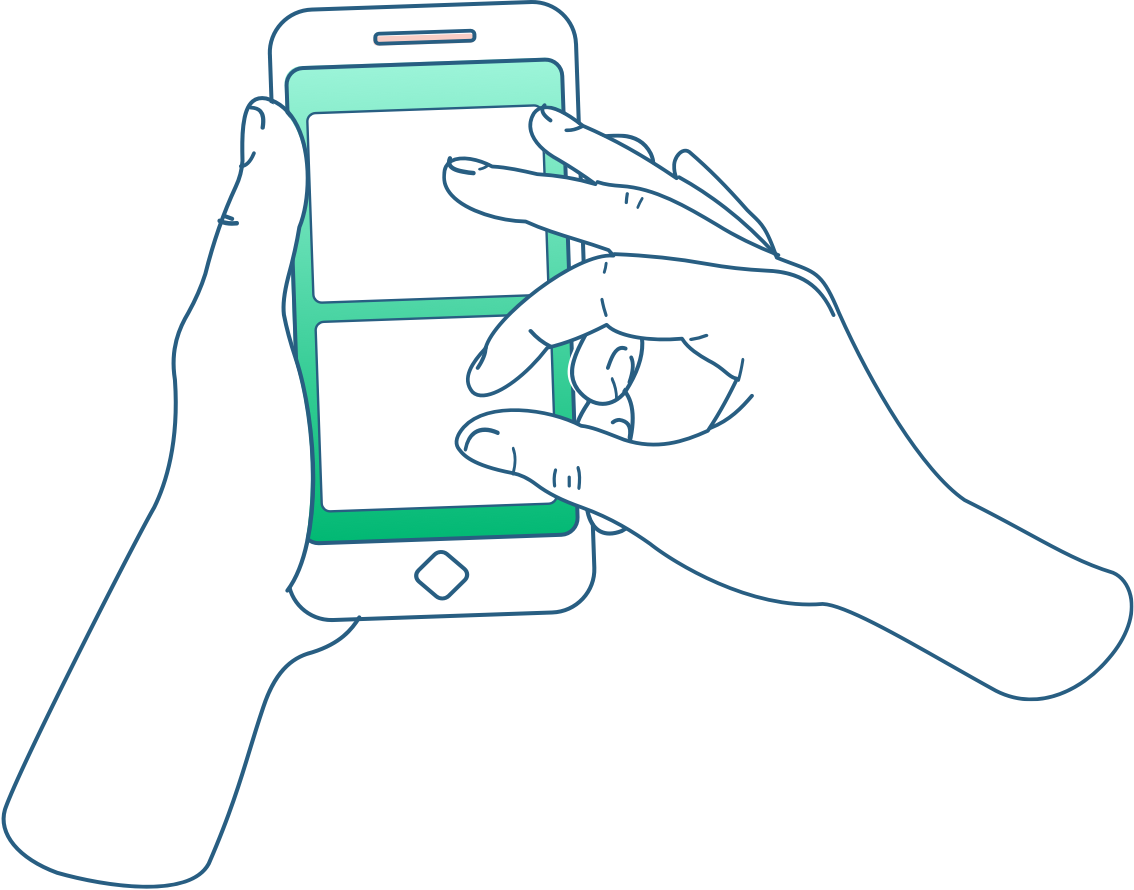
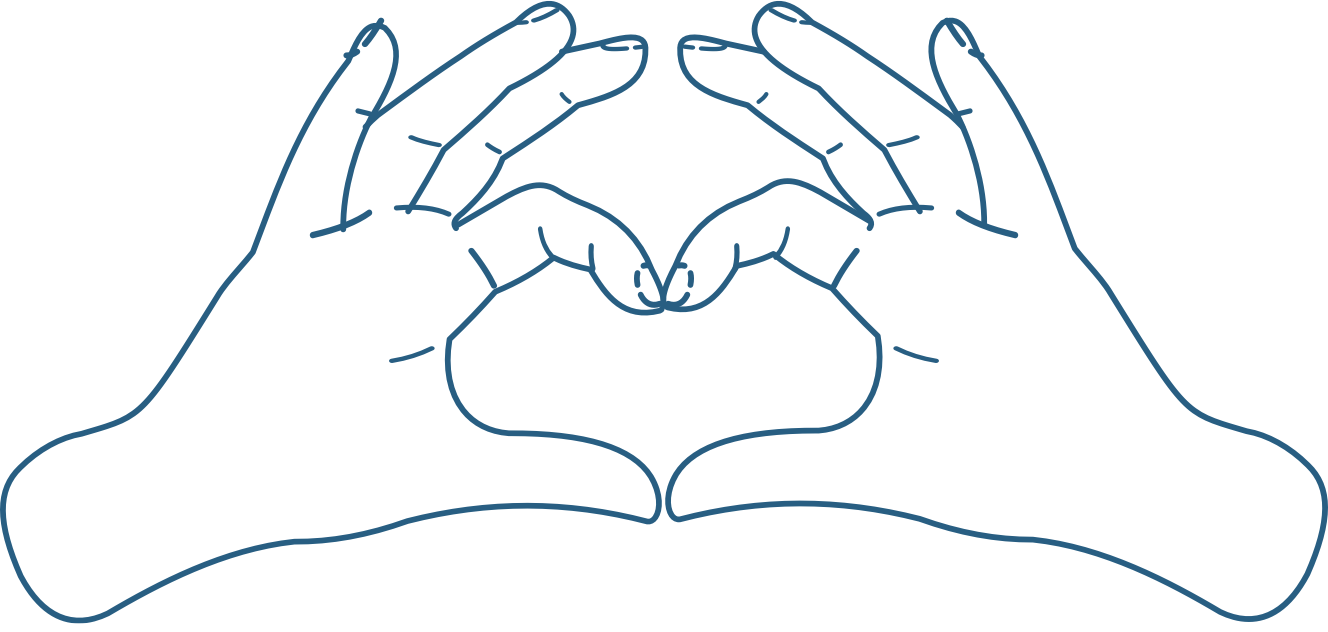
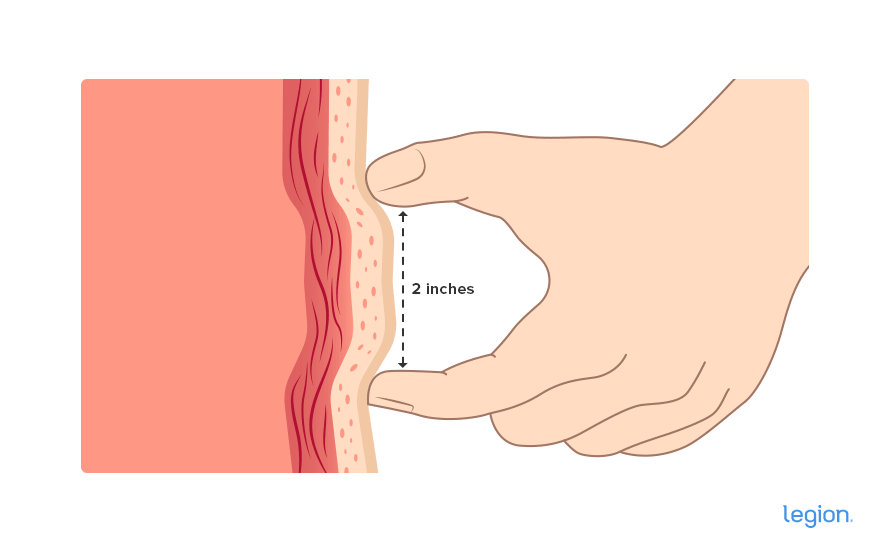
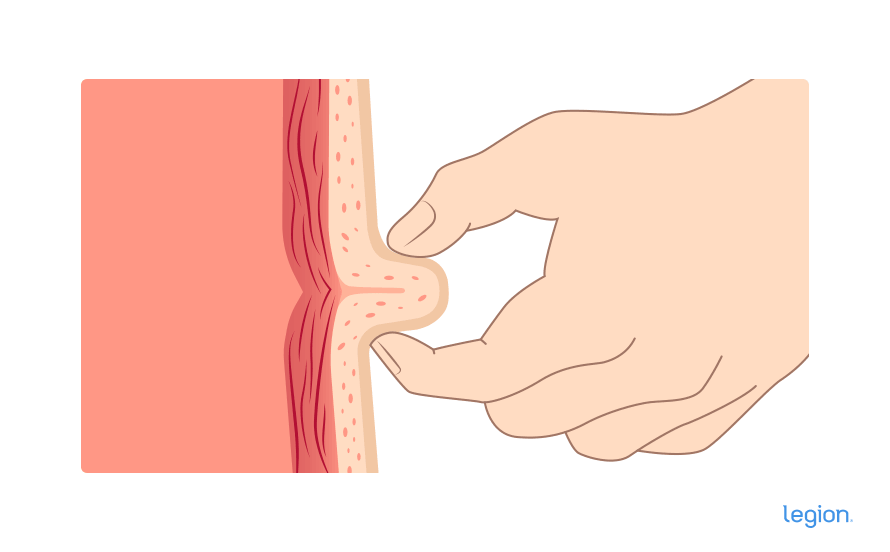
1. Pinch your skin by placing the thumb and forefinger on your body about two inches apart (or further if there’s a lot of fat in this area), firmly pushing them into your flesh:
2. Push your fingers together, then gently pull the skinfold away from your body:
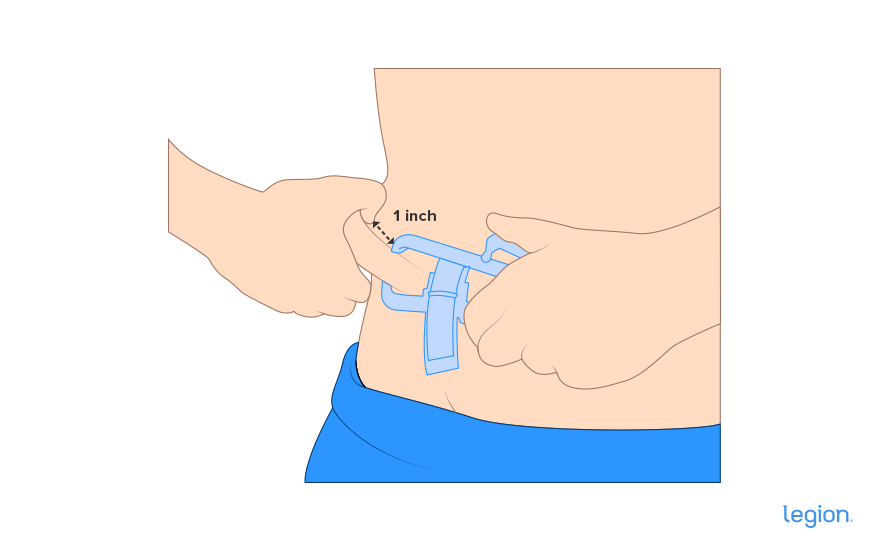
3. Measure a pinched skinfold by placing the tips of the caliper in the middle of the skinfold about an inch from your fingers. For example, the illustration below shows someone taking a suprailiac skinfold measurement:
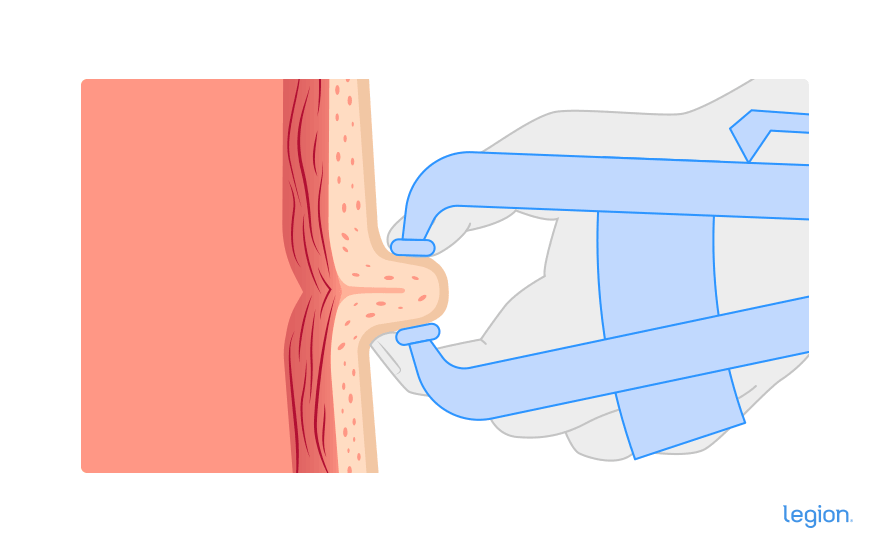
4. Compress the caliper until it clicks (and no more), and note the measurement:
Measurement Guidelines:
- Take all measurements on the right side of your body, standing with your muscles relaxed.
- Ensure your skin is dry and free of lotion.
- Avoid measuring after anything physically demanding or when you’re hot, as this can temporarily increase the amount of fluid beneath your skin, inflating your skinfold thickness.
- Measure at the same time of day each time.
- If you’re a woman, try to avoid taking body fat caliper measurements during times in your menstrual cycle when you’re retaining more water, as this can skew your results.
Skinfold Measurement Sites:
- Abdominals: Pinch a vertical fold of skin one inch to the right of your belly button.
- Biceps: Pinch the skin vertically halfway between the elbow and shoulder on the front of your arm.
- Calf: Pinch the skin vertically on the inside of the largest part of the right calf.
- Lower back: Pinch the skin horizontally about 6 inches above the waist and 2 inches to the right of the spine.
- Midaxillary: Pinch the skin vertically below the armpit at the same height as the base of your breastbone.
- Pectoral: For men, pinch a diagonal skinfold halfway between the front edge of your armpit and your right nipple. For women, pinch a diagonal skinfold about two-thirds of the way from your right nipple to the front edge of your right armpit (i.e., closer to your armpit than your nipple).
- Subscapular: Pinch the skin diagonally an inch beneath the middle of your shoulder blade (about three inches to the right of your spine and six inches above your waist).
- Suprailiac: Pinch the skin diagonally above the bony protrusion on the front of the right hip (the iliac crest).
- Thigh: Pinch the skin vertically, halfway between the top of the kneecap and the top of the front of your thigh.
- Triceps: Pinch the skin vertically halfway between the elbow and shoulder on the back of your arm.
Tape Measurements (Navy Method)
The Navy tape measure method estimates body fat using circumference measurements. It’s simple, fast, and reliable for tracking changes over time. If your waist is shrinking, you’re losing fat. If it’s growing, you’re gaining fat.
However, it’s not without limitations. It tends to overestimate body fat in lean individuals—especially men below 15% and women below 25%.
How to Take Tape Measurements:
- For men, measure waist circumference at the navel. For women, measure the waist at the narrowest point.
- Measure neck circumference with the tape angled slightly downward in front.
- Women should also measure hip circumference at the widest point.
Enter these values into the calculator using the “Navy tape measure method.”
Methods to Avoid for Tracking Body Fat
Not all body fat measurement methods are equally useful for tracking progress. Here are some you should avoid:
- Body composition scales and handheld devices (BIA): These send a small electrical current through your body to estimate body fat. The problem is that results change based on things like how hydrated you are, what you’ve eaten, and whether you’ve exercised, so they’re often unreliable.2 3 4
- Visual estimates (mirror or photos): Judging body fat by how you look is difficult because people with the same body fat percentage can look very different depending on how much muscle they have.
- DXA (dual-energy X-ray absorptiometry): Many people consider DXA highly accurate, but results can vary between machines and software.5 Factors like hydration, sex, body size, and total fat mass can also affect readings.6
- Bod Pod: Bod Pod estimates body fat based on how much air your body displaces inside a sealed chamber. Results can be affected by things like how tight your clothes are, body temperature, and even facial hair, which can reduce accuracy by up to 5%.
- MRI: An MRI machine produces detailed images of your body, but accuracy depends on how many images are taken and how they’re analyzed. It’s also expensive and not practical for regular tracking.
- Hydrostatic weighing: This method estimates body fat by comparing your weight on land and underwater. Results can be influenced by how much air you have in your lungs and other factors, making it less reliable than it seems.
FAQ #1: How is body fat percentage calculated?
Body fat percentage is estimated using formulas that combine measurements like skinfold thickness or body circumferences with factors such as sex, age, height, and weight. These formulas are based on population averages, which is why the result is an estimate rather than an exact measurement.
FAQ #2: What is a healthy body fat percentage?
A healthy body fat percentage depends mainly on your sex and age, but for most people it falls roughly between 8% and 20% for men and 16% and 28% for women.
FAQ #3: How accurate are body fat calculators?
Body fat calculators provide reasonable estimates, but they aren’t perfectly accurate. Your result depends on the formula used and how precisely you take your measurements. That’s why it’s best to use the same method consistently and focus on changes over time rather than any single number.
FAQ #4: What’s the most accurate way to measure body fat at home?
For most people, skinfold (caliper) measurements and the Navy tape method are the most practical and reliable options for tracking body fat at home. Skinfold measurements can be slightly more precise when done correctly, while tape measurements are simpler and faster.
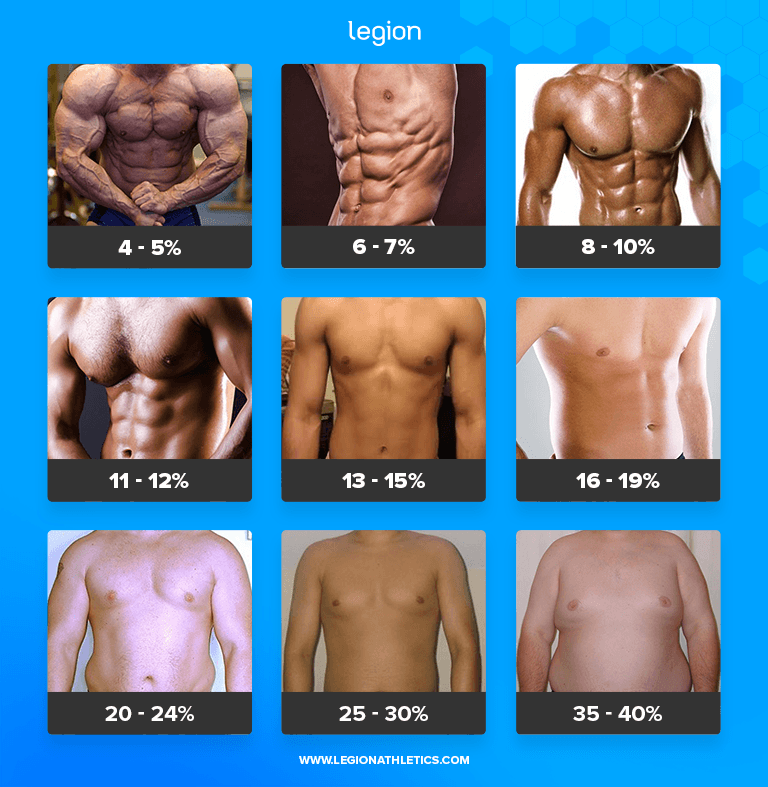
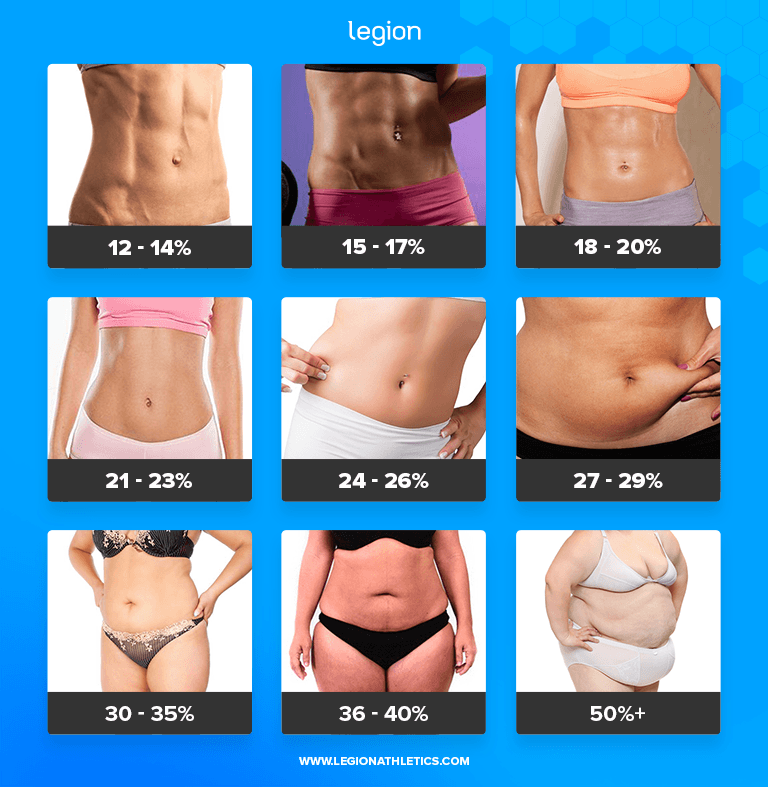
FAQ #5: What does a 20% body fat percentage look like?
How a specific body fat percentage looks varies depending on how much muscle you have. Two people with the same body fat percentage can look very different. That said, the following images are a good guideline:
Want More Tools Like This?
Check out these articles:
- TDEE Calculator: Calculate Your TDEE for Free
- Calorie Calculator: How Many Calories Should You Eat?
- Army Body Fat Calculator: One-Site Tape Test
Scientific References +
- Jackson, A. S., and M. L. Pollock. “Generalized Equations for Predicting Body Density of Men.” British Journal of Nutrition, vol. 40, no. 3, Nov. 1978, pp. 497–504, www.cambridge.org/core/journals/british-journal-of-nutrition/article/generalized-equations-for-predicting-body-density-of-men/EAB21B1CF3A8360E5F5D43FDB8D4DD17, https://doi.org/10.1079/bjn19780152. https://pubmed.ncbi.nlm.nih.gov/718832/ ↩
- Jeong, Soolim, et al. “The Effect of Acute Hydration on Body Composition Assessed by Multi-Frequency and Single-Frequency Bioelectrical Impedance.” The Journal of Sports Medicine and Physical Fitness, vol. 63, no. 10, 1 Oct. 2023, pp. 1069–1074, pubmed.ncbi.nlm.nih.gov/37335581/#:~:text=MF-BIA%20improperly%20categorizes%20increased%20mass%20due%20to%20acute, https://doi.org/10.23736/S0022-4707.23.14913-9. https://pubmed.ncbi.nlm.nih.gov/37335581/ ↩
- Slinde, Frode, and Lena Rossander-Hulthén. “Bioelectrical Impedance: Effect of 3 Identical Meals on Diurnal Impedance Variation and Calculation of Body Composition.” The American Journal of Clinical Nutrition, vol. 74, no. 4, 1 Oct. 2001, pp. 474–478, https://doi.org/10.1093/ajcn/74.4.474. Accessed 17 Oct. 2019. https://pubmed.ncbi.nlm.nih.gov/11566645/ ↩
- Abu Khaled, M, et al. “Electrical Impedance in Assessing Human Body Composition: The BIA Method.” The American Journal of Clinical Nutrition, vol. 47, no. 5, 1 May 1988, pp. 789–792, https://doi.org/10.1093/ajcn/47.5.789. Accessed 23 Jan. 2020. https://pubmed.ncbi.nlm.nih.gov/3364394/ ↩
- Ioannidou, E., et al. “Pencil-Beam versus Fan-Beam Dual-Energy X-Ray Absorptiometry Comparisons across Four Systems: Appendicular Lean Soft Tissue.” Acta Diabetologica, vol. 40, no. S1, Oct. 2003, pp. s83–s85, https://doi.org/10.1007/s00592-003-0034-x. Accessed 22 Jan. 2021. http://www.ncbi.nlm.nih.gov/pubmed/14618441 ↩
- Williams, Jane E, et al. “Evaluation of Lunar Prodigy Dual-Energy X-Ray Absorptiometry for Assessing Body Composition in Healthy Persons and Patients by Comparison with the Criterion 4-Component Model.” The American Journal of Clinical Nutrition, vol. 83, no. 5, 1 May 2006, pp. 1047–1054, https://doi.org/10.1093/ajcn/83.5.1047. https://pubmed.ncbi.nlm.nih.gov/16685045/ ↩