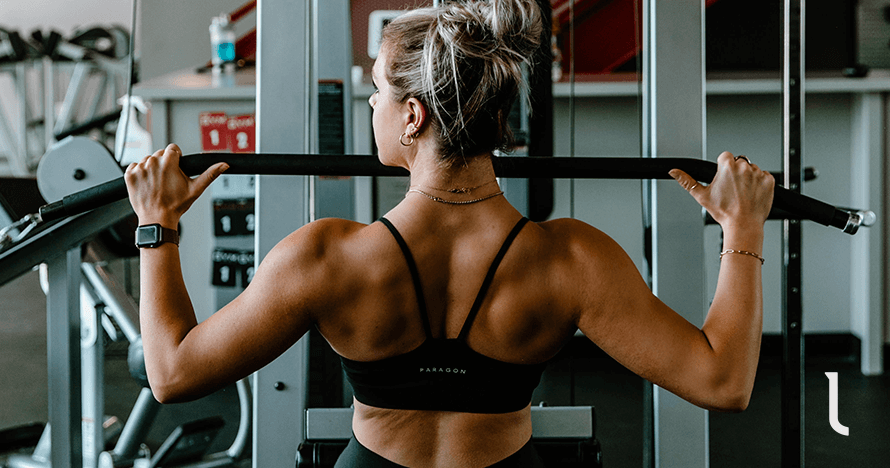
If you want your upper body to look “put together”—shoulders back, waist smaller, arms defined—your pull days matter more than you think.
Strong pulling muscles shape your back, keep your shoulders from collapsing forward, and do most of the work when you pick up kids, groceries, suitcases, and everything else life throws at you. Yet most women barely train them on purpose.
A dedicated pull day fixes that.
It focuses your effort on the lifts that build a better-looking back and arms, improve posture, and make your whole upper body look more athletic.
In this article, you’ll see exactly what a pull day for women should look like: which exercises to do, how many sets and reps you really need, how often to train, and how to plug it into a weekly split you can actually stick to.
Key Takeaways
- A pull day is a workout built around pulling movements (like deadlifts, rows, and pulldowns) that train your back, rear delts, biceps, hamstrings, and glutes.
- Pull days help women improve posture, slim the waist, and build a more defined back and arms.
- Most women only need one focused pull day per week, plus a few extra pulling exercises on other days.
- The simplest and most effective pull day includes five moves: a deadlift, a vertical pull, a row, a rear-delt exercise, and a biceps exercise.
- You don’t need supplements to make progress, but a good pre-workout, creatine, and protein powder can help you train harder, recover better, and build muscle faster.
Table of Contents
+
What Is a Pull Day Workout for Women?
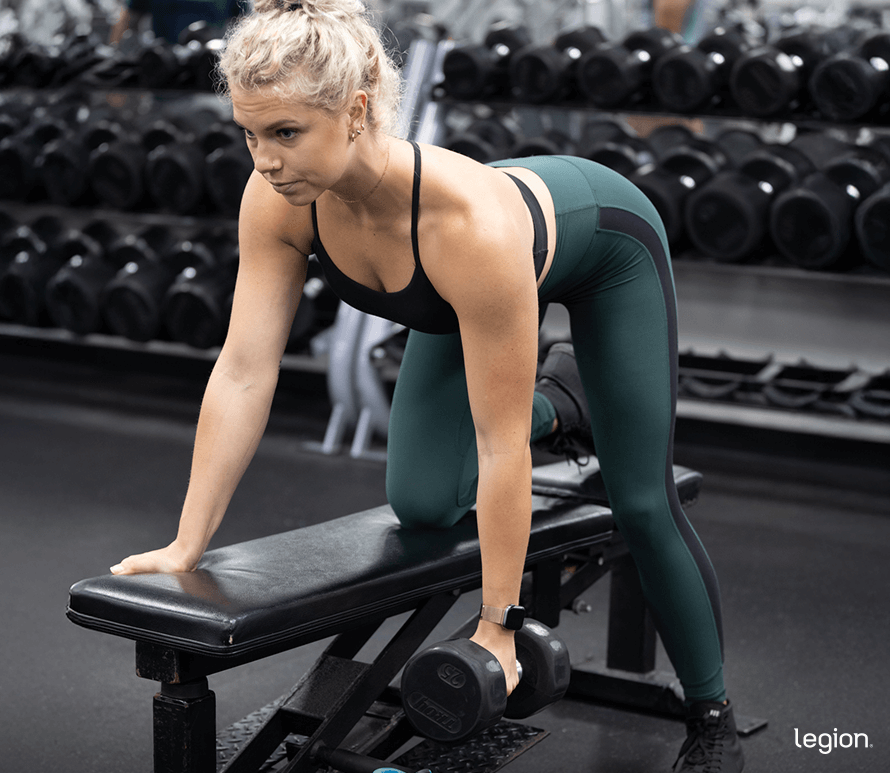
A pull day workout is a training session built around “pulling” movements—exercises where you pull weight toward your body or off the floor.
Most pull days revolve around big compound lifts like deadlifts, rows, and pull-ups (or lat pulldowns). These movements train many muscles at once and let you lift heavy weights safely and efficiently.
Good pull workouts also include one or two isolation exercises to train muscles compound lifts don’t emphasize as well—like rear lateral raises for the rear delts or curls for the biceps.
What Are the Benefits of a Pull Day Workout for Women?
Pull days are especially helpful for women because they:
- Build a stronger, more athletic-looking back
- Add subtle width to your upper body, which helps create the hourglass shape many women want
- Add shape and definition to your arms
- Improve your posture by strengthening the muscles that hold your shoulders back (which may also lift your chest a little)
Where Does a Pull Day Fit In Your Training Split?
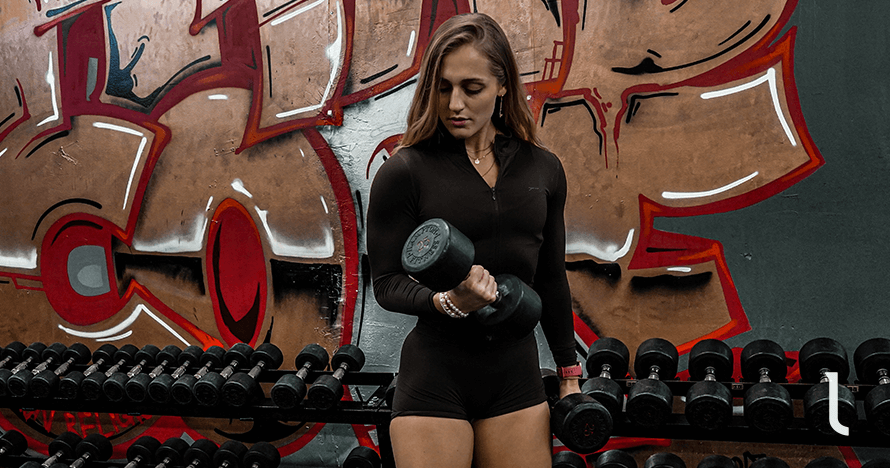
A “training split” is simply how you divide your workouts across the week.
The most common splits that include a pull day are:
- Push Pull Legs (PPL): One push day, one pull day, one leg day.
- Upper Lower (UL): One or two upper-body days (that usually emphasize push or pull), and one or two lower-body days.
- PPLUL: A mix of both—push, pull, legs, plus upper and lower days.
Here’s how this usually looks for women:
- If you train 3 days per week, a PPL split works very well.
- If you train 4 days per week, an upper lower split is often best.
- If you train 5 days per week, a PPLUL split gives you more volume (sets) without beating you up.
In all of these, the pull day is your chance to focus on the muscles that make your upper body look stronger, aesthetic, and more “put together.” It’s one pillar of a balanced routine, not a random “back and biceps day” you throw in when you feel like it.
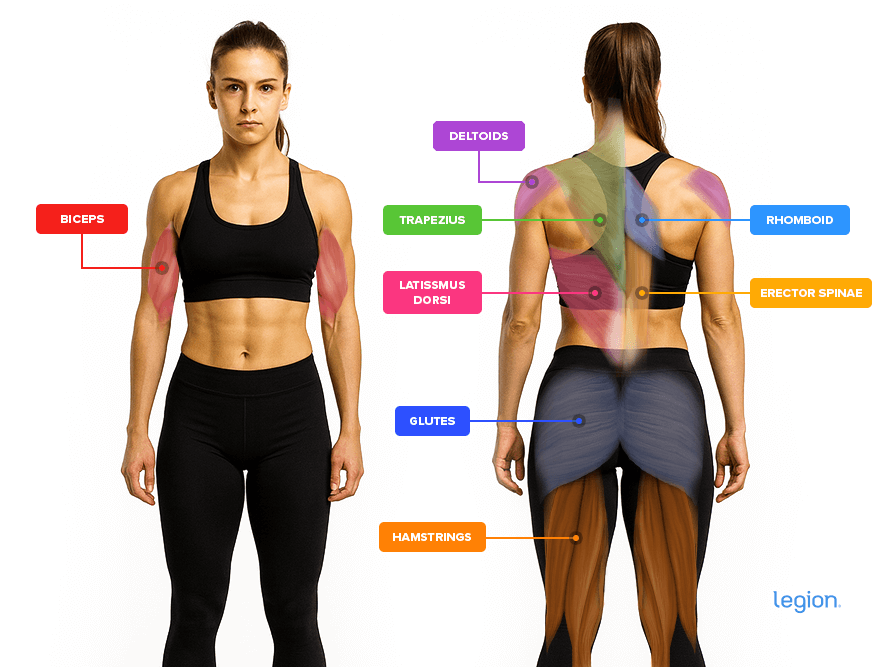
Which Muscles Does a Pull Day Train?
On a pull day, you mainly train your:
- Back (lats, traps, rhomboids, erector spinae)
- Glutes
- Hamstrings
- Biceps
- Rear delts (the back of your shoulders)
Here’s how those muscles look on your body:
How Many Pull Days per Week Should Women Do?
For most women, one dedicated pull day per week is enough. If you train four or five days per week, you’ll usually include pulling exercises on another day as well, but that second session doesn’t need to be a full pull-only workout.
For example, if you follow an upper lower split, you can make one of your upper-body days a true pull day, then add another upper-body pulling exercise to your other upper day. This can help you develop your back and biceps more quickly—muscle groups many women prefer to prioritize over additional chest work.
You’d also likely include a Romanian deadlift variation on one of your lower days.
The key is simply having at least one focused pull day, with additional pulling movements sprinkled throughout the week based on how often you train and what you want to emphasize.
READ MORE: The Best Training Frequency for Building Muscle (According to 20 Studies)
How Many Exercises Are Enough for a Pull Day?
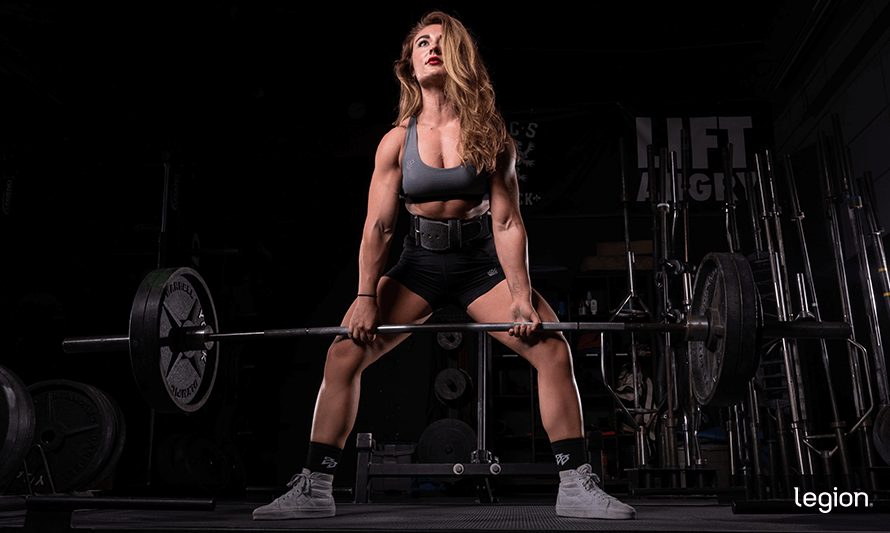
For most women, five exercises on a pull day is ideal:
- A deadlift variation
- A vertical pull
- A horizontal pull
- An isolation exercise for the rear delts
- An isolation exercise for the biceps
This provides enough hard sets to stimulate growth without piling on unnecessary fatigue, and keeps your workouts efficient—about 45 minutes start to finish.
Some programs call for six or seven exercises per pull day. But having worked with thousands of women through Thinner Leaner Stronger and Legion’s body transformation coaching, I’ve consistently found that doing fewer exercises produces better results.
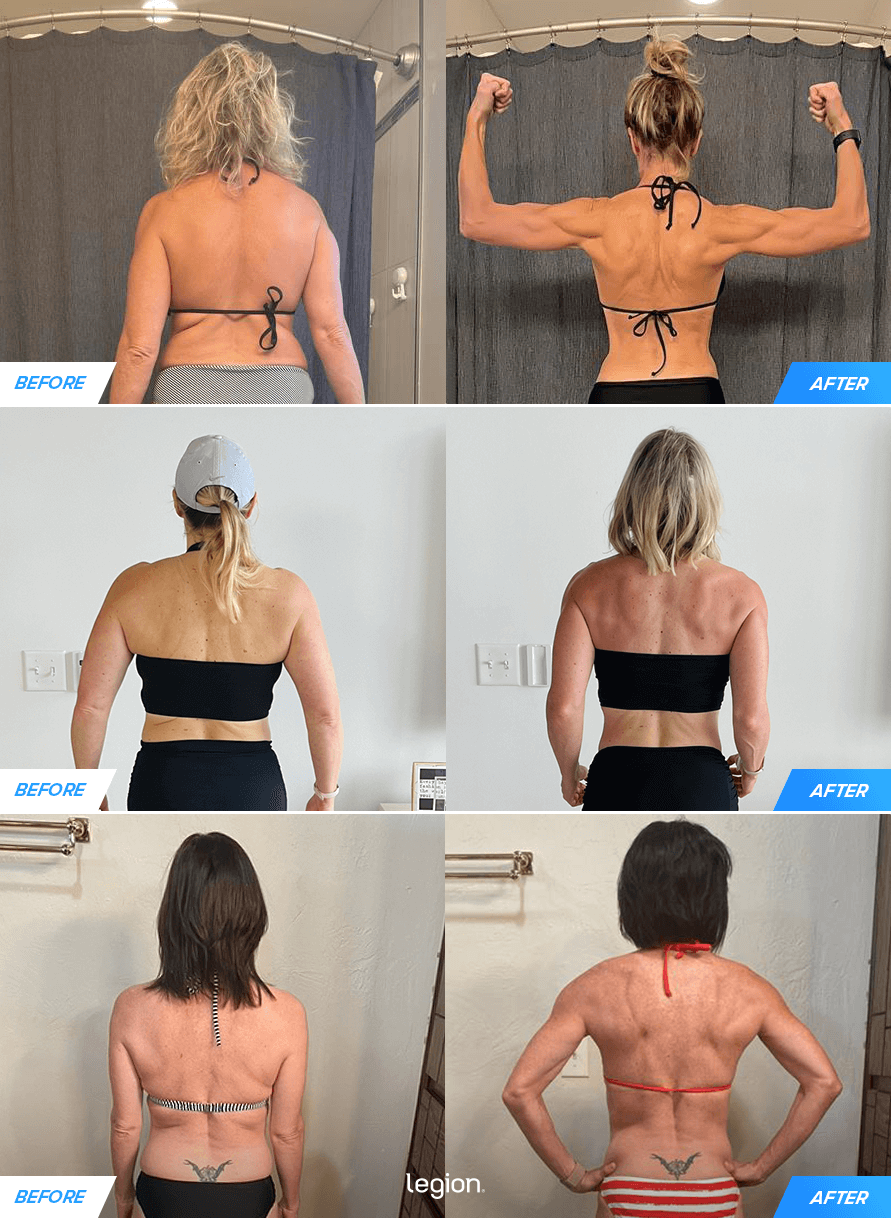
And if you’d like proof, here are a few coaching clients who built noticeably stronger, more defined “pull muscles” in just a few months using this exact approach:
Best Pull Day Workout for Women
The following pull-day workout is designed to help you build a strong, defined back and arms while improving posture and overall upper-body strength.
It works because it focuses on pull exercises that work best for women. Each one:
- Trains your pulling muscles through a large range of motion
- Allows you to lift challenging weights safely
- Makes it easy to increase the load or reps over time as you get stronger
The workout also provides just the right amount of volume (sets) to stimulate muscle growth without leaving you wrecked or keeping you in the gym for hours.
That said, it’s a challenging routine. To make sure you have the energy to train hard, recover well, and build muscle effectively, consider:
- Pre-workout: A high-quality pre-workout enhances energy, mood, and focus, increases strength and endurance, and reduces fatigue.
- Creatine: Creatine boosts muscle and strength gain, improves anaerobic endurance, and reduces muscle damage and soreness from your push workouts.
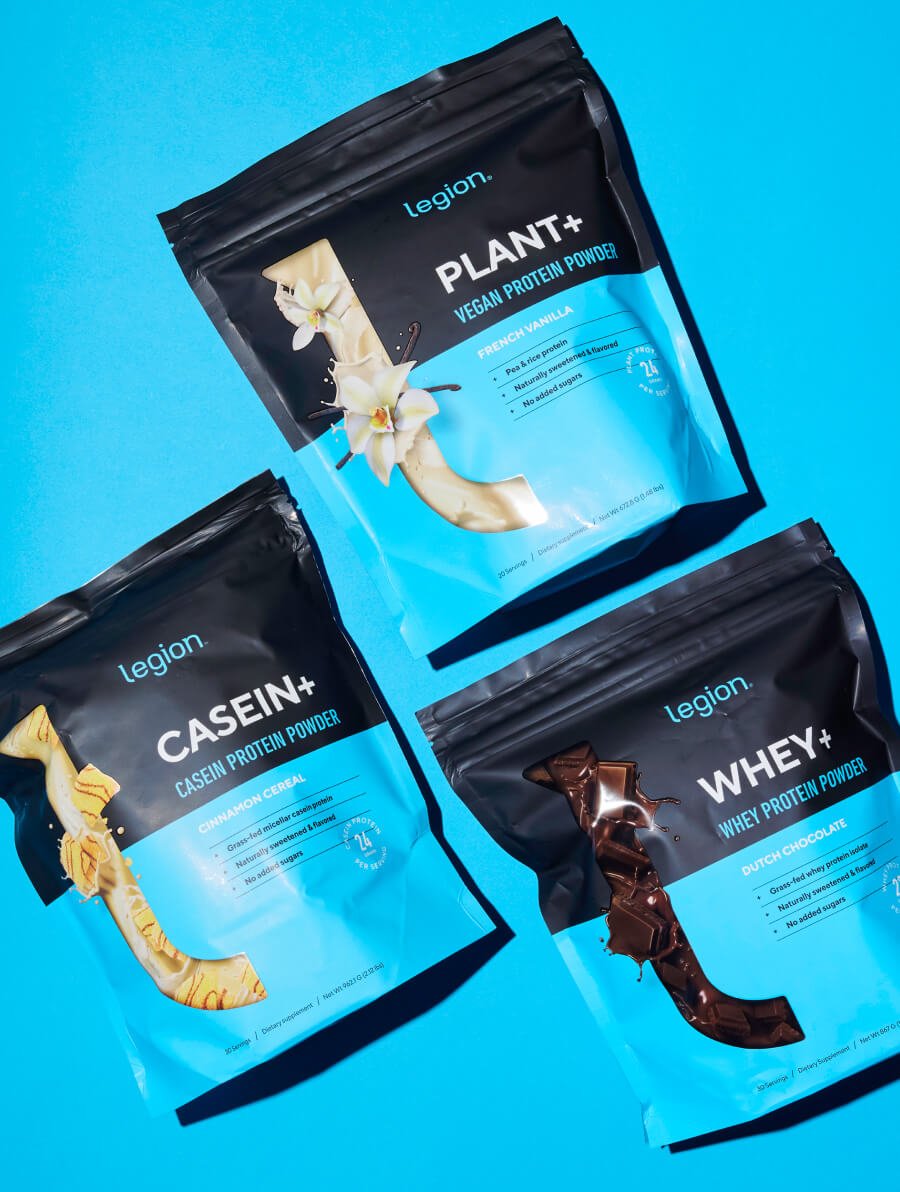
- Protein powder: Protein powder, such as whey or casein, provides your body with the nutrients needed to build muscle tissue and recover from workouts.
Now let’s get to the workout:
Deadlift
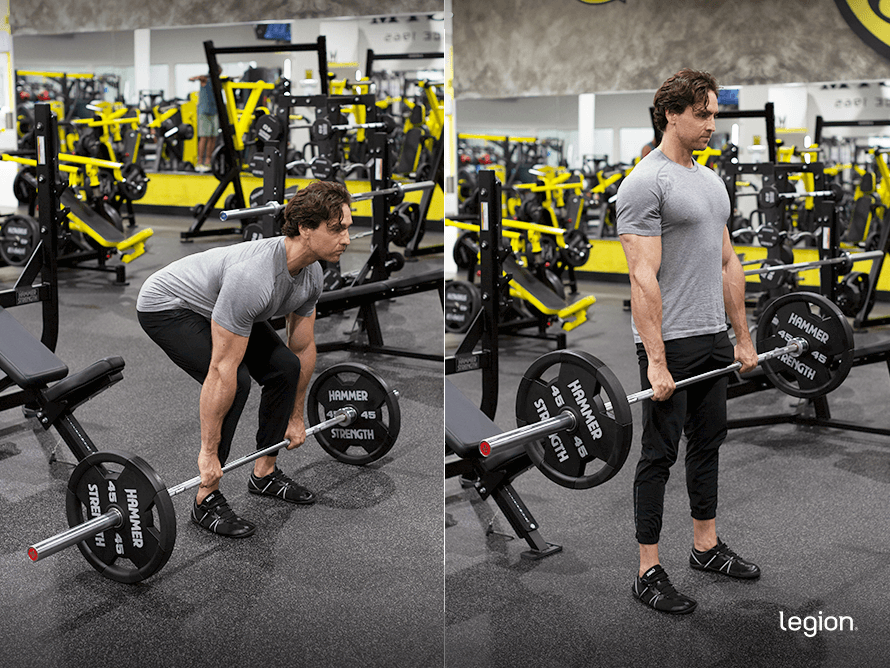
Why: Deadlifts train your entire posterior chain—glutes, hamstrings, and back—making them one of the most efficient full-body strength builders you can do.
How to:
- Stand with your feet slightly narrower than shoulder width, toes pointed slightly out.
- Position the bar over your midfoot, about an inch from your shins.
- Push your hips back and grip the bar just outside your legs.
- Take a deep breath, brace your core, and flatten your back.
- Drive through your heels to stand upright, keeping the bar close to your body.
- Reverse the movement and return to the starting position.
Sets, reps, and rest: 3 sets | 8–10 reps | 3–5 min rest
Alternatives:
Lat Pulldown
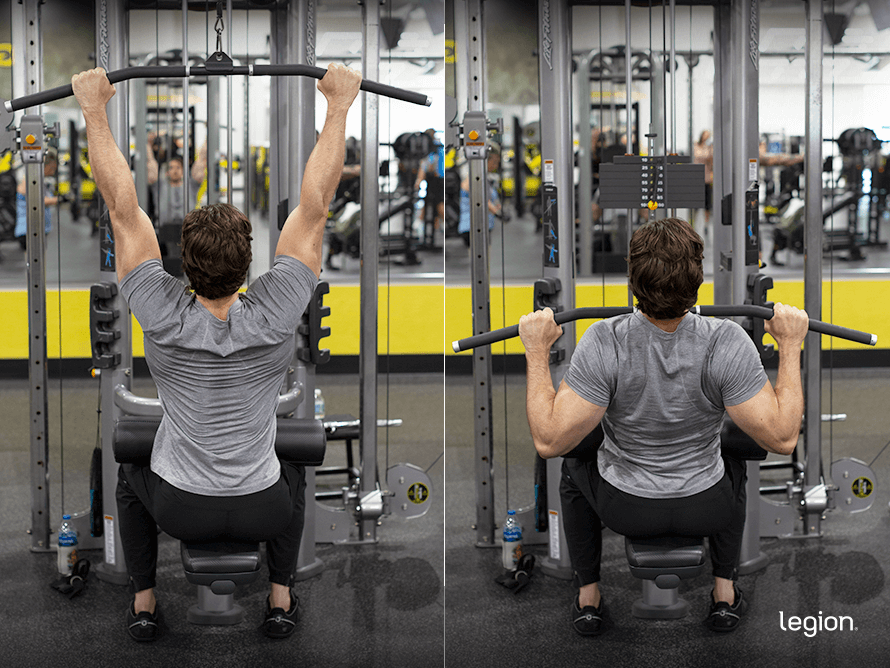
Why: Lat pulldowns focus on your lats, biceps, and upper back, helping you build width and improve posture—even if you can’t do pull-ups yet.
How to:
- Adjust the thigh pad so it holds your legs firmly in place.
- Stand up and grab the bar with an overhand grip slightly wider than shoulder width.
- Keeping your grip on the bar, sit down and secure your thighs under the pad.
- Pull the bar down until it reaches your upper chest.
- Reverse the movement and return to the starting position.
Sets, reps, and rest: 3 sets | 8–10 reps | 3–5 min rest
Alternatives:
One-Arm Dumbbell Row
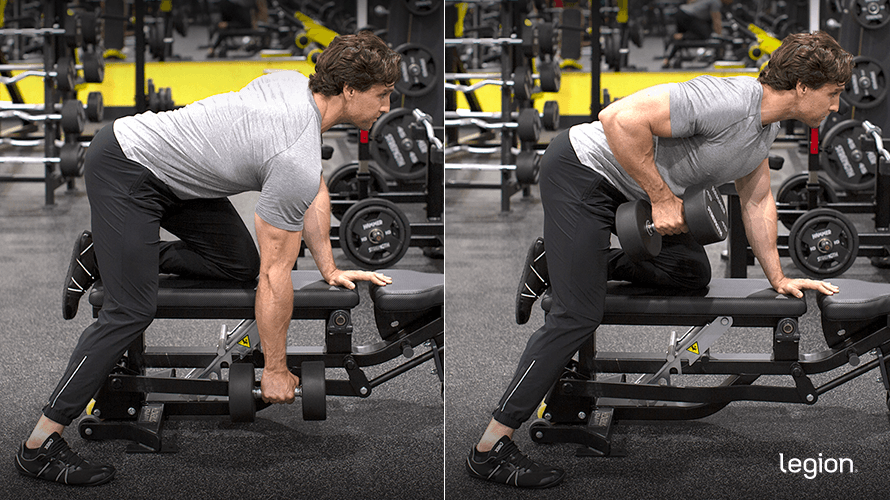
Why: One-arm rows build your mid-back, lats, and biceps while allowing you to train each side independently and protect your lower back.
How to:
- Hold a dumbbell in your right hand and place your left knee and hand on a bench.
- Keep your right foot on the floor and let your right arm hang straight down.
- With your back flat, pull the dumbbell to your torso.
- Reverse the movement and return to the starting position.
- After completing the desired number of reps, repeat on your left side.
Sets, reps, and rest: 3 sets | 8–10 reps | 2–3 min rest
Alternatives:
Dumbbell Rear Lateral Raise
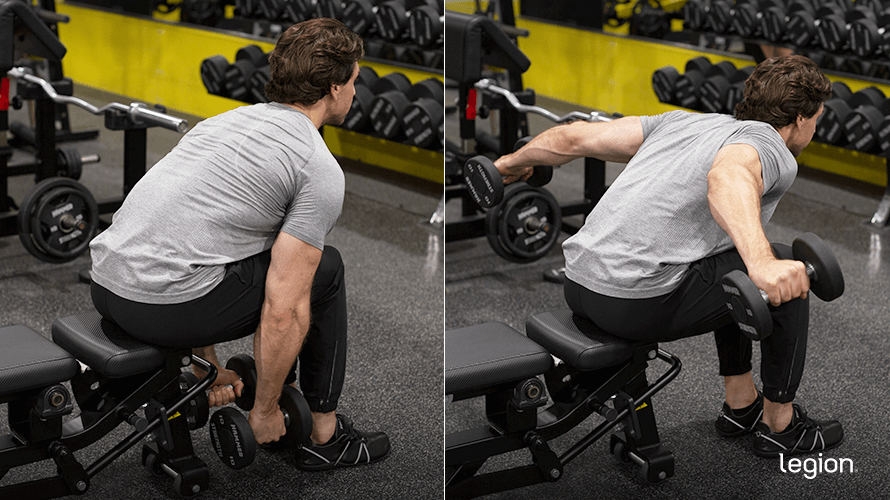
Why: Rear delt raises target the back of your shoulders, helping your shoulders look round and “finished” from every angle.
How to:
- Whether standing or seated, bend at the hips so that your upper body is as close to parallel to the floor as possible.
- Hold a dumbbell in each hand, keep your back flat, and lift the dumbbells out to the side until your upper arm is parallel to the floor.
- Reverse the movement and return to the starting position.
Sets, reps, and rest: 3 sets | 8–10 reps | 2–3 min rest
Alternatives:
Dumbbell Curl
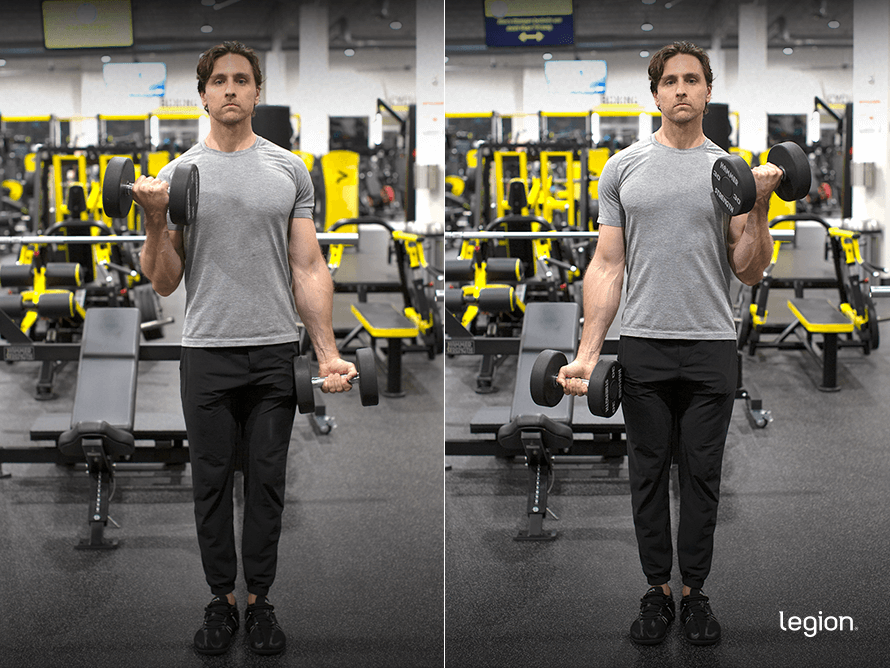
Why: Dumbbell curls directly train your biceps, adding shape and definition to the front of your arms.
How to:
- Stand with your feet shoulder width apart, holding a dumbbell in each hand at your sides with your palms facing forward.
- Bend your right elbow to curl the dumbbell toward your shoulder.
- Reverse the movement and return to the starting position.
- Repeat with your left arm.
Sets, reps, and rest: 3 sets | 8–10 reps | 2–3 min rest
Alternatives:
How to Progress Your Pull Day Workouts
Progress is what drives muscle growth—if you don’t gradually challenge your muscles more over time, your pulling muscles won’t get stronger or change shape.
There are two parts to progressing effectively:
1. Train Hard Enough
Finish most sets 1–2 reps shy of “failure”—the point where you can’t perform another rep with proper form even if you want to.
An easy way to gauge this is to ask yourself at the end of each set:
“If I had to, how many more reps could I have done with good form?”
If the answer is more than two, increase the weight or reps on your next set to make it more challenging.
2. Add Weight or Reps Over Time
If your workout calls for 8–10 reps of the deadlift and you complete 10 reps in a set, increase the weight by 10 pounds (total) for your next set.
If you do 7 reps or fewer in subsequent sets, reduce the load by 5 pounds to stay in the 8–10 rep range.
Do this for every exercise, in every workout, and your pulling muscles will continue to get stronger and more defined over time.
Sample Weekly Split for Women With Pull Day Included
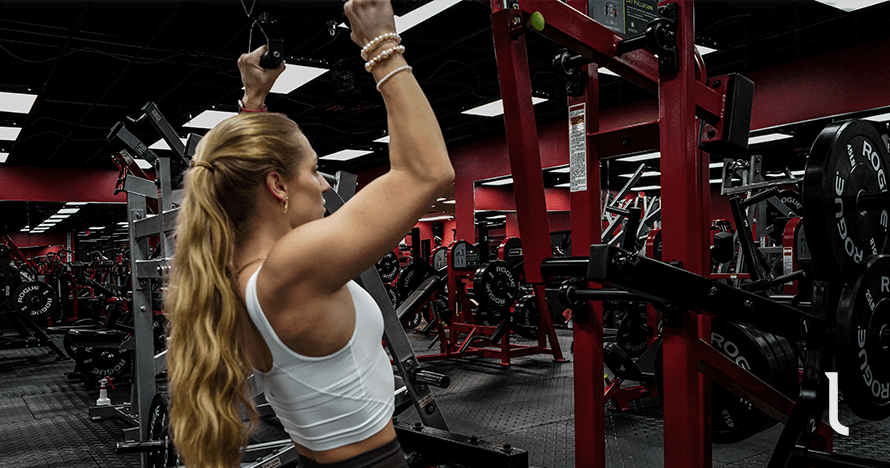
There are many ways to include a pull day workout in a weekly split for women, but the following three schedules usually work best:
3-Day PPL Split
- Monday: Push
- Tuesday: Rest
- Wednesday: Pull
- Thursday: Rest
- Friday: Legs
- Saturday: Rest
- Sunday: Rest
This is a great option if you can only train three days per week but still want balanced upper- and lower-body development.
4-Day Upper Lower Split
- Monday: Push
- Tuesday: Lower
- Wednesday: Rest
- Thursday: Pull
- Friday: Lower
- Saturday: Rest
- Sunday: Rest
This works well for women who like a bit more volume per muscle group but don’t want to train five days per week.
5-Day PPLUL
- Monday: Push
- Tuesday: Pull
- Wednesday: Legs
- Thursday: Upper
- Friday: Lower
- Saturday: Rest
- Sunday: Rest
This is ideal if you enjoy training frequently, want faster progress, and can recover well from five weekly sessions.
The Bottom Line on Pull Day Workouts for Women
A good pull day doesn’t have to be complicated. If you train hard on a few key pulling movements—like deadlifts, rows, and pulldowns—and sprinkle in rear delt and biceps work, you’ll build a stronger back, better posture, and more defined arms with just one focused session per week.
Use the five-exercise workout in this article, plug it into one of the sample weekly splits, and aim to get a little stronger each time you repeat it. Do that consistently, and your upper body will start to look and feel noticeably more “put together” in a matter of weeks.
FAQ #1: What are the best pull day exercises for women?
The best pull day exercises are the ones that:
- Train a lot of muscle at once
- Are easy to load and progress
- Feel comfortable
For most women, that means building your pull days around:
- Deadlifts (for glutes, hamstrings, and back)
- Lat pulldowns or pull-ups (for lats and upper back)
- Rows (dumbbell, cable, or machine, for mid-back and lats)
- Rear lateral raises (for the back of your shoulders)
- Curls (for biceps and arm definition)
If your pull workouts consistently hit those movement patterns, you’re doing what matters most.
FAQ #2: Are 5 exercises enough for a pull day workout?
Yes—five exercises is not only enough, it’s often better than doing more.
With five good exercises, you can:
- Train all of your major pulling muscles
- Do enough hard sets to grow
- Keep your workouts around 45 minutes
Once you start adding a sixth, seventh, or eighth exercise, you usually don’t get better results—you just get more tired, your form slips, and recovery becomes harder.
Focus on doing more work with the same five movements (heavier weights, better technique, more reps over time), not constantly adding new ones.
FAQ #3: What is a “push pull” workout split for women?
A “push pull” split organizes your workouts by movement pattern rather than by muscle group.
- Push workouts include exercises where you push weight away from your body, such as presses, or push against the floor, such as squat variations.
- Pull workouts include exercises where you pull weight toward your body, such as rows and pulldowns, or pull weight off the floor, such as deadlifts.
It’s similar to a PPL routine, but instead of placing all lower-body exercises on one day, you divide them by how you move. A push pull split isn’t the same as a push pull workout, which is a training session where you train all your upper-body muscles with pushing and pulling exercises.
READ MORE: The Best “Push Pull” Workout Routines for Building Your Chest, Back, and Arms
FAQ #4: Can women do pull day workouts at home with dumbbells or bands?
Absolutely. While a full gym gives you more options, you can still run very effective pull workouts at home using:
- Dumbbells: For one-arm rows, regular or Romanian deadlifts, rear lateral raises, and curls.
- Resistance bands: For band rows, band pulldowns (anchored overhead), and band curls.
Train hard, get close to failure on most sets, and progress your weights or band tension over time, and you’ll get great results—even at home.
Want More Content Like This?
Check out these articles:
- Transform Your Pear-Shaped Body: Exercises & Diet Tips
- The Ultimate Workout Routine for Women
- The Ultimate 3-Month Female Body Recomposition Workout Plan
Scientific References +
- Eckerson, Joan M., et al. “Effect of Creatine Phosphate Supplementation on Anaerobic Working Capacity and Body Weight after Two and Six Days of Loading in Men and Women.” The Journal of Strength and Conditioning Research, vol. 19, no. 4, 2005, p. 756, https://doi.org/10.1519/r-16924.1.
- Bassit, Reinaldo Abunasser, et al. “Effect of Short-Term Creatine Supplementation on Markers of Skeletal Muscle Damage after Strenuous Contractile Activity.” European Journal of Applied Physiology, vol. 108, no. 5, 3 Dec. 2009, pp. 945–955, https://doi.org/10.1007/s00421-009-1305-1.
- Stokes, Tanner, et al. “Recent Perspectives Regarding the Role of Dietary Protein for the Promotion of Muscle Hypertrophy with Resistance Exercise Training.” Nutrients, vol. 10, no. 2, 7 Feb. 2018, p. 180, www.mdpi.com/2072-6643/10/2/180/pdf.