A little-known fact about creatine:
It doesn’t enhance muscle growth by increasing muscle protein synthesis, but by decreasing post-workout soreness, increasing post-workout recovery, and increasing cellular hydration and glycogen storage in muscle cells.
This, in turn, allows you to train harder and more frequently and experience less muscle damage, which, over time, leads to more muscle and strength.
It’s little wonder why creatine is such a popular supplement—and why supplement companies are fighting to stand out in a crowded market.
Since the monohydrate form of creatine is cheap, proven, and apparently impossible to “reinvent,” many brands are adding extra ingredients and selling the mixes as premium “upgrades.”
One of the most popular mash-ups is creatine monohydrate combined with HMB.
If you go by influencer posts or Reddit threads, this combo supposedly results in significantly more muscle growth, athletic performance and post-workout recovery and less muscle breakdown than creatine alone.
Some companies even allege that creatine and HMB is 25–67% more effective than just creatine, and even share research studies as purported evidence of these benefits.
Are any of those claims actually true—or just marketing spin?
Key Takeaways
- Creatine monohydrate on its own works extremely well. It helps you train harder, recover faster, and build more muscle and strength over time.
- HMB reduces muscle damage and helps preserve muscle during times when muscle loss is more likely, but doesn’t otherwise boost muscle growth.
- Combining creatine with HMB doesn’t offer “synergistic” benefits—it’s no different than taking the two supplements in isolation.
- The research on creatine plus HMB has limits. It’s mostly short-term, done in young men, and often uses inconsistent and unrealistic testing methods.
- For most people, the best option is to use a high-quality creatine monohydrate—like Legion’s creatine monohydrate powder, gummies, capsules, or post-workout Recharge—and add HMB only if it fits your situation.
Table of Contents
+
What Is Creatine HMB?
Creatine HMB is the common name for supplements that combine creatine monohydrate and β-hydroxy β-methylbutyrate (HMB).
Creatine is made up of the amino acids L-arginine, glycine, and methionine. Supplementing with it helps you train harder and recover faster by boosting your body’s ability to produce adenosine triphosphate (ATP), the quick energy source your muscles use during hard training.
HMB is a compound produced when the body breaks down leucine, an amino acid that stimulates protein synthesis. Research shows HMB reduces protein breakdown, strengthens muscle cell membranes, and activates muscle-building molecules like mTOR and IGF-1.
Why Combine Creatine and HMB?
Supplement manufacturers combine creatine and HMB because it allows them to package an iconic supplement with one that’s rising in popularity and sell it as a premium upgrade.
Creatine is the most effective sports supplement you can buy—but it’s also cheap, widely available, and impossible for any brand to “own.” You can only hype up plain creatine monohydrate so much, however, which is why many supplement companies are mixing it with other ingredients like beta-alanine, L-carnitine, and BCAAs.
Among these many combinations, HMB is quickly becoming one of the most popular supplements to stack with creatine for a few reasons:
- HMB has been studied enough to give marketers something to point to (a degree of credibility that many other potential add-on ingredients don’t have).
- Despite that research, HMB is still unfamiliar to most people. That makes it easy for brands to market it as a cutting-edge compound that “upgrades” plain creatine.
- Creatine and HMB sound like a perfect pairing: Creatine helps you train harder, creating more stimulus for growth but also more stress on your muscles—while HMB reduces muscle breakdown and muscle damage.
In other words, marketers use (cherry-pick, really–keep reading) HMB’s research base and relative obscurity to sell creatine HMB as a premium “evolution” of creatine supplementation—one where each ingredient amplifies the effects of the other, leading to bigger gains and better recovery.
Does Creatine and HMB Actually Work Better?
The pitch is simple:
Scientific research shows that creatine and HMB are great by themselves but are even greater when taken together.
For example, both ANIMAL and Transparent Labs claim creatine HMB boosts muscle growth and strength gain compared to creatine alone. ANIMAL claims muscle growth increases by 67% and strength by 32%, while Transparent Labs reports similar figures of 67% and 33% as well as “up to 25% more lean muscle mass” elsewhere (????).
Both brands cite a single 2001 study by the Institute of Sport and Physical Education as evidence for these claims—and the way they present its data is deeply misleading.
First, the study lasted just three weeks and involved only 40 young men who were essentially new to strength training.
When you start weightlifting, strength and muscle size increase rapidly as you learn the movements, your nervous system adapts, and your muscles store more water—especially when you also begin taking creatine.
That matters because the study used bioelectrical impedance (BIA) to measure changes in muscle size, a method that’s easily skewed by changes in body water.
As a result, much of the reported “muscle gain” likely reflects water weight and newbie gains, not meaningful long-term muscle growth.
Thus, such data tells you little about what to expect if you’re not untrained, and even less if you also already take creatine.
Second, the study showed that creatine and HMB don’t work synergistically—directly contradicting the core marketing claims made.
Ironically, the authors explicitly stated that the effects observed were additive, meaning each ingredient worked on its own, and combining them didn’t create any special extra benefit. One plus one equalled two, not three.
Hence the blasted TITLE OF THE PAPER (emphasis mine):
Creatine and beta-hydroxy-beta-methylbutyrate (HMB) additively increase lean body mass and muscle strength during a weight-training program.
Third, the “67% more muscle” claim makes a small difference sound huge.
In absolute terms, the creatine group gained around 3.9 pounds of lean mass (muscle, water, and other tissues), while the creatine-HMB group gained about 5.3 pounds—roughly 1.4 extra pounds.
That’s not “67% more muscle” in the way most people would interpret it.
What’s more, it’s well known that novices produce notoriously “noisy” data in resistance training studies. It’s common to see “hyper-responders” who gain significant muscle and weight very quickly, and “non-responders” who gain almost nothing, along with everyone in between.
Therefore, the extra ~1.4 pounds is at best a tentative signal that needs larger, better-controlled replication—not strong evidence for a dramatic, reliable boost.
Fourth, the “33% more strength” figure doesn’t mean people got 33% stronger on any lift. No one squatted, benched, or deadlifted 33% more weight.
Instead, the researchers added together the strength gains from several different exercises and compared how much the creatine-HMB group improved above the creatine-only group. This makes relatively modest improvements appear much bigger than they really were.
(It also appears to be based on numbers from the abstract that differ from those reported later in the paper—which raises questions about how carefully these brands even read the research before concocting claims.)
Fifth, where did Transparent Labs get the “up to 25% more lean muscle mass” claim?
My guess is monkey math or they simply made it up, because the same Institute of Sport and Physical Education study they cite never showed this.
Again, the creatine group gained about 3.9 pounds of lean mass, while the creatine-HMB group gained about 5.3 pounds of lean mass—around 1.4 pounds more in three weeks. In percentage terms, that’s ~35% more, not 25%.
Finally, the clincher:
Even if I were wrong about all of the above and there was indeed a significant synergistic effect that simply isn’t adequately demonstrated in the available research, many popular creatine HMB products aren’t using the same clinical doses.
For example, the Institute of Sport and Physical Education study used very high creatine doses—20 grams per day for a week, followed by 10 grams per day—along with 3 grams of HMB per day.
In contrast, ANIMAL’s product provides 5 grams of creatine and 3 grams of HMB per “heaping scoop” and recommends one scoop before training (read: daily), while Transparent Labs’ creatine HMB supplement provides 5 grams of creatine and only 1.5 grams of HMB per serving and recommends one serving per day.
That alone undermines all claims of product efficacy.
The Rest of the Creatine HMB Research
“But Mike, aren’t there other studies on creatine HMB that support its efficacy?”
Kind of.
A 2019 systematic review published in the Journal of the International Society of Sports Nutrition is another paper often cited to justify the combo, particularly because of its conclusion:
In summary, the combination of 3-10 g/day of CrM plus 3 g/day of HMB for 1-6 weeks could produce potential positive effects on sport performance (strength and anaerobic performance) and for 4 weeks on body composition (increasing fat free mass and decreasing fat mass).
That is, creatine plus HMB may improve strength, high-intensity exercise performance, and even body composition (more than taking either one alone).
The results are less impressive when you peek under the hood, though.
For a start, the review only included six studies of young men who mostly played team sports, and since only two of them involved weight training, we don’t know whether the results apply to older people, women, or regular gymgoers.
Also, the two weight-training studies measured different things. One tested one-rep max strength. The other tested three-rep max strength and how many chin-ups participants could do before failing. Since they used different measures, you can’t simply combine their results to draw one clear conclusion.
Finally, the remaining studies in this review involved tasks like sprinting or cycling to see how much power people could produce when they were exhausted—results that tell us nothing about muscle growth or strength gain.
The problem is that when studies look at different types of exercise and measure different things, you can’t easily combine the results to answer one simple question—like does adding HMB to creatine help you gain more strength? Instead, the evidence ends up fragmented and inconclusive.
Even so, when the studies looked at similar things, the results didn’t line up:
- For strength, only one of two studies favored the combo.
- For anaerobic performance, two of three did.
- For aerobic performance, the only study showed no advantage.
- For body composition, only one of three showed any meaningful improvement.
- For muscle damage and hormones, none of the four showed a benefit.
One study even suggested creatine might blunt HMB’s ability to lower creatine kinase, a common marker of muscle damage.
So why did the conclusion look so rosy?
Because the authors didn’t combine the data across studies, they could highlight the most positive, eye-catching results they analyzed and soft-pedal the rest, which were inconsistent, ambiguous, or less compelling.
Since that review, there’s been more research published on creatine HMB:
- A 2020 study in elite rowers found that creatine and HMB improved high-intensity aerobic power more than creatine alone, but didn’t improve body composition or performance when training at lower intensities.
- A 2020 study in elite rugby players found that adding HMB to creatine provided no additional benefit over creatine alone for strength, body composition, or sprint performance.
- A 2022 review on recovery concluded that creatine HMB doesn’t meaningfully reduce muscle damage or improve recovery compared to creatine alone.
- A 2025 study in older adults found that creatine plus HMB improved strength compared to placebo, but because there was no creatine-only group, it’s impossible to tell whether HMB added anything beyond the effects of creatine itself.
- A 2025 ISSN position stand on HMB referenced two unpublished conference presentations, one of which suggested taking creatine plus HMB led to more muscle growth than HMB alone. However, because it didn’t include a creatine-only group, it’s impossible to know whether the benefit came from combining creatine and HMB—or simply from adding creatine.
The bottom line?
Not only is there no strong and consistent evidence that combining creatine and HMB produces synergistic effects, it doesn’t even consistently produce meaningfully greater muscle or strength gains than creatine alone.
That isn’t to say the combination is completely useless, however.
When Taking Creatine and HMB Together Makes Sense
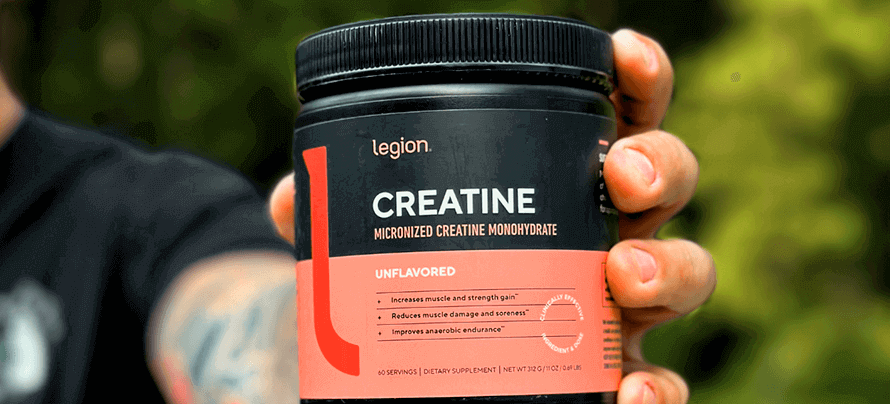
Creatine monohydrate on its own is the most thoroughly researched, reliably effective supplement you can take.
It improves strength, power, muscle growth, endurance, recovery, and more, and all these benefits have been replicated across hundreds of studies, in both men and women, beginners and experienced athletes.
Creatine doesn’t work synergistically with any supplement we know of, and you can take in a variety of forms:
- A plain, unflavored powder you can mix into smoothies, shakes, yogurt, oatmeal, and other foods (or take plain)
- A tasty, flavored powder that you can drink as a refreshing beverage.
- Gummies, which are delicious, portable, and pre-portioned.
- Capsules, which are easy to incorporate into your existing supplement regimen (just add a few capsules to your existing supplement stack).
- Or mixed with other ingredients to support muscle recovery, like Recharge.
And that means nearly everyone can benefit from taking creatine.
HMB, meanwhile, is also a valuable supplement—in the right context.
Research shows HMB may help reduce muscle damage and muscle breakdown, and possibly even support fat loss.
That makes it especially useful if you need extra help recovering from intense training, or during periods when muscle loss is more likely—while cutting, training fasted, or when you’re injured and unable to exercise, for example.
And if you happen to be in one of those situations—and you’re already taking creatine—using both together can make practical sense.
In that case, a creatine HMB product, or any multi-ingredient supplement with clinically effective doses of both, is the most convenient option.
What you shouldn’t expect, however, is HMB to make creatine more effective or vice versa. Each works on its own, and taking them together doesn’t make either one better.
FAQ #1: What does creatine with HMB do for you?
Creatine HMB is marketed as a combo that works synergistically to boost muscle growth and athletic performance more than creatine alone.
In reality, the research is inconsistent: sometimes it shows small benefits; other times nothing at all.
That said, taking them together can still make sense if you want the well-established benefits of creatine—greater strength, power, muscle growth, and faster recovery—along with HMB’s more situational benefits, such as reduced muscle damage or muscle loss when training is especially hard, when you’re cutting, or when you’re temporarily unable to train.
What you shouldn’t expect is the combination to make either supplement work better than it does on its own.
FAQ #2: What are the potential side effects of creatine and hmb?
Creatine is one of the safest, most well-studied supplements available. Some people experience stomach discomfort if they take a lot in a single dose, but serious side effects are almost unheard of.
HMB is also considered safe and well-tolerated, with few reported issues at standard doses.
FAQ #3: Is creatine HMB worth it?
The main benefit of creatine HMB is convenience. Taking both together lets you get the benefits of creatine and HMB in a single supplement instead of managing two separate products.
Creatine is beneficial for almost everyone. HMB, on the other hand, is most useful in situations where recovery is a bear or muscle loss is more likely—such as when dieting, training fasted, or during periods when you can’t exercise.
If you’re in one of those situations, a creatine-HMB product can make sense. Otherwise, creatine monohydrate on its own is usually all you need.
Want More Content Like This?
Check out these articles:
- The Protein Content Scam Hiding in Plain Sight on Supplement Labels (And It’s Not Just Amino Spiking)
- The Creatine Gummy Scandal: What You Need to Know
- Is Grass-Fed Whey Protein Powder a Scam?
Scientific References +
- Kaczka, Piotr, et al. “Mechanism of Action and the Effect of Beta-Hydroxy-Beta-Methylbutyrate (HMB) Supplementation on Different Types of Physical Performance - a Systematic Review.” Journal of Human Kinetics, vol. 68, 2019, pp. 211–222, www.ncbi.nlm.nih.gov/pubmed/31531146, https://doi.org/10.2478/hukin-2019-0070.
- Wilkinson, D J, et al. “Effects of Leucine and Its Metabolite β-Hydroxy-β-Methylbutyrate on Human Skeletal Muscle Protein Metabolism.” The Journal of Physiology, vol. 591, no. 11, 2013, pp. 2911–23, www.ncbi.nlm.nih.gov/pubmed/23551944/, https://doi.org/10.1113/jphysiol.2013.253203.
- Jówko, Ewa, et al. “Creatine and β-Hydroxy-β-Methylbutyrate (HMB) Additively Increase Lean Body Mass and Muscle Strength during a Weight-Training Program.” Nutrition, vol. 17, no. 7-8, July 2001, pp. 558–566, https://doi.org/10.1016/s0899-9007(01)00540-8. Accessed 27 Apr. 2021.
- Lukaski, H. C., et al. “Validation of Tetrapolar Bioelectrical Impedance Method to Assess Human Body Composition.” Journal of Applied Physiology, vol. 60, no. 4, 1 Apr. 1986, pp. 1327–1332, https://doi.org/10.1152/jappl.1986.60.4.1327. Accessed 26 Sept. 2019.
- Bergsma–Kadijk, Janneke A., et al. “Measurement of Body Fat in Young and Elderly Women: Comparison between a Four-Compartment Model and Widely Used Reference Methods.” British Journal of Nutrition, vol. 75, no. 5, May 1996, pp. 649–657, https://doi.org/10.1079/bjn19960170.
- Hubal, Monica J., et al. “Variability in Muscle Size and Strength Gain after Unilateral Resistance Training.” Medicine and Science in Sports and Exercise, vol. 37, no. 6, 1 June 2005, pp. 964–972, pubmed.ncbi.nlm.nih.gov/15947721/.
- Bamman, Marcas M., et al. “Cluster Analysis Tests the Importance of Myogenic Gene Expression during Myofiber Hypertrophy in Humans.” Journal of Applied Physiology, vol. 102, no. 6, June 2007, pp. 2232–2239, https://doi.org/10.1152/japplphysiol.00024.2007. Accessed 15 Nov. 2020.
- Fernández-Landa, Julen, et al. “Effect of the Combination of Creatine Monohydrate plus HMB Supplementation on Sports Performance, Body Composition, Markers of Muscle Damage and Hormone Status: A Systematic Review.” Nutrients, vol. 11, no. 10, 20 Oct. 2019, p. 2528, https://doi.org/10.3390/nu11102528. Accessed 8 June 2020.
- O’Connor, Donna M., and Melissa J. Crowe. “Effects of Six Weeks of β-Hydroxy-β-Methylbutyrate (HMB) and HMB/Creatine Supplementation on Strength, Power, and Anthropometry of Highly Trained Athletes.” The Journal of Strength and Conditioning Research, vol. 21, no. 2, 2007, p. 419, https://doi.org/10.1519/r-15974.1. Accessed 19 Aug. 2019.
- Zajac, Adam, et al. Effects of Creatine and HMß Supplementation on Anaerobic Power and Body Composition in Basketball Players. 1 Jan. 2003, www.researchgate.net/publication/255657129.
- Faramarzi, Brasil, et al. “Brazilian Journal of Biomotricity the EFFECT of SHORT -TERM COMBINATION of HMB (BETA-HYDROXY-BETA- METHYLBUTYRATE) and CREATINE SUPPLEMENTATION on ANAEROBIC PERFORMANCE and MUSCLE INJURY MARKERS in SOCCER PLAYERS.” Brazilian Journal of Biomotricity, vol. 3, 2009, pp. 366–375, www.redalyc.org/pdf/930/93012717009.pdf. Accessed 7 Feb. 2025.
- O’Connor, D. M., and M. J. Crowe. “Effects of Beta-Hydroxy-Beta-Methylbutyrate and Creatine Monohydrate Supplementation on the Aerobic and Anaerobic Capacity of Highly Trained Athletes.” The Journal of Sports Medicine and Physical Fitness, vol. 43, no. 1, 1 Mar. 2003, pp. 64–68, pubmed.ncbi.nlm.nih.gov/12629464/.
- Fernández-Landa, Julen, et al. “Effect of Ten Weeks of Creatine Monohydrate plus HMB Supplementation on Athletic Performance Tests in Elite Male Endurance Athletes.” Nutrients, vol. 12, no. 1, 2020, p. E193, www.ncbi.nlm.nih.gov/pubmed/31936727, https://doi.org/10.3390/nu12010193.
- Mangine, Gerald T., et al. “The Addition of β-Hydroxy β-Methylbutyrate (HMB) to Creatine Monohydrate Supplementation Does Not Improve Anthropometric and Performance Maintenance across a Collegiate Rugby Season.” Journal of the International Society of Sports Nutrition, vol. 17, no. 1, 27 May 2020, https://doi.org/10.1186/s12970-020-00359-4. Accessed 6 Apr. 2021.
- Kim, Daeho, and Jooyoung Kim. “Effects of β-Hydroxy-β-Methylbutyrate Supplementation on Recovery from Exercise-Induced Muscle Damage: A Mini-Review.” Physical Activity and Nutrition, vol. 26, no. 4, 31 Dec. 2022, pp. 041–045, https://doi.org/10.20463/pan.2022.0023. Accessed 9 Mar. 2023.
- Ramos-Hernández, Rafael, et al. “Combined Creatine and HMB Co-Supplementation Improves Functional Strength Independent of Muscle Mass in Physically Active Older Adults: A Randomized Crossover Trial.” GeroScience, 10 Oct. 2025, https://doi.org/10.1007/s11357-025-01889-y.
- Rathmacher, John A., et al. “International Society of Sports Nutrition Position Stand: β-Hydroxy-β-Methylbutyrate (HMB).” Journal of the International Society of Sports Nutrition, vol. 22, no. 1, 19 Dec. 2024, https://doi.org/10.1080/15502783.2024.2434734. Accessed 30 Jan. 2025.
- Burke, Ryan, et al. “The Effects of Creatine Supplementation Combined with Resistance Training on Regional Measures of Muscle Hypertrophy: A Systematic Review with Meta-Analysis.” Nutrients, vol. 15, no. 9, 1 Jan. 2023, p. 2116, www.mdpi.com/2072-6643/15/9/2116, https://doi.org/10.3390/nu15092116.
- Jaramillo, Arturo, et al. “Effectiveness of Creatine in Metabolic Performance: A Systematic Review and Meta-Analysis.” Cureus, vol. 15, no. 9, 15 Sept. 2023, www.ncbi.nlm.nih.gov/pmc/articles/PMC10503229/#REF19, https://doi.org/10.7759/cureus.45282.
- Delpino, Felipe M., et al. “The Influence of Age, Sex, and Type of Exercise on the Efficacy of Creatine Supplementation on Lean Body Mass: A Systematic Review and Meta-Analysis of Randomized Clinical Trials.” Nutrition, vol. 103, July 2022, p. 111791, https://doi.org/10.1016/j.nut.2022.111791.
- Chilibeck, Philip, et al. “Effect of Creatine Supplementation during Resistance Training on Lean Tissue Mass and Muscular Strength in Older Adults: A Meta-Analysis.” Open Access Journal of Sports Medicine, vol. 8, Nov. 2017, pp. 213–226, https://doi.org/10.2147/oajsm.s123529.
- van Someren, Ken A., et al. “Supplementation with β-Hydroxy- β-Methylbutyrate (HMB) and α-Ketoisocaproic Acid (KIC) Reduces Signs and Symptoms of Exercise-Induced Muscle Damage in Man.” International Journal of Sport Nutrition and Exercise Metabolism, vol. 15, no. 4, Aug. 2005, pp. 413–424, https://doi.org/10.1123/ijsnem.15.4.413.
- Panton, Lynn B, et al. “Nutritional Supplementation of the Leucine Metabolite β-Hydroxy-β-Methylbutyrate (Hmb) during Resistance Training.” Nutrition, vol. 16, no. 9, Sept. 2000, pp. 734–739, https://doi.org/10.1016/s0899-9007(00)00376-2.
- Cruz-Jentoft, A. J., et al. “Prevalence of and Interventions for Sarcopenia in Ageing Adults: A Systematic Review. Report of the International Sarcopenia Initiative (EWGSOP and IWGS).” Age and Ageing, vol. 43, no. 6, 21 Sept. 2014, pp. 748–759, https://doi.org/10.1093/ageing/afu115.
- Nissen, S., et al. “Effect of Leucine Metabolite β-Hydroxy-β-Methylbutyrate on Muscle Metabolism during Resistance-Exercise Training.” Journal of Applied Physiology, vol. 81, no. 5, 1 Nov. 1996, pp. 2095–2104, https://doi.org/10.1152/jappl.1996.81.5.2095.
- Engelen, Mariëlle P. K. J., and Nicolaas E. P. Deutz. “Is HMB an Effective Anabolic Agent to Improve Outcome in Older Diseased Populations?” Current Opinion in Clinical Nutrition and Metabolic Care, vol. 21, no. 3, 1 May 2018, pp. 207–213, www.ncbi.nlm.nih.gov/pmc/articles/PMC5882564/, https://doi.org/10.1097/MCO.0000000000000459. Accessed 24 Feb. 2021.
- Tinsley, Grant M, et al. “Time-Restricted Feeding plus Resistance Training in Active Females: A Randomized Trial.” The American Journal of Clinical Nutrition, vol. 110, no. 3, 3 July 2019, pp. 628–640, https://doi.org/10.1093/ajcn/nqz126.