You’re probably here because you want to get defined six-pack abs, and you’ve heard you need to train your obliques to achieve this.
I’ll explain the best exercises for training your obliques and how to put them into a workout, but before we get into that, it’s worth knowing the truth about getting a six-pack:
- You must lose body fat if you want to see your abs and obliques. No amount of oblique training will give you V-cut abs if your body fat percentage is too high. Get lean—that’s the only way your obliques will ever show.
- You don’t need dedicated ab exercises to get a six-pack, much less specific oblique exercises. That said, the idea that you should avoid training your obliques because it’ll make your waist look “blocky” is also misguided.
- For most people, the abs are sufficiently stimulated by compound exercises (squats, chin-ups, etc.) to get a six-pack. No direct ab work required.
All of that said, the abs (including the obliques) respond to strength training like any other muscle—by getting bigger and stronger. And training them directly can make them “pop” a little more.
The key point to understand is that ~90-to-95% of your oblique gains are going to come from a combination of heavy compound weightlifting and a few bread-and-butter ab exercises. Doing a few exercises specifically to target the obliques is what gets you those last few percentage points.
So, if you feel the juice of training your obliques is worth the six-pack squeeze, carry on.
Your obliques have three main jobs:
- Stabilizing your spine under load. And that’s why research shows they have to work hard during many compound exercises—squats, deadlifts, overhead presses, rows, etc—to prevent your torso from crumpling, twisting, or buckling under the weight.123 In other words, if your training routine is built around heavy compound weightlifting, you’ve already got most of your oblique training covered.
- Flexing your torso. In other words, pulling your chest toward your waist, just like every other ab exercise. This is why most ab exercises train your oblique muscles to some degree.
- Crunching and rotating your torso. Any movement that involves twisting or turning your torso will engage your obliques. Thus, if you want to emphasize your oblique muscles, it makes some sense to do at least one exercise like this (such as the oblique cable crunch). Just don’t get carried away.
The best oblique workouts center around a handful of exercises that force your obliques to produce high levels of tension. The good news is that most traditional ab exercises like cable crunches, weighted situps, and ab wheel rollouts, accomplish this. You don’t need a suite of special exercises specifically for the obliques, much less a whole workout.
That’s basically the formula I used to develop my obliques: a program built around heavy barbell compound weightlifting, a few well-chosen exercises that made it easy to progressively overload my obliques, and dieting down to single-digit body fat percentage.
Here’s how it turned out:
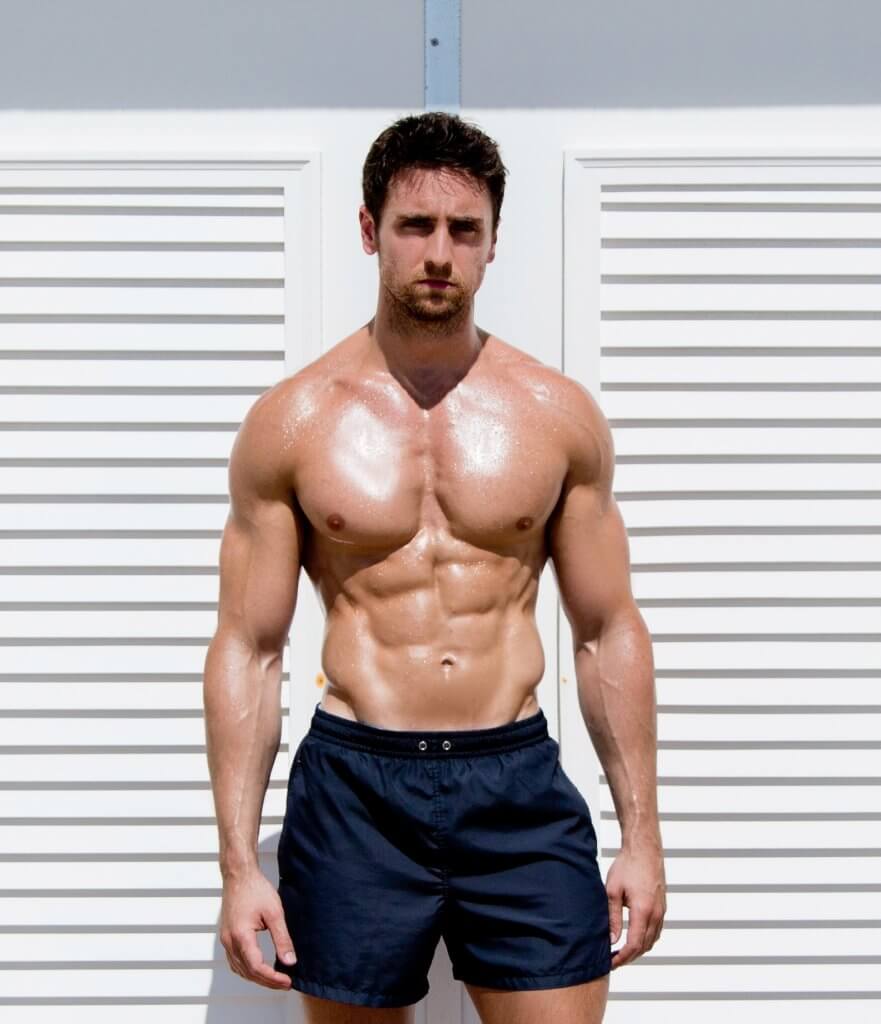
Now let’s get to the workout.
The Best Oblique Workouts for a Tapered, V-Cut Waist
Below is the best routine you can do to develop your obliques. It’s two short workouts—A and B—each done once per week.
The best way to schedule them is to tack them onto the end of two existing workouts on nonconsecutive days. For example, if you train Monday, Wednesday, and Friday, you could add Oblique Workout A to the end of Monday’s workout and Oblique Workout B to the end of Friday’s session.
Oblique Workout A
Legion Oblique Workout A
|
|

Oblique Workout B
Legion Oblique Workout B
|
|
Notes on the Workouts
Looking at these workouts, you might wonder if doing just two exercises per workout is enough. The answer is yes.
Remember, you’re doing this workout at the end of a session where you’ve already squatted, deadlifted, pressed, or rowed heavy weights. Your obliques have already done plenty of work stabilizing your spine and resisting rotation under those loads.
All that’s left is to train the functions compounds don’t cover—bringing your ribs toward your hips and rotating your torso—and a couple of weighted exercises is all you need to do it.
To get results, two more things matter: intensity and progression.
To ensure you’re training intensely enough, finish most sets 0–2 reps shy of failure—the point where you couldn’t do another rep with good form despite giving your all. To gauge whether you’re reaching this point, ask yourself at the end of each set, “How many more reps could I have done?”
If the answer is more than two, add weight or reps in the next set.
Frankly, it’s fine to take ab exercises to failure on most sets. Yes, it’s uncomfortable, but it ensures you’re truly pushing yourself (most people hold back more than they realize), and it’s almost impossible to “overtrain” your abs. Just make sure your form doesn’t slip, especially on exercises like the weighted situp.
To keep progressing, use the following strategy (double progression):
If your workout calls for 10–20 reps of the cable crunch and you complete 20 reps in a set, increase the weight by 5 pounds for your next set. If the new weight is so challenging that you can’t complete at least 10 reps in subsequent sets, reduce the load by 5 pounds to stay in the 10–20 rep range.
The 5 Best Oblique Exercises
The routine above really is all that’s required to develop standout obliques, so you never need to do anything different. That said, doing the same exercises for months on end can get tedious, so you might want to swap in alternatives occasionally to keep your training fresh.
For that reason, the list below includes the four exercises from the workout plus one alternative that works well as a substitute. Just don’t stray far from this list—anything outside it is significantly less effective.
1. Cable Crunch
Why: The cable crunch trains your oblique muscles through a full range of motion, keeps constant tension on the muscles throughout each rep, and allows you to incrementally add weight over time. These three attributes make the cable crunch one of the single best oblique exercises you can do.
How to:
- Set the pulley to the highest position, attach a rope handle, and grip it with both hands.
- Kneel facing the machine and hold the rope at your forehead, with your hips bent slightly so there’s tension on the cable.
- Crunch your torso down toward your thighs by contracting your abs, keeping your hips and arms stable.
- Reverse the movement and return to the starting position.
Expert Tip: Keep your hips and knees locked in the same position throughout each rep. If you bend or straighten them as you crunch, your hip flexors and glutes start helping with the movement, which makes the exercise easier for your obliques.
2. Oblique Cable Crunch
Why: The oblique cable crunch is the same exercise as the standard cable crunch with one key difference: as you crunch down, you also rotate your torso to bring one elbow toward your opposite knee. That rotation puts the obliques to work in a different way—they’re the muscles primarily responsible for twisting your torso, so adding the twist trains them with a movement the standard cable crunch doesn’t.
Like the standard cable crunch, it’s easy to progress with more weight over time, which makes it one of the most effective oblique exercises you can do.
How to:
- Set the pulley to the highest position, attach a rope handle, and grip it with both hands.
- Kneel facing the machine and hold the rope at your forehead, with your hips bent slightly so there’s tension on the cable.
- Crunch your torso down and rotate to the left, bringing your right elbow toward your left knee.
- Reverse the movement and return to the starting position, then repeat on the opposite side, bringing your left elbow toward your right knee.
- Continue alternating sides until you complete the desired number of reps.
Expert Tip: Don’t try to over-rotate. You only need to bring your elbow to (or near) the opposite knee—going further than that doesn’t train your obliques any better, forces you to use lighter weights, and can throw off your balance.
3. Decline Weighted Situp
Why: Like the cable crunch, the decline weighted situp trains your obliques (and the rest of your abs) through a full range of motion and allows you to incrementally add weight over time. Some people also find it more comfortable than the cable crunch and feel it better targets all the muscles of the core.
The main downside is that the exercise is relatively easy at the top of the movement (when your chest is closest to your knees) and much more difficult when you’re leaning back, but it’s still better than most exercises in this regard.
How to:
- Lie on your back on a decline bench, locking your legs into the pads.
- Pick up a dumbbell or weight plate (I prefer a dumbbell) and hold it across your chest. Use whatever grip you like.
- Sit up by contracting your abs and bringing your torso toward your knees.
- Finish with your torso perpendicular to the floor.
- Reverse the movement and return to the starting position.
Expert Tip: Keep a firm grip on the weight and make sure you don’t let it slide down your chest—this makes the exercise easier and less effective. Instead, keep it positioned as high on your chest as you comfortably can, just below your chin.
4. Ab-Wheel Rollout
Why: The ab wheel rollout trains your entire core—including your obliques—isometrically.4 As you roll forward, your obliques have to fight the urge to let your torso twist or your lower back collapse, and as you roll back, they help pull your body in.
Although bodyweight exercises generally aren’t as effective as weighted exercises, the ab-wheel rollout is actually one of the most demanding oblique exercises you can do. Ab wheels are also simple, inexpensive, and found in most gyms, making them a practical option for almost any training setup.
How to:
- Kneel on a mat and grip the ab wheel’s handles directly below your shoulders.
- Roll the wheel forward, stopping just before your hips drop or your lower back arches.
- Reverse the movement and return to the starting position.
Expert Tip: Do the movement smoothly. If you find yourself jerking the wheel back and forth, make the exercise easier by not extending the wheel as far forward. To make the exercise harder, you can a) allow the wheel to roll farther forward, b) raise your knees off the floor so you’re balancing on your toes, c) elevate your feet a few inches off the ground d) slow down the movement so you expose your abs to more time under tension.
5. Captain’s Chair Leg Raise
Why: The main benefits of the captain’s chair leg raise are that it’s convenient—most gyms have one—and challenging for a bodyweight exercise. Most people can only do about 8–10 strict reps per set. This means it produces a high level of tension despite being harder to progress than something like a cable crunch.
How to:
- Position yourself in the captain’s chair with your forearms on the pads, your hands gripping the handles, and your legs hanging straight down.
- Keeping your legs straight, curl your pelvis upward and lift your legs in front of you.
- Reverse the movement and return to the starting position.
Expert Tip: If you’re not strong enough to lift your legs when they’re perfectly straight, it’s fine to start with a slight bend in your knees. Over time, work toward straightening your legs to gradually increase the resistance. If the regular captain’s chair leg raise feels too easy, you can also add weight by using ankle weights or pinching a small dumbbell between your feet, but this becomes impractical with anything other than relatively light weights.
Supplements to Support Your Oblique Workouts
You don’t need supplements to develop your obliques. That said, the right ones can make the process easier. Here are three worth considering:
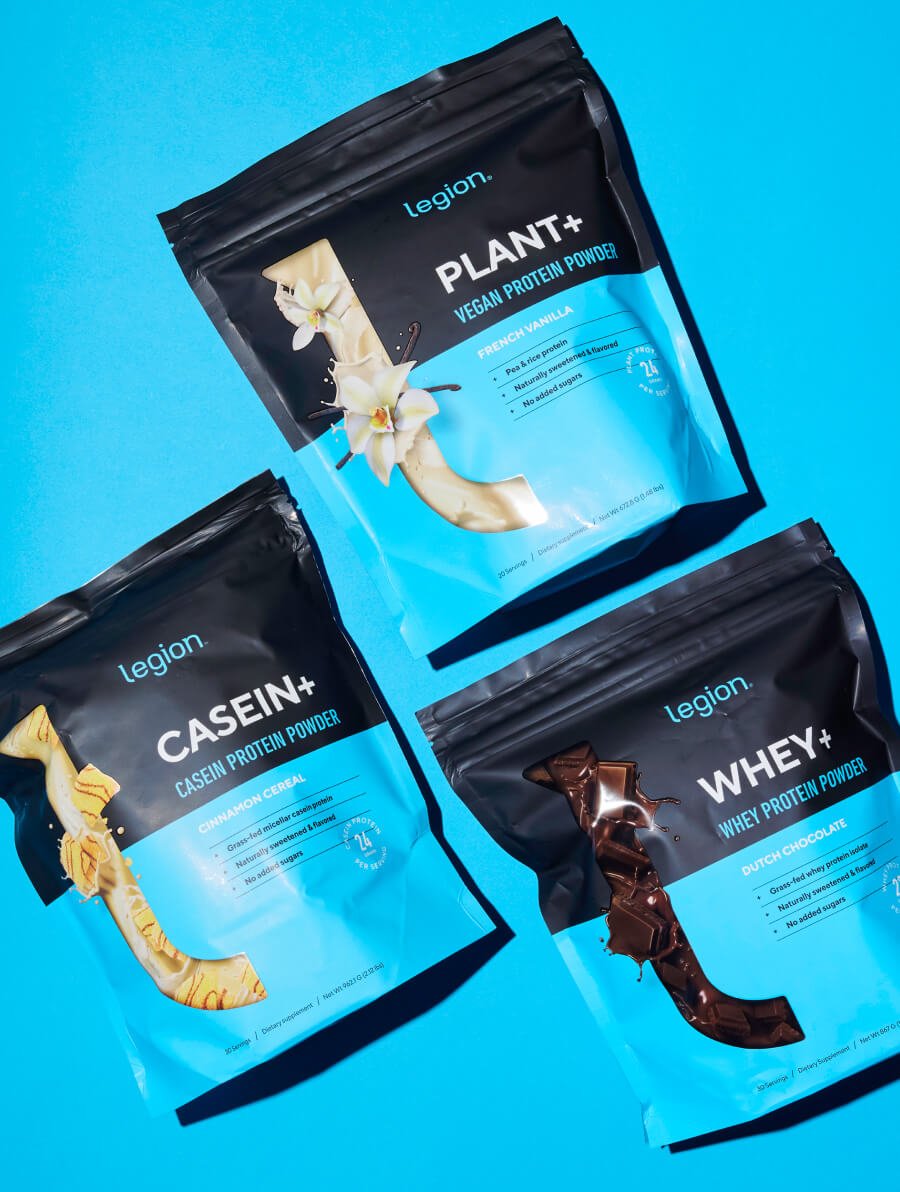
- Protein powder: Eating enough protein is essential for building muscle. Protein powders like Whey+, Casein+ and Egg+ make hitting your target easier.
- Creatine: Creatine boosts muscle and strength gain, improves anaerobic endurance, and reduces muscle damage and soreness. For a natural source of creatine, try Legion’s creatine monohydrate powder, creatine gummies, creatine capsules, or post-workout Recharge.
- Fat Burner: Effective fat burners contain ingredients that boost the number of calories you burn and reduce hunger and cravings, making weight loss more straightforward.
Want even more specific supplement advice? Take the Legion Supplement Finder Quiz to learn exactly what supplements are right for you.
Want More Content Like This?
Check out these articles:
- The Best Ab Workout for Women (According to Science)
- How Long Does It Take to Get Six-Pack Abs?
- How to Get a Six Pack: Tips, Exercises & FAQs
Scientific References +
- ↩ Hamlyn N, Behm DG, Young WB. Trunk muscle activation during dynamic weight-training exercises and isometric instability activities. J Strength Cond Res. 2007;21(4):1108-1112.
- ↩ Snarr RL, Esco MR. Comparison of Core Muscle Activation between a Prone Bridge and 6-RM Back Squats. Int J Exerc Sci. 2018;11(1):585-592. PMCID: PMC6006542.
- ↩ Nesser TW, Fleming N, Gage MJ. Activation of Selected Core Muscles during Pressing. Int J Kinesiol Sports Sci. 2015;3(4):56-61.
- ↩ Escamilla RF, Lewis C, Bell D, et al. Core muscle activation during Swiss ball and traditional abdominal exercises. J Orthop Sports Phys Ther. 2010;40(5):265-276.