
Many people want to take pre-workout on an empty stomach.
Maybe they like to train early in the morning before breakfast so they don’t feel full and uncomfortable during their workout. Or maybe they’re heading to the gym after work and haven’t eaten in a while.
Still, many worry it’s a bad idea to take stimulants and other performance-enhancing ingredients without eating first.
They’re concerned it might upset their stomach or make them feel nauseous, lightheaded, or anxious.
The truth is most people can take pre-workout on an empty stomach without issue. That said, it tends to make the effects feel stronger—for better or worse.
In this article, you’ll learn when taking pre-workout on an empty stomach makes sense, when it doesn’t, and how to do it safely.
Key Takeaways
- Most people can take pre-workout on an empty stomach without problems.
- Taking pre-workout without food usually makes it kick in faster and feel stronger because ingredients like caffeine are absorbed more quickly.
- While this can boost energy and focus, it can also increase the chances of jitters, nausea, or stomach discomfort in people sensitive to stimulants.
- Taking pre-workout on an empty stomach tends to work best for people who already tolerate caffeine well and prefer training before their first meal.
- If it makes you feel nauseous, shaky, or lightheaded, taking pre-workout with a small snack instead usually solves the problem. Or if you’d prefer to avoid stimulants altogether, take a stimulant-free pre-workout like stim-free Pulse.
Table of Contents
+
Can You Take Pre Workout on an Empty Stomach?
Yes—you can take pre-workout on an empty stomach.
For most people, it works just fine, especially before an early morning workout when eating first feels inconvenient or uncomfortable.
That said, if you take pre-workout without food, you’ll usually feel its effects sooner and stronger. That can be a good thing if you want a quicker boost in energy and focus, but it can also be a downside if you’re sensitive to stimulants or prone to stomach issues.
In other words, taking pre-workout on an empty stomach isn’t inherently bad. It just tends to amplify the experience—for better or worse.
Here’s a simple way to think about it:
If your pre-workout is well formulated (no mega doses of stimulants), your caffeine tolerance is decent, and your stomach handles supplements well, taking it without food is often no problem.
If you’re new to pre-workout, sensitive to caffeine, or you’ve had issues with nausea, jitters, or feeling “off” during training, taking it on an empty stomach is more likely to cause problems.
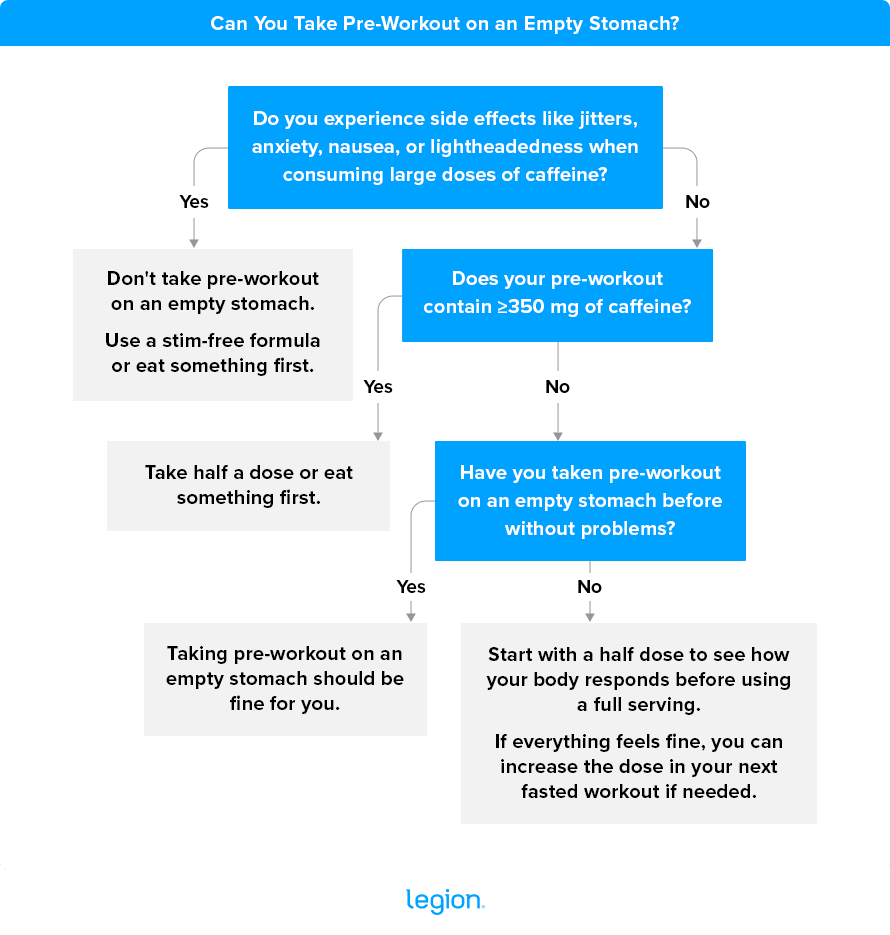
Quick Test: Should You Take Pre-Workout on an Empty Stomach?
Use this quick test to see whether taking pre-workout on an empty stomach is likely to work well for you.
Benefits of Taking Pre Workout on an Empty Stomach
The main benefit of taking pre-workout on an empty stomach is that you’ll usually feel its effects faster and more strongly.
Without food slowing digestion, studies show that ingredients like caffeine can enter your bloodstream more quickly, which means the boost in energy and focus tends to kick in sooner.
For many people, this is especially helpful before early morning workouts when they want to wake up and get moving quickly.
Some people also simply prefer training without eating first.
A full stomach can make heavy strength training uncomfortable, so many lifters work out before their first meal of the day. In those cases, taking pre-workout on an empty stomach can help you feel more alert and ready to train.
Of course, the same faster absorption that makes pre-workout feel stronger can also increase the chance of side effects—which we’ll look at next.
Downsides of Taking Pre Workout on an Empty Stomach
The main downside of taking pre-workout on an empty stomach is that side effects tend to feel stronger.
Because the effects are stronger without food, stimulants like caffeine can hit harder than they would if you’d eaten beforehand. For some people, that can lead to shakiness or stomach discomfort.
This is especially common if you’re sensitive to stimulants or if your pre-workout contains large doses of caffeine (more than 350 mg) and other stimulatory ingredients.
Some people also find that supplements simply don’t sit well on an empty stomach. Without food to buffer them, certain ingredients can upset the stomach and make you feel lightheaded or uneasy during training.
None of this means taking pre-workout on an empty stomach is unsafe—it just might not suit you.
If you notice nausea, shakiness, or stomach upset when you do it, that’s usually a sign you’d feel better taking your pre-workout with a small snack or meal instead.
Who Should Take Pre Workout on an Empty Stomach?
Taking pre-workout on an empty stomach usually works best for people who already know how their body responds to it.
If you’ve used pre-workout before, tolerate caffeine well, and don’t usually get nauseous or jittery from stimulants, taking it without food may be perfectly fine.
It can also make sense if you prefer training before your first meal of the day. Many people don’t want to eat before an early workout, either because they’re short on time or because lifting with food in their stomach feels uncomfortable.
In other words, if stimulants agree with you and you prefer training fasted, taking pre-workout on an empty stomach will usually work just fine.
Who Should Avoid Taking Pre Workout on an Empty Stomach?
Taking pre-workout on an empty stomach doesn’t work well for everyone.
If you’re sensitive to caffeine or stimulants, taking it without food may make the effects feel too strong. That can lead to feeling lightheaded, uneasy, or wired.
You may also want to avoid it if you’ve previously felt sick or shaky after taking supplements without eating first. Some people simply tolerate stimulants better when they’ve had at least a small amount of food.
If you fall into any of these categories, you’ll probably feel better taking your pre-workout with a small meal or snack instead.
How to Take Pre Workout on an Empty Stomach Safely
If you want to take pre-workout on an empty stomach, a few simple adjustments can help reduce the chances of side effects and make the experience smoother.
Dose
Start with a smaller dose than you normally would—especially if you haven’t tried it this way before.
Because stimulants are absorbed more quickly without food, the same amount of pre-workout can feel stronger than usual. Beginning with a half dose lets you see how your body responds before using a full serving.
If everything feels fine, you can increase the dose in your next fasted workout if needed.
Timing
Take your pre-workout about 30 minutes before a fasted workout.
This ensures the ingredients kick in around the time you start training.
Use a Stim-Free Pre-Workout
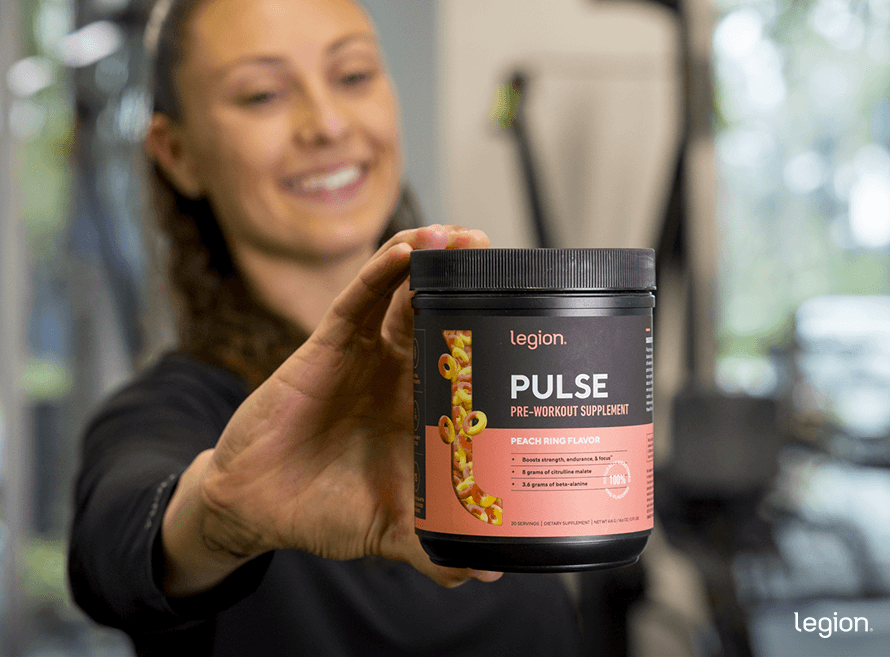
If stimulants tend to make you feel nauseous, jittery, or lightheaded on an empty stomach, another option is to use a stimulant-free pre-workout, like stim-free Pulse.
These formulas contain ingredients that support performance—such as citrulline, beta-alanine, and betaine—but don’t include caffeine or other stimulants.
Because of this, they’re often easier to tolerate without food while still helping improve workout performance.
The Bottom Line on Pre Workout on an Empty Stomach
You can take pre-workout on an empty stomach, and many people do—especially before early morning workouts. The main difference is that it usually kicks in faster and feels stronger because there’s no food slowing absorption.
For some people, that’s helpful. For others, it can cause jitters or stomach discomfort. If you tolerate stimulants well, it’s often fine. If not, taking pre-workout with a small snack may work better.
FAQ #1: What happens if you don’t eat before pre-workout?
If you take pre-workout without eating first, you’ll usually feel its effects sooner and more strongly. That’s because there’s no food slowing digestion, so stimulants like caffeine enter your bloodstream more quickly.
For some people, this means a faster boost in energy and focus. For others—especially those sensitive to stimulants—it can increase the chances of jitters, upset stomach, or nausea.
FAQ #2: Is pre-workout hard on your stomach?
Pre-workout isn’t usually hard on your stomach, but some people find it uncomfortable—especially when taken on an empty stomach.
Without food to buffer them, certain ingredients (particularly stimulants) may upset your stomach or make you feel nauseous or lightheaded. If this happens to you, taking pre-workout with a small snack or meal often helps.
FAQ #3: What happens if you take pre-workout in the morning?
Taking pre-workout in the morning is common, especially before early workouts.
Many people take it soon after waking up to feel more alert and energized before training. If you take it without eating first, the effects may kick in faster and feel stronger, which can be helpful for some people but too intense for others.
Want More Content Like This?
Check out these articles: