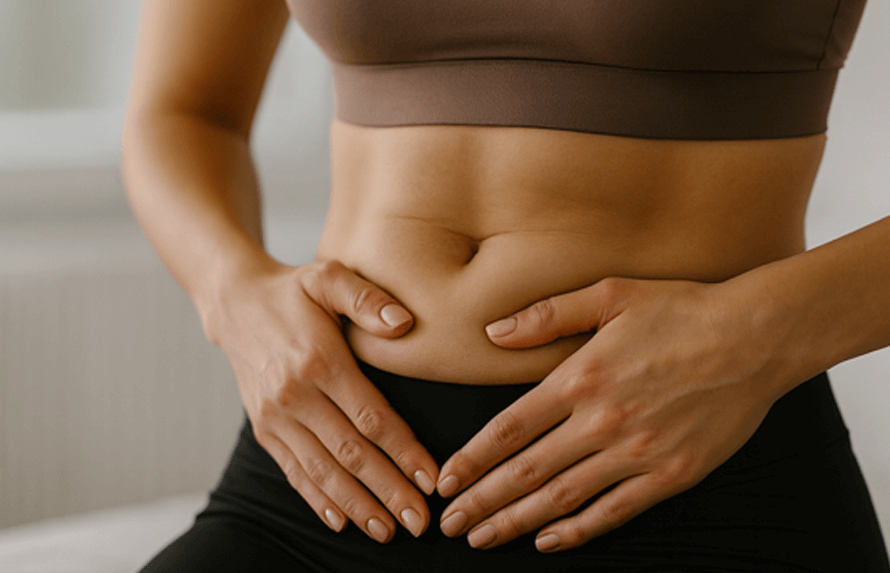
Most people try to get rid of a FUPA by hammering their abs—planks, crunches, leg raises, Pilates pulses, anything that “targets the lower belly.”
Here’s the truth: none of that works.
A FUPA isn’t a muscle problem. It isn’t a core-strength problem. And it’s not something you can “tone” away with a list of special lower-ab exercises.
It’s a fat-loss problem.
A biology problem.
A “your body stores fat in places you don’t like” problem.
Once you understand why this area is so stubborn—and what actually moves the needle—you can finally stop wasting time and start seeing progress.
This guide cuts through every myth and tells you exactly how to shrink a FUPA the fastest, healthiest, and most predictable way possible.
Key Takeaways
- A FUPA (“fatty upper pubic area”) is fat stored around the lower belly and pubic area.
- You can’t spot reduce FUPA fat with ab exercises—fat loss comes from maintaining a calorie deficit.
- Pubic fat is more stubborn because of genetics, hormones, and receptor differences in the fat cells, so it’s often one of the last places to lean out.
- The fastest, most reliable way to shrink a FUPA is to do compound exercises, stay in a moderate calorie deficit, eat enough protein, and do regular cardio.
- You don’t need supplements to get rid of a FUPA, but caffeine, yohimbine, and a fat burner can accelerate your progress.
Table of Contents
+
What Is a FUPA?
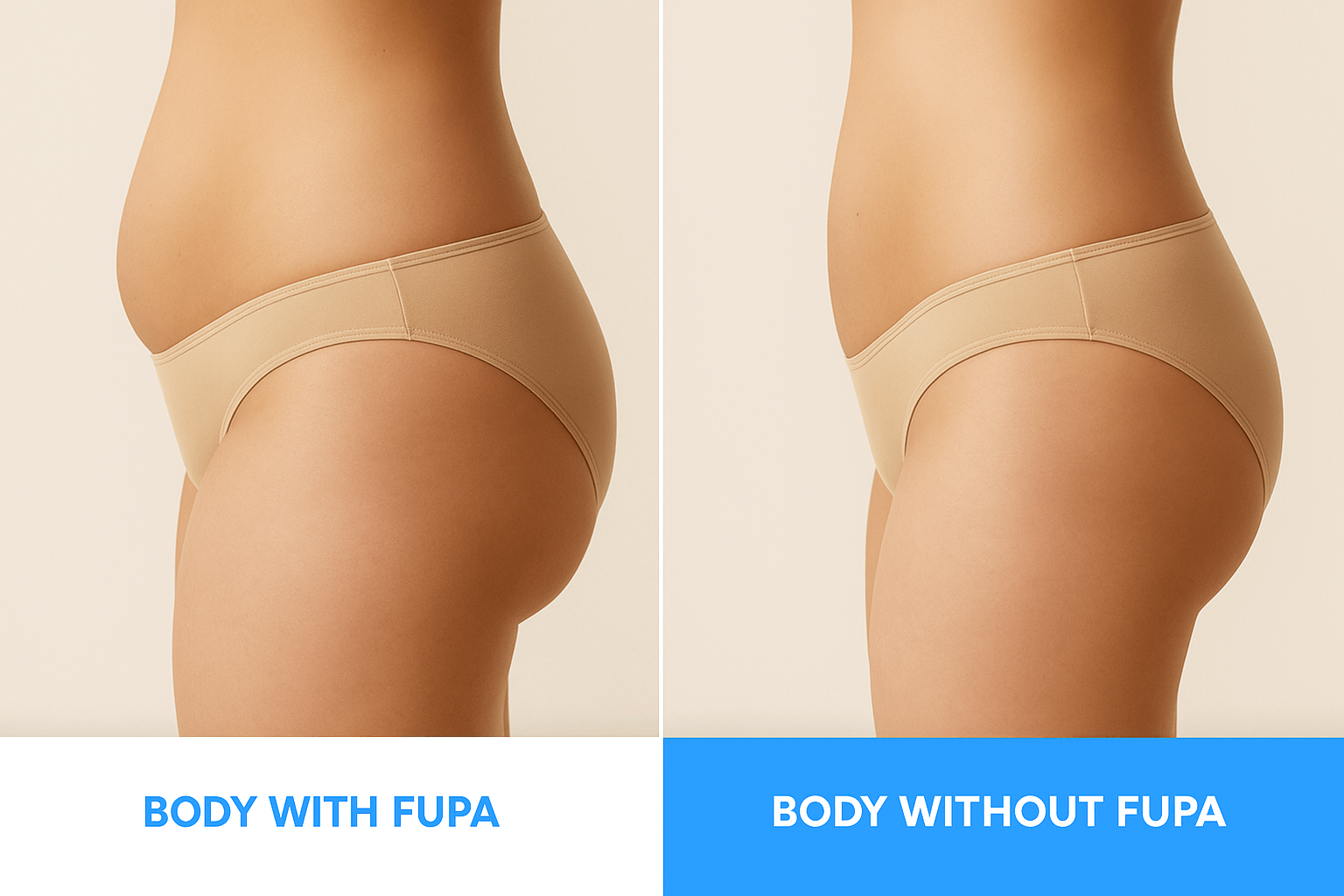
FUPA stands for “fatty upper pubic area” and it’s a slang term to describe a visible pad of fat that sits over the pubic bone at the bottom of your abdomen. The medical term for a FUPA is panniculus.
Some people only notice it when they sit down or bend forward. For others, it’s visible even when they’re standing tall. And for many, it feels out of proportion with the rest of their body—especially if they’re relatively lean elsewhere.
Here’s how it looks:
Why Your Lower Belly Stores More Fat Than the Rest of Your Upper Body
Some of the biggest reasons your FUPA seems “extra” compared to the rest of your abdomen include:
- Genetics: Research shows that up to 70% of body fat distribution is determined by genes. Some people store more in their upper body, some in their hips and thighs, and some in their lower belly and pubic area. You can’t change that pattern, only the overall amount of fat you carry.
- Hormones: Low levels of hormones like estrogen can cause your body to store more fat around the belly instead of the hips and thighs and make losing fat in general more challenging.
- Posture and muscle tone: If your pelvis tilts backward so that the back of your pelvis is lower than the front when viewed from the side, your lower abdomen can protrude forward, making a FUPA stand out more.
None of this means you’re stuck with it forever—but it does explain why this area tends to fight back harder than you’d like.
Can You Target FUPA Fat Directly, or Is Spot Reduction a Myth?
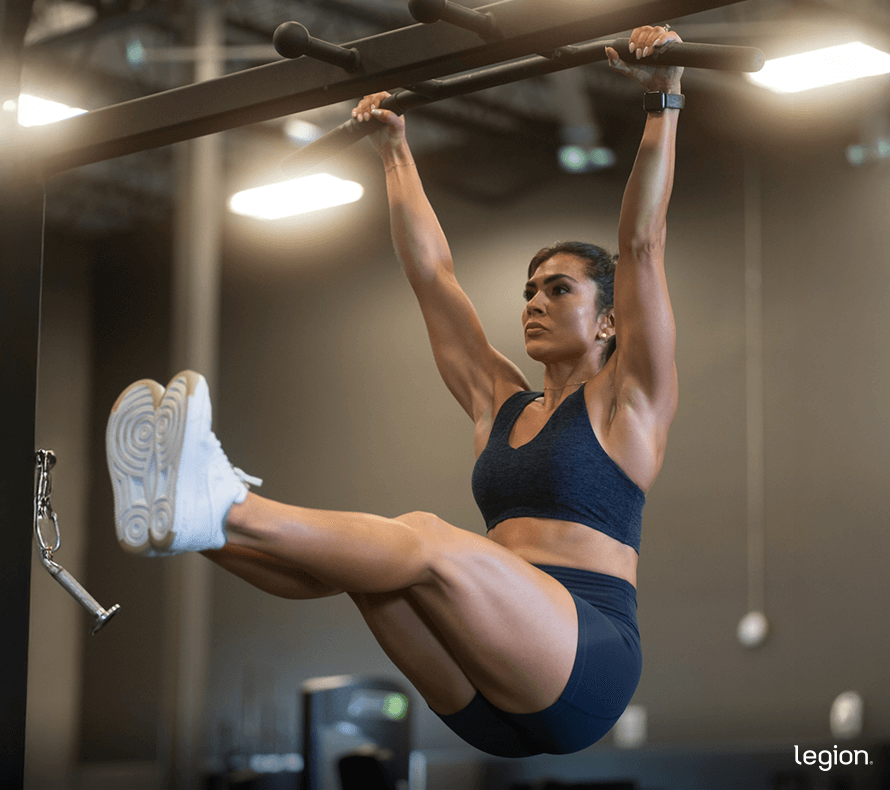
Many guides to getting rid of a FUPA recommend training your abs with exercises like planks, crunches, and “the hundred.” The thinking is that these exercises will get rid of your FUPA for good.
But the research shows you can’t burn fat from one area by training the muscles underneath it.
In fact, trying to get rid of a FUPA by taking this approach can make matters worse by increasing the size of the muscles underneath, which may make your FUPA stand out more.
What should you do instead?
Two things:
- Do exercises that burn the most calories: They raise your energy expenditure, which helps create the calorie deficit needed to lose a FUPA.
- Build full-body muscle: A muscular body burns more calories resting and moving than a similarly-sized fat one. Muscle also supports good metabolic health, which is vital for maintaining a healthy body fat percentage, and it even alters the expression of certain genes that accelerate fat burning.
Why Lower-Belly and Pubic Fat Often Feels Extra Stubborn
FUPA fat is often the last to change when dieting because the fat cells in this area have more alpha-receptors, which slow fat release, and fewer beta-receptors, which speed it up, than fat cells elsewhere on your body.
That makes the lower belly naturally slower to lean out than other areas.
It’s not a sign you’re doing anything wrong—you simply have to stay consistent long enough for your body to tap into these harder-to-access fat stores.
Another reason it feels stubborn: most people still have more total body fat than they think when they start worrying about their FUPA. Getting leaner overall usually shrinks it far more than expected.
How to Get Rid of FUPA with Exercise
To maximize the fat-burning and muscle-building effects of strength training, focus on the following:
- Compound exercises: Compound exercise, such as the squat, deadlift, push-up, and shoulder press, train multiple muscle groups simultaneously. Studies show that compound exercises produce the greatest increases in metabolic rate, muscle mass, and strength, which is why they’re the best type of exercise to get rid of a FUPA.
- Heavy weightlifting: Lifting heavy weights is the most practical and reliable way to get stronger. And because getting stronger is one of the main drivers of long-term muscle growth, lifting heavier weights helps you build the muscle needed to improve your metabolism and lose fat more effectively.
- Progressive overload: The best way to build muscle and, thus, maximize the fat-burning effects of weightlifting is to strive to add weight or reps to every exercise in every workout. This is known as progressive overload, and it’s the single most important driver of muscle growth.
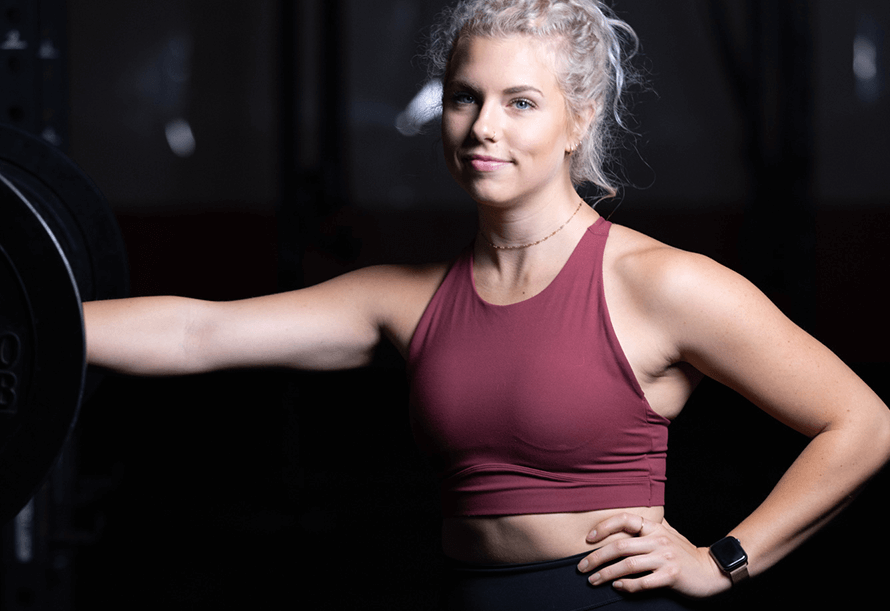
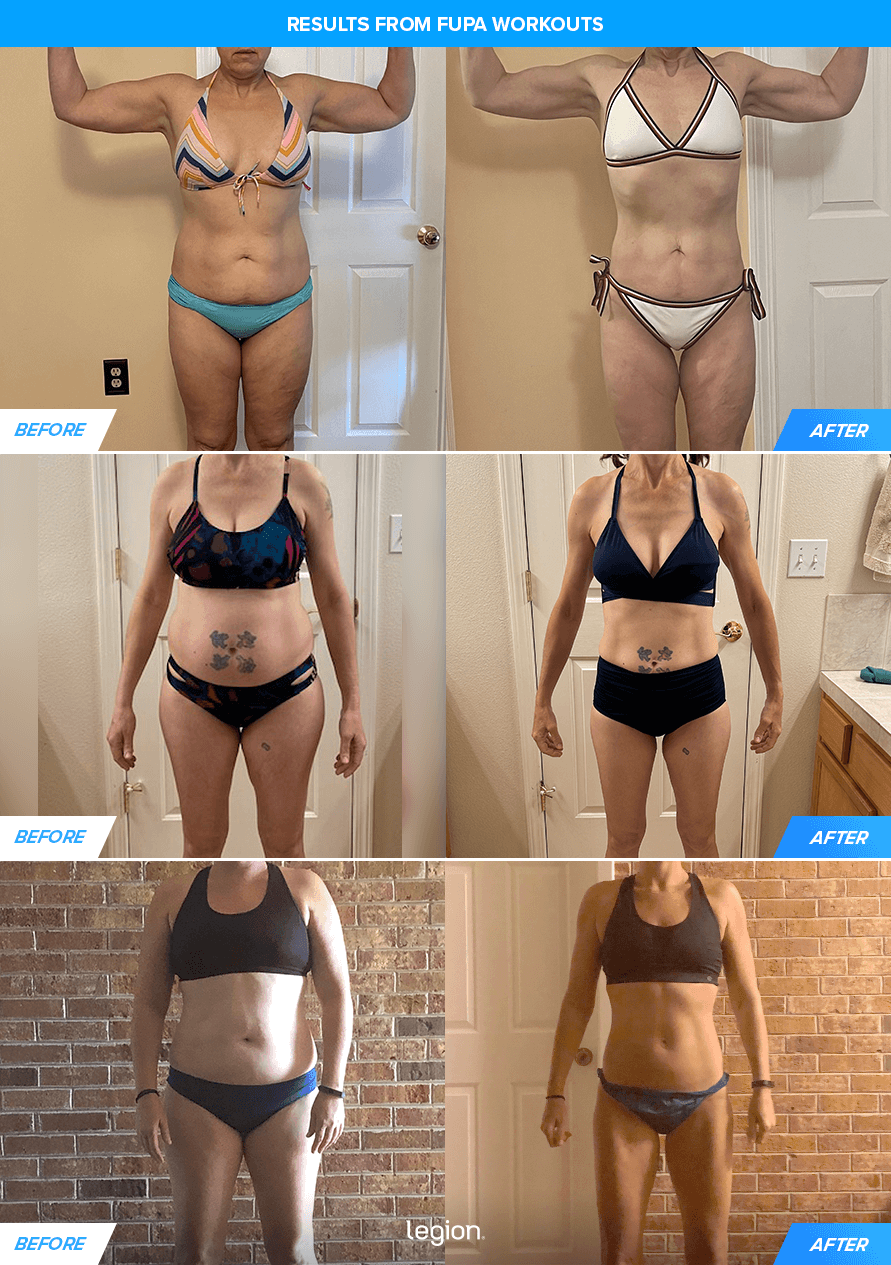
This is the approach these women on Legion’s body transformation coaching program used and the results speak for themselves:
Now let’s discuss the best FUPA exercises . . .
The Best FUPA Exercises
You can use plenty of exercises to tighten and reshape your lower belly area, but the following moves deliver results fastest.
Work these exercises into your routine consistently, and you’ll notice your lower belly—and the rest of your body—start to change.
Bodyweight Squat
Why: Bodyweight squats train several large lower-body muscles at once, which is ideal for increasing calorie burn. They’re also easy to learn, making them great for beginners.
How to:
- Stand with your feet slightly wider than shoulder-width apart, toes turned slightly out.
- Sit straight down by pushing your hips backward and bending your knees at the same time.
- Stand up and return to the starting position.
READ MORE: Dumbbell Squat: Variations, Form & Benefits
Goblet Squat
Why: Adding weight to the squat helps increase overall strength gain and supports the full-body fat loss you need to reduce a FUPA.
How to:
- Hold a dumbbell in front of your chest with both hands.
- Stand with your feet slightly wider than shoulder-width apart, toes turned slightly out.
- Sit straight down by pushing your hips backward and bending your knees at the same time.
- Stand up and return to the starting position.
READ MORE: Goblet Squat: Form, Form, Muscles Worked, & Common Mistakes
Dumbbell Deadlift
Why: Deadlifts work big muscle groups like the hamstrings, glutes, and back, which increases overall calorie burn and supports better long-term fat loss.
How to:
- Stand upright holding a dumbbell in each hand, palms facing your thighs.
- Push your hips backward, bend at the knees, and arch your lower back slightly.
- Bend your knees slightly more as the dumbbells pass them, lowering until they’re 6–8 inches from the floor.
- Reverse the movement and return to the starting position.
READ MORE: How to Do the Dumbbell Deadlift with Proper Form
Dumbbell Romanian Deadlift
Why: Dumbbell Romanian deadlifts train all the muscles on the back of your body. Because these muscles are so large, training them contributes meaningfully to your daily energy expenditure.
How to:
- Stand upright holding a dumbbell in each hand, palms facing your thighs.
- Push your hips backward and arch your lower back slightly.
- When you feel a stretch in your hamstrings, bend your knees slightly, and keep lowering the dumbbells until your back begins to round.
- Reverse the movement and return to the starting position.
READ MORE: How to Do the Romanian Deadlift: Form, Benefits, and Variations
Push-up
Why: Push-ups strengthen and develop several upper-body muscles, such as the chest, shoulders, triceps, and core. Gaining upper-body muscle helps balance out a bottom-heavy physique, creating a more proportional look.
How to:
- Start in a high plank with your hands slightly wider than shoulder-width.
- Lower your chest toward the floor by bending your elbows.
- Reverse the movement and return to the starting position.
READ MORE: How to Do the Push-up: Form, Variations, and Workouts
One-Arm Dumbbell Row
Why: Rows train several large muscle groups in your back, which makes them perfect for offsetting a bottom heavy frame and aiding weight loss by increasing overall calorie burn.
How to:
- Hold a dumbbell in your right hand.
- Plant your left knee and arm firmly on a bench, your right foot on the floor a foot or two from the bench, and let your right arm hang straight down.
- Keeping your back straight, pull the dumbbell up until it touches your torso, and then return it to the starting position.
- Once you’ve completed the desired number of reps, repeat the process with your left arm.
READ MORE: How to Do the Bent-Over Dumbbell Row
Standing Dumbbell Shoulder Press
Why: Shoulder presses develop your delts and triceps, adding shape and width to your upper body. This helps visually offset lower-body fat storage and makes your physique look more proportional as you get leaner.
How to:
- Stand upright holding a dumbbell in each hand.
- Bring the dumbbells up to shoulder height with your palms facing away.
- Press the dumbbells overhead.
- Reverse the movement and return to the starting position.
READ MORE: How to Perfect the Seated Dumbbell Shoulder Press
Sample Full-Body FUPA Workout
There are plenty of ways to build a FUPA-focused workout, but a simple and effective structure is to start with a squat variation, move to a deadlift variation, then do a pressing exercise, and finish with a row.
This lets you train your entire body in one session, hit all the major muscle groups, and create the kind of training stimulus that supports overall fat loss.
Here’s what that might look like in practice:
- Goblet Squat: 3 sets | 12–15 reps | 2–3 min rest
- Dumbbell Deadlift: 3 sets | 12–15 reps | 2–3 min rest
- Standing Dumbbell Shoulder Press: 3 sets | 12–15 reps | 2–3 min rest
- One-Arm Dumbbell Row: 3 sets | 12–15 reps | 2–3 min rest
How Often Should You Do FUPA Workouts?
For best results, do the FUPA workout above (or a similar variation) 2–3 times per week on non-consecutive days. For instance, you could do it on Mondays, Wednesdays, and Fridays.
Cardio and Daily Movement for Losing FUPA Fat Fast
If you want to get rid of your pubic fat as quickly as possible, research shows that combining strength training and cardio is better for fat loss than doing either alone.
Here’s what I recommend:
- Do 2–3 sessions of low- or moderate-intensity cardio workouts per week (e.g., walking, swimming, or rucking) for 20–60 minutes each.
- Do one HIIT workout weekly if you enjoy it.
- Limit total cardio to 2–3 hours weekly.
- Do cardio and weightlifting on separate days if possible. If you have to do both in one day, lift first and separate the sessions by at least 6 hours.
And if you want to learn more about how to combine strength training and cardio, check out this article:
Concurrent Training: The Right Way to Combine Cardio and Strength Training
Nutrition Tips for Losing FUPA
Strength training builds muscle and boosts calorie burn, but your diet is what ultimately determines whether that stubborn lower-belly fat comes off.
The good news?
Losing fat doesn’t require extreme dieting or cutting out all your favorite foods. Here’s a simple three-step approach that makes fat loss—including FUPA fat—far more manageable:
Calories
Research shows that eating 20–25% fewer calories than you burn every day is the sweet spot for losing fat quickly without feeling miserable, losing muscle, or dealing with ravenous hunger.
This moderate deficit is big enough to produce weekly progress but small enough to maintain for several months—which is usually what’s needed for stubborn areas like the FUPA to lean out.
Macros
No matter your calorie goal, aim for:
- About 1 gram of protein per pound of body weight per day
- Around 20–30% of your daily calories from fats
- The rest of your daily calories from carbs
This balance supports muscle growth, performance, and overall health.
To learn more about how to calculate your macros, check out this article:
How to Calculate Your Macros for Weight Loss & Muscle Gain
Supplements
You don’t need supplements to lose a FUPA, but the right ones can make the process faster and more comfortable.
- Caffeine: 3–6 mg of caffeine per kilogram of body weight per day increases metabolic rate and helps you train harder while dieting.
- Yohimbine: 0.1–0.2 milligrams of yohimbine per kilogram of body weight before fasted training enhances fat loss.
- Fat Burner: Effective fat burners contain ingredients that boost the number of calories you burn and reduce hunger and cravings, making weight loss more straightforward.
And if you’d like to know exactly what other supplements you should take to reach any and all of your fitness goals, take the Legion Supplement Finder Quiz.
How Fast Can You See Results from FUPA Workouts?
Most people notice changes in how their clothes fit, how firm their lower belly feels, or how they look in the mirror within 4–6 weeks of consistent training and dieting, and if you maintain your routine for 3–6 months, you’ll see big changes in how your body looks and feels.
You can’t get rid of a FUPA overnight, but the progress does come if you stick with the plan long enough.
When Exercise Is Not Enough: Medical and Surgical Options for FUPA
Sometimes you can lose a lot of fat and still see a pad of tissue over your pubic bone. That’s because not all “FUPAs” are caused by fat—some come from loose skin, stretched tissue, or changes after pregnancy or major weight loss.
In these cases, exercise won’t fully fix the issue. Common options include:
- Non-invasive treatments: Use heat, cold, or energy devices to reduce small fat pockets. Helpful for mild cases but won’t tighten loose skin.
- Liposuction: Removes fat directly from the area but doesn’t address stretched skin.
- Tummy tuck: Removes excess skin and tightens tissue. Often the only solution after pregnancy or significant weight loss.
What to Do First
Before considering any procedure, make sure you’ve:
- Reached a stable body weight
- Given training and nutrition a long-term effort
- Talked to a board-certified professional about risks, costs, and realistic expectations
Surgery isn’t a shortcut—but in cases where the issue is skin, not fat, it may be the only way to fully flatten the area.
The Bottom Line on How to Get Rid of FUPA
A FUPA isn’t a flaw or a failure—it’s a common place for the body to store fat. Factors like genetic and hormones influence how it looks and how stubborn it is.
The best way to shrink it is the same approach that works for reducing any stubborn fat:
- Do compound exercises
- Maintain a calorie deficit
- Eat enough protein
- Do regular cardio
- Stay consistent for long enough to see results
For many people, this is enough to noticeably flatten the area.
For others—especially after pregnancy or major weight loss—there may be a limit to how much exercise and diet can change the tissue itself. In those cases, medical or surgical options may be worth considering.
Either way, the goal is the same: understand how your body works, control what you can, and give the process enough time to work.
FAQ #1: What exercise is best for FUPA?
There’s no single exercise that targets FUPA fat directly, but big compound movements—like squats, deadlifts, rows, and presses—burn the most calories and build the most muscle, which helps you lose fat everywhere, including the lower belly.
If you had to choose just one, a weighted squat or deadlift variation gives you the highest “return on effort.”
FAQ #2: Do FUPA workouts really work?
Yes, but not because they “burn” fat off the area. FUPA workouts work by helping you build muscle and increase the number of calories you burn each day.
When you pair those workouts with a consistent calorie deficit, your body loses fat overall—and your FUPA eventually shrinks along with it.
FAQ #3: How do you flatten a FUPA fast?
You flatten a FUPA the fastest by combining three things: a moderate calorie deficit, consistent strength training with big compound exercises, and regular cardio. There’s no shortcut to make the lower belly go first, but this approach speeds up fat loss everywhere, including stubborn areas.
FAQ #4: Can I get rid of my FUPA in 2 weeks?
No—meaningful fat loss takes longer than two weeks, but you can take your first steps toward losing your FUPA in that time. Most people need at least a few months of consistent training and dieting to noticeably reduce a FUPA.
FAQ #5: Why is my FUPA so hard to get rid of even when I’m losing weight elsewhere?
Because the belly has more “alpha-receptors,” which slow fat release. That makes this zone more stubborn than places like the arms, face, or chest. You’re not doing anything wrong—it just takes longer for the body to tap into fat stores in this region. Keep losing fat overall, and the FUPA will eventually follow.
Want More Content Like This?
- Transform Your Pear-Shaped Body: Exercises & Diet Tips
- How to Get Rid of Armpit Fat: Workouts, Exercises & Diet
- The Best Lower Back Fat Exercises to Eliminate Back Fat Fast
Scientific References +
- Karastergiou, Kalypso, et al. “Sex Differences in Human Adipose Tissues – the Biology of Pear Shape.” Biology of Sex Differences, vol. 3, no. 1, 2012, p. 13, www.ncbi.nlm.nih.gov/pmc/articles/PMC3411490/, https://doi.org/10.1186/2042-6410-3-13.
- Kim, Hyeyoon, et al. “Sex and Gender Differences in Obesity: Biological, Sociocultural, and Clinical Perspectives.” PubMed, 14 July 2025, https://doi.org/10.5534/wjmh.250126.
- Kuryłowicz, Alina. “Estrogens in Adipose Tissue Physiology and Obesity-Related Dysfunction.” Biomedicines, vol. 11, no. 3, 24 Feb. 2023, p. 690, https://doi.org/10.3390/biomedicines11030690. Accessed 16 Apr. 2023.
- KOSTEK, MATTHEW A., et al. “Subcutaneous Fat Alterations Resulting from an Upper-Body Resistance Training Program.” Medicine & Science in Sports & Exercise, vol. 39, no. 7, July 2007, pp. 1177–1185, https://doi.org/10.1249/mss.0b0138058a5cb.
- McClave, Stephen A., and Harvy L. Snider. “Dissecting the Energy Needs of the Body.” Current Opinion in Clinical Nutrition and Metabolic Care, vol. 4, no. 2, Mar. 2001, pp. 143–147, https://doi.org/10.1097/00075197-200103000-00011.
- Willoughby, Darryn, et al. “Body Composition Changes in Weight Loss: Strategies and Supplementation for Maintaining Lean Body Mass, a Brief Review.” Nutrients, vol. 10, no. 12, 3 Dec. 2018, p. 1876, www.ncbi.nlm.nih.gov/pmc/articles/PMC6315740/, https://doi.org/10.3390/nu10121876.
- MacKenzie-Shalders, Kristen, et al. “The Effect of Exercise Interventions on Resting Metabolic Rate: A Systematic Review and Meta-Analysis.” Journal of Sports Sciences, vol. 38, no. 14, 12 May 2020, pp. 1635–1649, https://doi.org/10.1080/02640414.2020.1754716.
- Kim, Gyuri, and Jae Hyeon Kim. “Impact of Skeletal Muscle Mass on Metabolic Health.” Endocrinology and Metabolism, vol. 35, no. 1, 2020, p. 1, https://doi.org/10.3803/enm.2020.35.1.1.
- Vechetti, Ivan J., et al. “Mechanical Overload‐Induced Muscle‐Derived Extracellular Vesicles Promote Adipose Tissue Lipolysis.” The FASEB Journal, vol. 35, no. 6, 25 May 2021, https://doi.org/10.1096/fj.202100242r.
- Galitzky, J, et al. “Role of Vascular Alpha-2 Adrenoceptors in Regulating Lipid Mobilization from Human Adipose Tissue.” Journal of Clinical Investigation, vol. 91, no. 5, 1 May 1993, pp. 1997–2003, https://doi.org/10.1172/jci116421. Accessed 11 Oct. 2020.
- Nih.gov, 2025, pmc.ncbi.nlm.nih.gov/articles/PMC548904/pdf/jcinvest00483-0092.pdf. Accessed 2 Dec. 2025.
- Farinatti, Paulo TV, and Antonio G Castinheiras Neto. “The Effect of Between-Set Rest Intervals on the Oxygen Uptake during and after Resistance Exercise Sessions Performed with Large- and Small-Muscle Mass.” Journal of Strength and Conditioning Research, vol. 25, no. 11, Nov. 2011, pp. 3181–3190, https://doi.org/10.1519/jsc.0b013e318212e415.
- MARX, JAMES O., et al. “Low-Volume Circuit versus High-Volume Periodized Resistance Training in Women.” Medicine and Science in Sports and Exercise, Apr. 2001, pp. 635–643, https://doi.org/10.1097/00005768-200104000-00019.
- Mangine, Gerald T., et al. “The Effect of Training Volume and Intensity on Improvements in Muscular Strength and Size in Resistance-Trained Men.” Physiological Reports, vol. 3, no. 8, Aug. 2015, p. e12472, https://doi.org/10.14814/phy2.12472.
- Schoenfeld, Brad J. “The Mechanisms of Muscle Hypertrophy and Their Application to Resistance Training.” Journal of Strength and Conditioning Research, vol. 24, no. 10, Oct. 2010, pp. 2857–72, https://doi.org/10.1519/JSC.0b013e3181e840f3.
- Ho, Suleen S, et al. “The Effect of 12 Weeks of Aerobic, Resistance or Combination Exercise Training on Cardiovascular Risk Factors in the Overweight and Obese in a Randomized Trial.” BMC Public Health, vol. 12, no. 1, 28 Aug. 2012, bmcpublichealth.biomedcentral.com/articles/10.1186/1471-2458-12-704, https://doi.org/10.1186/1471-2458-12-704.
- Brellenthin, Angelique G., et al. “Resistance Exercise, Alone and in Combination with Aerobic Exercise, and Obesity in Dallas, Texas, US: A Prospective Cohort Study.” PLOS Medicine, vol. 18, no. 6, 23 June 2021, p. e1003687, https://doi.org/10.1371/journal.pmed.1003687.
- Huovinen, Heikki T., et al. “Body Composition and Power Performance Improved after Weight Reduction in Male Athletes without Hampering Hormonal Balance.” Journal of Strength and Conditioning Research, vol. 29, no. 1, Jan. 2015, pp. 29–36, https://doi.org/10.1519/jsc.0000000000000619.