Most advice about getting rid of saddlebags is wrong.
It tells you to do special outer-thigh exercises, avoid certain foods, or “boost circulation” with creams and massages. But none of these have much effect because they don’t address the root cause of saddlebag fat.
The truth is simpler: saddlebags are just fat stored in a spot your body is reluctant to give up. And the only reliable way to get rid of them is to understand why that is—and how to work with your body instead of against it.
If you don’t, it’s easy to waste months doing things that feel productive but don’t actually move the needle.
In this guide, you’ll learn exactly what saddlebags are, why they’re so stubborn, and the only approach that reliably gets rid of them—without gimmicks or guesswork.
Key Takeaways
- Saddlebags is a slang term for fat that builds up on the outer part of the upper thigh.
- They’re often slow to change because the outer thighs are a place where many women preferentially store fat and are among the last areas the body pulls fat from.
- You can’t spot-reduce saddlebags, which means the best exercise for saddlebags isn’t an exercise that trains the outer-thigh area.
- The only reliable way to shrink saddlebags is to lose body fat overall through a calorie deficit, full-body strength training, cardio, and enough time for your outer thighs to catch up.
- You don’t need supplements to get rid of saddlebags, but caffeine, yohimbine, and a fat burner can accelerate your progress.
Table of Contents
+
What Are “Saddlebags”?
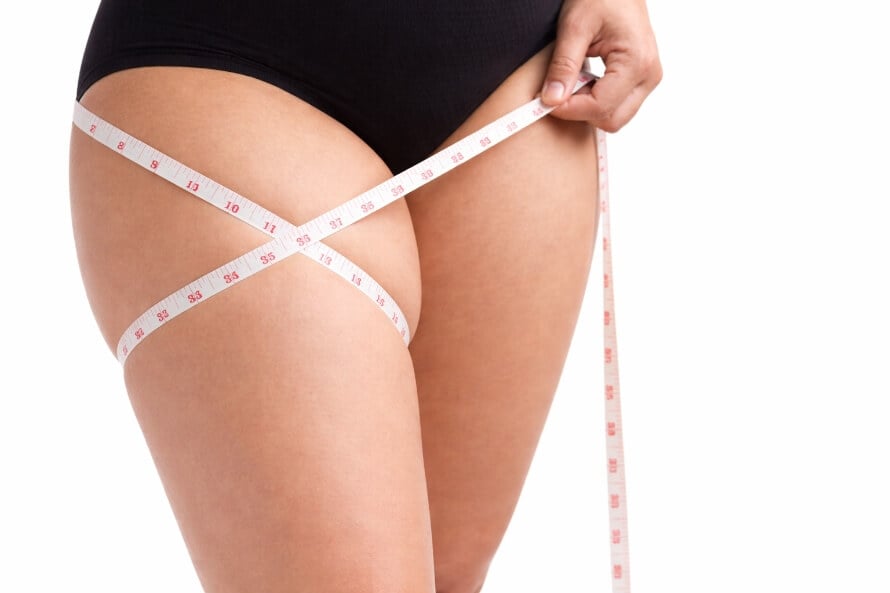
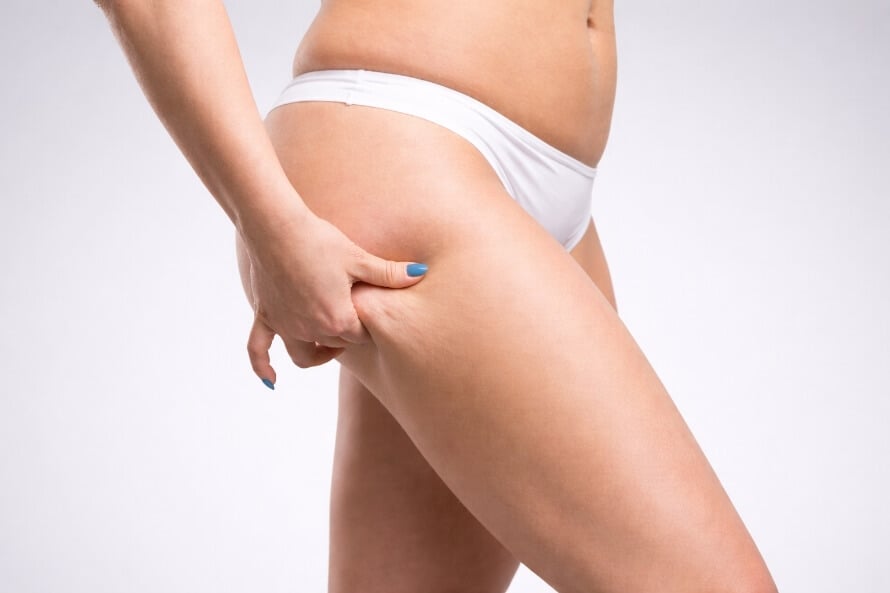
“Saddlebags” is a slang term for fat that builds up on the outer part of the upper thigh, just below the hip bone. It’s called that because the fat sits on the outside of the hips and thighs, resembling saddlebags hanging off a horse.
While men can get saddlebags, they’re far more common in women–especially those with a pear-shaped body (for reasons we’ll cover shortly).
Here’s an image showing how saddlebags typically look. The woman on the left has visible saddlebags, while the woman on the right doesn’t:

Saddlebags vs. Outer Thigh Fat vs. Cellulite
- Saddlebags refer to the visible fullness on the outer upper thighs. This is also where features like hip dips become more noticeable for some people.
- Outer thigh fat describes the same area in more literal terms.
- Cellulite refers to a dimpled skin texture, not fat itself, and can appear regardless of body fat percentage.
What Causes Saddlebags and Why Are They So Stubborn?
Saddlebags form because of how your body stores fat.
When you gain body fat, it doesn’t spread evenly across your entire body. Genetics and hormones influence where it accumulates. And in many women, the hips and upper thighs are one of the “preferred” storage spots.
To lose fat, your body has to release fat from fat cells into the bloodstream so it can be burned. But research shows fat cells in the upper-thigh area respond less to your body’s “fat-burning signals” than fat in other areas of the body like the stomach.
Other research shows this area also gets less blood flow and reacts less strongly to adrenaline (a key fat-release hormone), which can make it harder for your body to pull fat from it.
And in weight-loss studies, women often lose less leg fat relative to other fat, which matches the “last to go” experience many people report. This is similar to other stubborn fat areas, like the upper pubic or armpit area, which also tend to lean out later.
There’s another reason saddlebags feel so hard to lose: most advice about “targeting” outer-thigh fat is wrong. For instance, you’ll often hear that saddlebag fat is caused by . . .
- Eating the “wrong” foods
- “Weak” outer thighs
- “Toxins,” lymph buildup, or poor circulation
Those explanations are wrong—and they lead you to waste time on solutions that don’t work. Let’s talk about what actually gets results.
How to Get Rid of Saddlebags: The Only Approach That Works

If you’re trying to “target” saddlebags the way you’d target a weak muscle—by hammering outer-thigh exercises—you’re going to spin your wheels.
You can’t choose where your body burns fat first. Fat loss works like lowering the water level in a pool: the whole level drops, but some areas show it sooner than others.
That’s why the only reliable way to shrink saddlebag fat is to:
- Lose body fat overall
- Stick with it long enough for your outer thighs to catch up
Now, that doesn’t mean exercise is pointless. Exercise helps you maintain a calorie deficit, preserve muscle, and keep your body looking firm as you lean down—so it’s a key part of the plan alongside diet and supplements.
This isn’t just theory, either. It’s the exact approach these women took in Legion’s body transformation coaching program, and in just a few months, they dramatically changed the way their thighs looked:
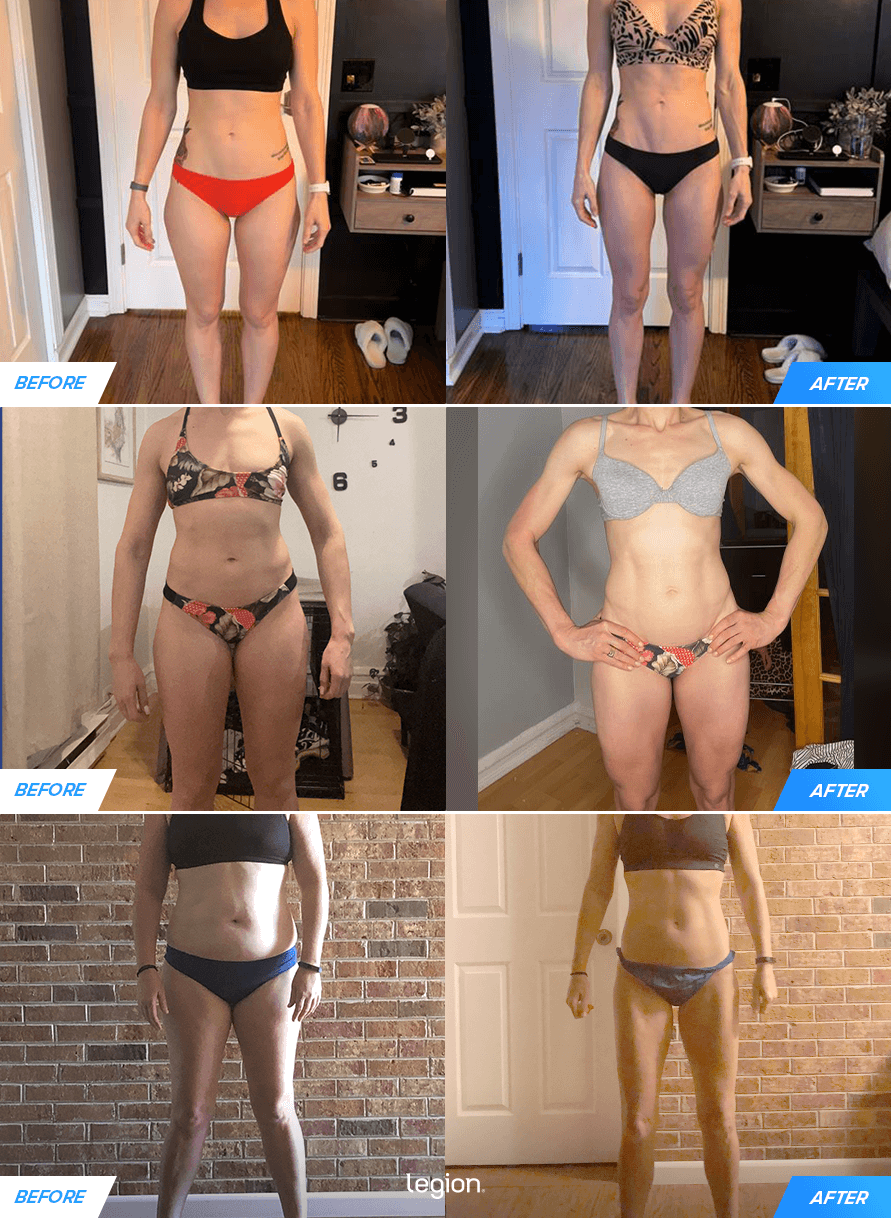
Now let’s get into the nitty-gritty of diet, training, and supplementation so you can get rid of your saddlebags fast.
Diet: Calorie Deficit and Macros
The first step to getting rid of saddlebags is simple: eat fewer calories than you burn.
Research shows that eating 20–25% fewer calories than you burn each day is the sweet spot for losing fat quickly without feeling miserable, losing muscle, or dealing with ravenous hunger.
It’s big enough to produce weekly progress, but small enough to maintain for several months—which is often what it takes for stubborn areas like the outer thighs to finally lean out.
Once you know your calorie target, the next step is to eat the right balance of macronutrients.
No matter your calorie goal, aim for:
- About 1 gram of protein per pound of body weight per day
- Around 20–30% of your daily calories from fats
- The rest of your daily calories from carbs
This balance helps you stay full, perform well in your workouts, and supports overall health.
To learn more about how to calculate your macros, check out this article:
How to Calculate Your Macros for Weight Loss & Muscle Gain
Exercise for Saddlebags
If you want to get rid of saddlebags on your thighs as quickly as possible, research shows that combining strength training and cardio is better for fat loss than doing either alone.
That said, if you only have time for one, make it strength training.
Why?
First, because strength training helps you build leg muscle, which gives your lower body the curves many women want. And second, because it makes fat loss easier in a few practical ways:
- A muscular body burns more calories resting and moving than a similarly-sized fat one.
- Muscle also supports good metabolic health, which is vital for maintaining a healthy body fat percentage
- Strength training even alters the expression of certain genes that accelerate fat burning
In other words, lifting weights doesn’t just change how you look—it changes the conditions that make it easier to stay lean.
Now, if you want to maximize the fat-burning effects of strength training, you need a well-designed workout split that focuses on . . .
- Compound exercises: Exercises that train multiple muscle groups at once, such as the squat, deadlift, and bench and overhead press, produce the greatest increases in metabolic rate, muscle mass, and strength, which means they’re the best type of exercise for increasing fat loss.
- Heavy weightlifting: Training with heavier weights helps you gain strength, which becomes increasingly important for continuing to build muscle as you get more experienced. It’s also more enjoyable for many people, which makes it easier to stick with long term.
- Progressive overload: The best way to build muscle and thus maximize the fat-burning effects of weightlifting is to strive to add weight or reps to every exercise in every workout. This is known as progressive overload, and it’s the single most important driver of muscle growth.
With that in mind, here are the 10 best strength training exercises for losing your saddlebags:
- Back Squat
- Front Squat
- Deadlift
- Romanian Deadlift
- Pull-up
- Barbell Row
- Bench Press
- Incline Bench Press
- Overhead Press
- Shoulder Press
READ MORE: How to Use Strength Training for Weight Loss
Supplements to Help Shrink Saddlebags
You don’t need supplements to shrink saddlebags, but the right ones can make the process faster and more comfortable. Here are three to consider:
- Caffeine: 3–6 mg of caffeine per kilogram of body weight per day increases metabolic rate and helps you train harder while dieting.
- Yohimbine: 0.1–0.2 milligrams of yohimbine per kilogram of body weight before fasted training enhances fat loss.
- Fat Burner: Effective fat burners contain ingredients that boost the number of calories you burn and reduce hunger and cravings, making weight loss more straightforward.
And if you’d like to know exactly what other supplements you should take to reach any and all of your fitness goals, take the Legion Supplement Finder Quiz.
Does Walking Get Rid of Saddlebags?
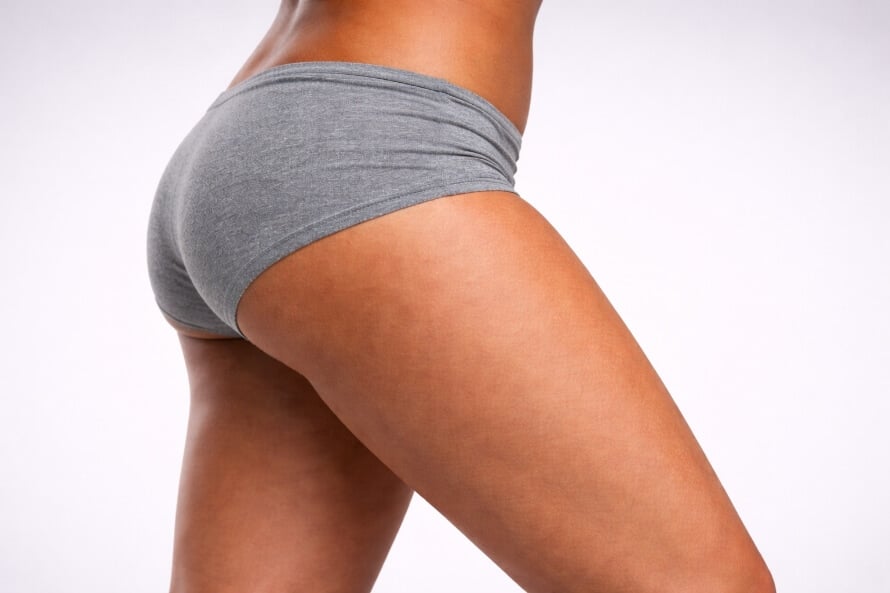
Walking can help you lose saddlebags—but not because it “targets” your outer thighs. It just helps you burn more calories, which makes it easier to stay in a calorie deficit. And if you stay in a deficit long enough, your body will eventually pull fat from your outer thighs too.
That’s why walking works best as a support tool, not the whole plan.
If your diet is on point and you’re strength training, walking is great because it:
- Increases calorie burn without beating up your joints
- Helps control stress for many people, which may make sticking to your diet easier
- Is easy to do often, which is the real “secret” (consistency)
But if you’re walking a few times per week and eating enough to cancel it out, you won’t see any change—especially in a stubborn area like the outer thighs.
Other Options People Consider (And Why They’re Not the Main Solution)
If you look online at ways to get rid of saddlebags, you’ll quickly run into “solutions” that sound easier than dieting and training.
The big ones are:
- Massage, lymphatic drainage, and anti-cellulite creams
- Non-invasive treatments like fat freezing (cryolipolysis) or radiofrequency
- Surgical options (usually some form of liposuction)
Here’s the problem: these options don’t reliably solve the root issue—your overall body fat level and the habits that determine it.
Massage and creams might make your skin look a little smoother temporarily, but they don’t reduce fat.
Treatments and surgery can reduce fat in a specific area, but they’re expensive, results vary, and they don’t fix the habits that put the fat there in the first place. So even if you change the outer-thigh area, you can still end up unhappy with your overall body composition.
That’s why these options aren’t the main solution.
That said, if you’re already lean, consistent with training, and still dislike the way your legs look, you may want to explore cosmetic options. That’s a personal call—just make it an informed one and talk to a qualified medical professional first.
The Bottom Line on How to Get Rid of Saddlebags
Saddlebags are just outer-thigh fat—and the only reliable way to shrink them is to lose body fat overall and stick with it long enough for your outer thighs to catch up.
That means:
- Eat in a consistent calorie deficit (big enough to make progress, small enough to maintain)
- Lift weights to burn calories, build muscle, and improve how your thighs look as you lean down
- Use cardio (including walking) to help you burn more calories and stay in that deficit
Do these consistently, and your saddlebags will shrink—it’s just a matter of time.
FAQ #1: Are saddlebags unhealthy?
Saddlebags themselves aren’t unhealthy. They’re simply a place where many people—especially women—store body fat.
That said, having more body fat overall can increase your risk of developing conditions like heart disease, hypertension, type 2 diabetes, certain cancers, and stroke, whereas improving your body composition usually benefits both physical and mental health.
FAQ #2: How long does it take to see results reducing saddlebags?
If you follow the approach in this article, most people start seeing changes within 8–12 weeks, with more noticeable changes after 3–6 months. Outer-thigh fat often comes off later than other areas, so patience and consistency are vital.
FAQ #3: Are saddlebags cellulite?
No. Saddlebags refer to fat stored on the outer thighs, while cellulite is a skin texture issue caused by how fat, connective tissue, and skin interact. You can have saddlebags without cellulite, cellulite without saddlebags, or both at the same time.
Want More Content Like This?
Check out these articles:
- The Ultimate 3-Month Female Body Recomposition Workout Plan
- How to Get Rid of Bat Wings: Exercise & Diet That Works
- How to Fix “Mom Butt” After Pregnancy
Scientific References +
- Karastergiou, Kalypso, et al. “Sex Differences in Human Adipose Tissues – the Biology of Pear Shape.” Biology of Sex Differences, vol. 3, no. 1, 2012, p. 13, www.ncbi.nlm.nih.gov/pmc/articles/PMC3411490/, https://doi.org/10.1186/2042-6410-3-13.
- Mauriege, P., et al. “Regional Differences in Adipose Tissue Lipolysis from Lean and Obese Women: Existence of Postreceptor Alterations.” American Journal of Physiology-Endocrinology and Metabolism, vol. 269, no. 2, 1 Aug. 1995, pp. E341–E350, https://doi.org/10.1152/ajpendo.1995.269.2.e341. Accessed 7 Nov. 2024.
- Manolopoulos, K. N., et al. “Marked Resistance of Femoral Adipose Tissue Blood Flow and Lipolysis to Adrenaline in Vivo.” Diabetologia, vol. 55, no. 11, 17 Aug. 2012, pp. 3029–3037, https://doi.org/10.1007/s00125-012-2676-0.
- Clifton, Peter M. “Relationship between Changes in Fat and Lean Depots Following Weight Loss and Changes in Cardiovascular Disease Risk Markers.” Journal of the American Heart Association, vol. 7, no. 8, 17 Apr. 2018, https://doi.org/10.1161/jaha.118.008675. Accessed 27 Apr. 2020.
- Huovinen, Heikki T., et al. “Body Composition and Power Performance Improved after Weight Reduction in Male Athletes without Hampering Hormonal Balance.” Journal of Strength and Conditioning Research, vol. 29, no. 1, Jan. 2015, pp. 29–36, https://doi.org/10.1519/jsc.0000000000000619.
- Ho, Suleen S, et al. “The Effect of 12 Weeks of Aerobic, Resistance or Combination Exercise Training on Cardiovascular Risk Factors in the Overweight and Obese in a Randomized Trial.” BMC Public Health, vol. 12, no. 1, 28 Aug. 2012, bmcpublichealth.biomedcentral.com/articles/10.1186/1471-2458-12-704, https://doi.org/10.1186/1471-2458-12-704.
- Brellenthin, Angelique G., et al. “Resistance Exercise, Alone and in Combination with Aerobic Exercise, and Obesity in Dallas, Texas, US: A Prospective Cohort Study.” PLOS Medicine, vol. 18, no. 6, 23 June 2021, p. e1003687, https://doi.org/10.1371/journal.pmed.1003687.
- McClave, Stephen A., and Harvy L. Snider. “Dissecting the Energy Needs of the Body.” Current Opinion in Clinical Nutrition and Metabolic Care, vol. 4, no. 2, Mar. 2001, pp. 143–147, https://doi.org/10.1097/00075197-200103000-00011.
- Willoughby, Darryn, et al. “Body Composition Changes in Weight Loss: Strategies and Supplementation for Maintaining Lean Body Mass, a Brief Review.” Nutrients, vol. 10, no. 12, 3 Dec. 2018, p. 1876, www.ncbi.nlm.nih.gov/pmc/articles/PMC6315740/, https://doi.org/10.3390/nu10121876.
- MacKenzie-Shalders, Kristen, et al. “The Effect of Exercise Interventions on Resting Metabolic Rate: A Systematic Review and Meta-Analysis.” Journal of Sports Sciences, vol. 38, no. 14, 12 May 2020, pp. 1635–1649, https://doi.org/10.1080/02640414.2020.1754716.
- Kim, Gyuri, and Jae Hyeon Kim. “Impact of Skeletal Muscle Mass on Metabolic Health.” Endocrinology and Metabolism, vol. 35, no. 1, 2020, p. 1, https://doi.org/10.3803/enm.2020.35.1.1.
- Vechetti, Ivan J., et al. “Mechanical Overload‐Induced Muscle‐Derived Extracellular Vesicles Promote Adipose Tissue Lipolysis.” The FASEB Journal, vol. 35, no. 6, 25 May 2021, https://doi.org/10.1096/fj.202100242r.
- Farinatti, Paulo TV, and Antonio G Castinheiras Neto. “The Effect of Between-Set Rest Intervals on the Oxygen Uptake during and after Resistance Exercise Sessions Performed with Large- and Small-Muscle Mass.” Journal of Strength and Conditioning Research, vol. 25, no. 11, Nov. 2011, pp. 3181–3190, https://doi.org/10.1519/jsc.0b013e318212e415.
- Schoenfeld, Brad J., et al. “Strength and Hypertrophy Adaptations between Low- vs. High-Load Resistance Training.” Journal of Strength and Conditioning Research, vol. 31, no. 12, Dec. 2017, pp. 3508–3523, https://doi.org/10.1519/jsc.0000000000002200.
- Lopez, Pedro, et al. “Resistance Training Load Effects on Muscle Hypertrophy and Strength Gain.” Medicine & Science in Sports & Exercise, vol. Publish Ahead of Print, no. 6, 26 Dec. 2020, pmc.ncbi.nlm.nih.gov/articles/PMC8126497/, https://doi.org/10.1249/mss.0000000000002585.
- Lacio, Marcio, et al. “Effects of Resistance Training Performed with Different Loads in Untrained and Trained Male Adult Individuals on Maximal Strength and Muscle Hypertrophy: A Systematic Review.” International Journal of Environmental Research and Public Health, vol. 18, no. 21, 26 Oct. 2021, p. 11237, pubmed.ncbi.nlm.nih.gov/34769755/, https://doi.org/10.3390/ijerph182111237.
- Ribeiro, Alex S., et al. “Acute Effects of Different Training Loads on Affective Responses in Resistance-Trained Men.” International Journal of Sports Medicine, vol. 40, no. 13, 9 Sept. 2019, pp. 850–855, https://doi.org/10.1055/a-0997-6680.
- Schoenfeld, Brad J. “The Mechanisms of Muscle Hypertrophy and Their Application to Resistance Training.” Journal of Strength and Conditioning Research, vol. 24, no. 10, Oct. 2010, pp. 2857–72, https://doi.org/10.1519/JSC.0b013e3181e840f3.
- Legrand, Fabien D., et al. “Effects of Outdoor Walking on Positive and Negative Affect: Nature Contact Makes a Big Difference.” Frontiers in Behavioral Neuroscience, vol. 16, 3 June 2022, https://doi.org/10.3389/fnbeh.2022.901491. Accessed 9 June 2022.
- Hill, Deborah, et al. “Stress and Eating Behaviours in Healthy Adults: A Systematic Review and Meta-Analysis.” Health Psychology Review, vol. 16, no. 2, 29 Apr. 2021, pp. 1–87, https://doi.org/10.1080/17437199.2021.1923406.
- O’Connor, Daryl B., et al. “Effects of Daily Hassles and Eating Style on Eating Behavior.” Health Psychology, vol. 27, no. 1, Suppl, 2008, pp. S20–S31, https://doi.org/10.1037/0278-6133.27.1.s20.
- Yau, Yvonne H C, and Marc N Potenza. “Stress and Eating Behaviors.” Minerva Endocrinologica, vol. 38, no. 3, Sept. 2013, p. 255.
- Keramat, Syed Afroz, et al. “Obesity and the Risk of Developing Chronic Diseases in Middle-Aged and Older Adults: Findings from an Australian Longitudinal Population Survey, 2009–2017.” PLoS ONE, vol. 16, no. 11, 16 Nov. 2021, p. e0260158, https://doi.org/10.1371/journal.pone.0260158.
- Lavallee, Kristen L., et al. “Obesity and Mental Health: A Longitudinal, Cross-Cultural Examination in Germany and China.” Frontiers in Psychology, vol. 12, 21 Sept. 2021, https://doi.org/10.3389/fpsyg.2021.712567. Accessed 19 Oct. 2021.
- Fontana, Luigi, and Frank B. Hu. “Optimal Body Weight for Health and Longevity: Bridging Basic, Clinical, and Population Research.” Aging Cell, vol. 13, no. 3, 14 Mar. 2014, pp. 391–400, www.ncbi.nlm.nih.gov/pmc/articles/PMC4032609/, https://doi.org/10.1111/acel.12207.