Many people lift regularly, eat well, and still feel frustrated by how their inner thighs look.
So they turn to high-rep circuits, “toning” workouts, and isolation exercises that promise fast results—but rarely deliver.
The problem isn’t effort. It’s the approach.
In this article, you’ll learn what actually builds tighter-looking inner thighs, why most inner thigh workouts fall short, and how to train your hip adductors in a way that’s simple, effective, and sustainable.
Key Takeaways
- You don’t need a separate “inner thigh day.” Training your hip adductors works best when it’s built into well-designed lower-body workouts.
- The most effective inner thigh workouts are based on exercises you can load with heavy weights, progress regularly, and perform through a large range of motion.
- Squat and deadlift variations should form the foundation. Using a slightly wider stance may emphasize the adductors more than standard versions, but it doesn’t need to be extreme.
- Direct adductor exercises are useful, but they work best as a small add-on—not the core of your plan.
- You don’t need supplements to support your inner thigh workouts, but protein powder, creatine, and pre-workout can help you make gains faster.
Table of Contents
+
Inner Thigh Workout Basics: What You’re Training and Why
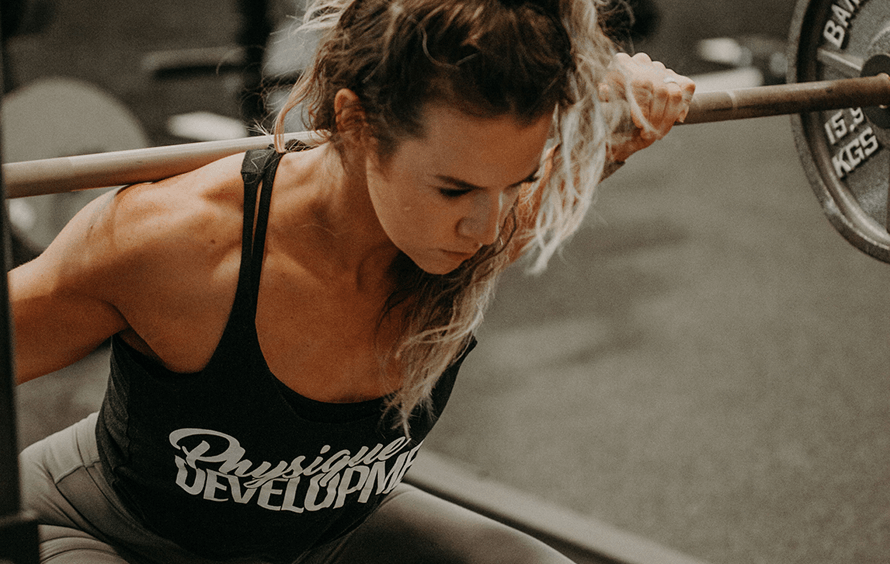
An “inner thigh workout” is just a training session that puts extra emphasis on your hip adductors—the muscles that pull your thighs toward each other and help stabilize your lower body.
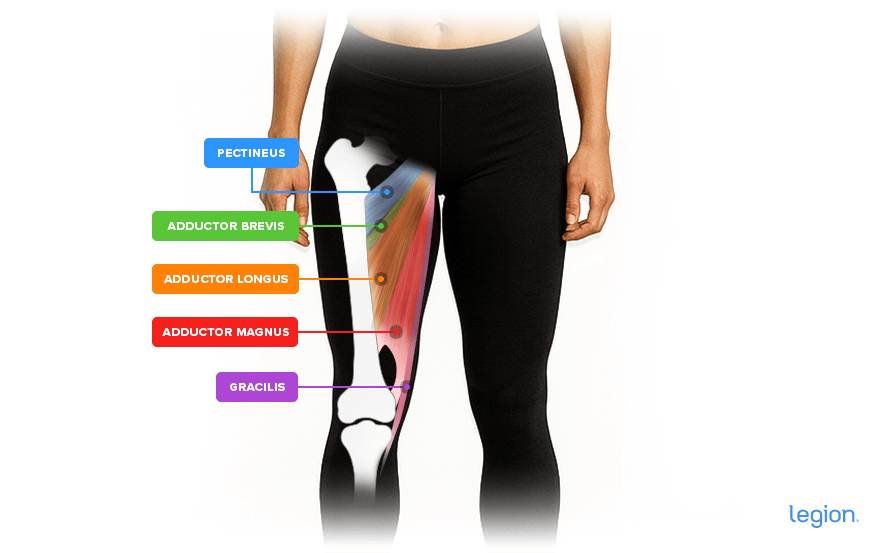
Your hip adductors include five main muscles:
- Adductor longus
- Adductor brevis
- Adductor magnus
- Gracilis
- Pectineus
Here’s how they look on your body:
Training your inner thighs is worth doing for two big reasons.
First, building your adductors can make your thighs look stronger, tighter, and more athletic, especially if you’re already fairly lean but your inner thighs are underdeveloped.
Second, strong adductors help your hips and knees stay more stable, which generally makes you more resilient—especially if you play sports, lift weights regularly, or are just highly active.
How to Build an Inner Thigh Workout (Standalone or Leg-Day Add-On)
Most people don’t need a separate “inner thigh day.” What they need is a simple way to train their adductors consistently—without turning their week into a mess of gimmicky exercises that don’t build much muscle.
Here’s the simplest way to think about it:
If you want your inner thighs to look and perform better, you need to train them the same way you’d train any other muscle you want to build—with exercises you can load with heavy weights, progress regularly, and perform through a large range of motion.
That’s the backbone of a good inner thigh workout. From there, most effective plans include three ingredients:
1. A Squat Variation
Squats are one of the best tools you have for building your lower body, and they can also do a lot for your adductors—especially when you squat deep.
And yes—stance can make a difference in how a squat feels.
Most people find that using a slightly wider stance and turning the toes out a bit helps them squat deep and feel more “inner thigh” involvement.
But don’t turn this into a circus.
You don’t need an extreme stance. You don’t need to crank your toes way out. And you definitely don’t need to chase some mythical “perfect inner thigh squat.”
Find a stance that feels strong, lets you squat deep, and doesn’t beat up your hips or knees—then focus on getting stronger.
2. A Deadlift Variation
The second pillar is a deadlift variation.
If you like sumo deadlifts, they can be a great choice here because the wider stance makes the adductors work harder to help stabilize the hips and knees.
But “pulling sumo” isn’t a requirement. If it feels awkward or irritates your hips, you can still build strong adductors with other deadlift variations.
Again, the goal is simple: pick one you can do well and progress over time.
3. One Direct Adductor Exercise
An exercise like the machine hip adduction can be useful for adding adductor-focused volume (sets) without beating up your lower back, hips, or knees.
Just don’t build your entire plan around it.
Think of isolation work as the cherry on top—it makes sure your adductors get their share of work after you’ve already done the heavy lifting.
Inner Thigh Exercises for Building an Inner Thigh Workout
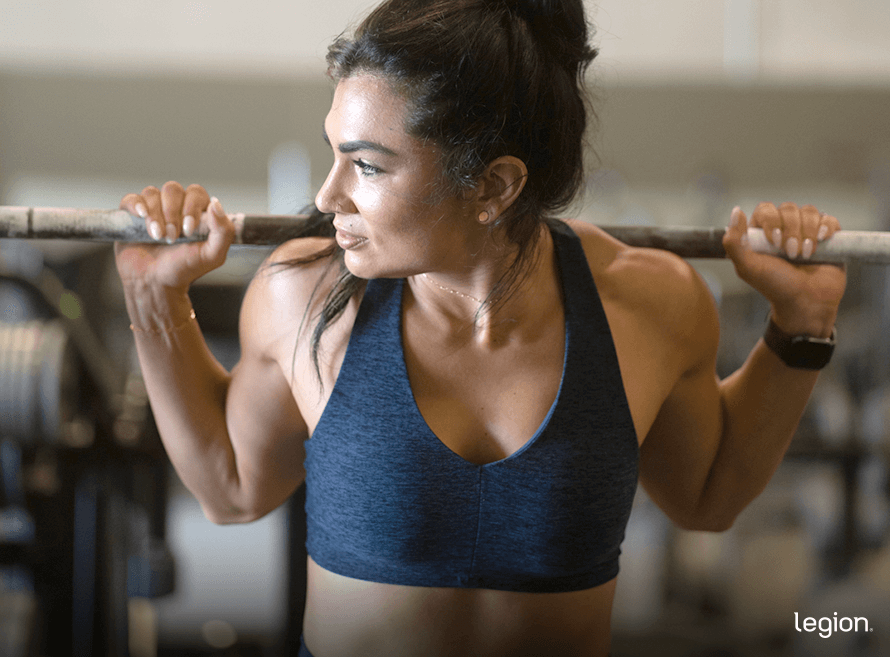
If you want your inner thighs to look better, you don’t need a laundry list of inner thigh exercises. You need the right mix of movements—mostly big lower-body lifts you can get stronger on, plus a little direct adductor work to round things out.
That’s the approach these women used while working with Legion’s body transformation coaching service, and in just a few months, they made big changes to how their thighs looked:
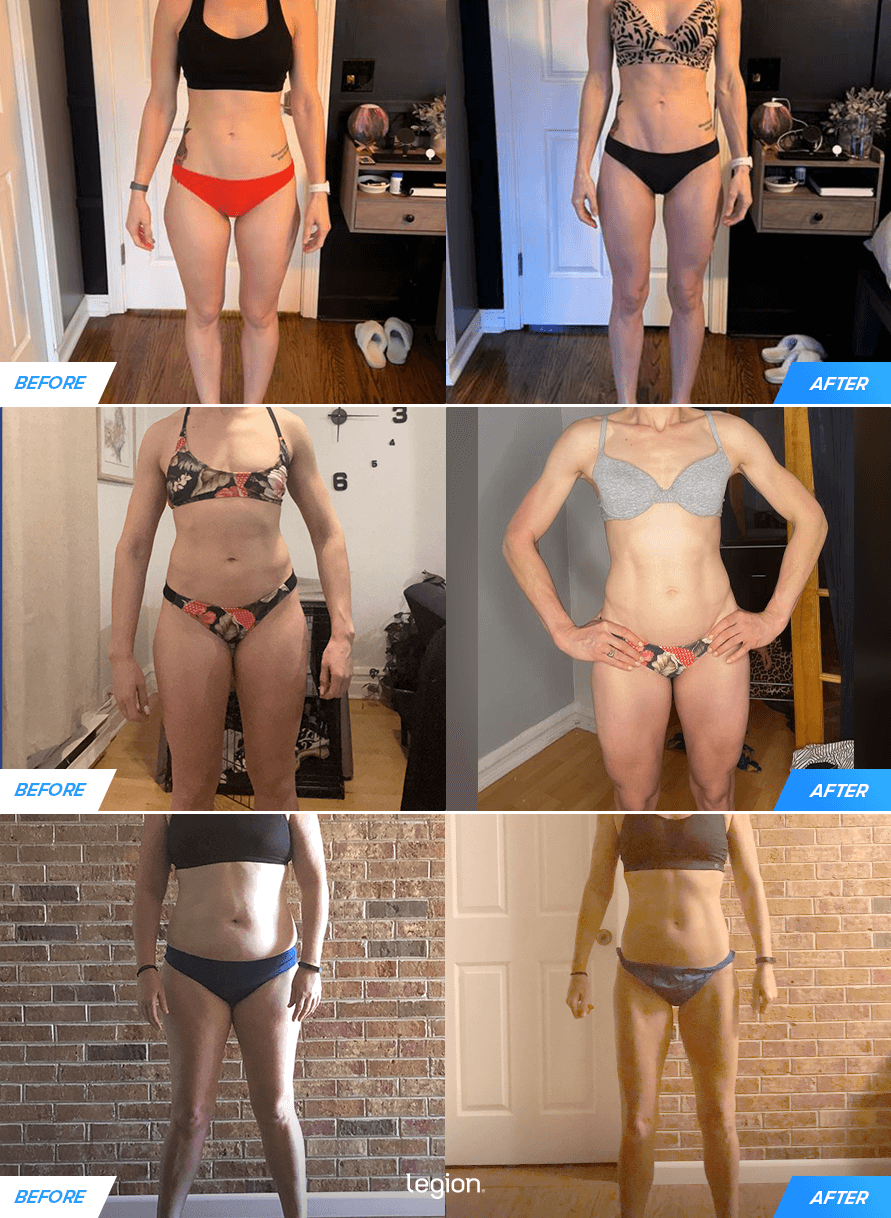
Here are the exercises that work best:
Back Squat
Why: One of the best lower-body builders, and a slightly wider stance can help emphasize your adductors alongside your quads and glutes.
How to:
- Set a barbell in a rack at about chest height.
- Step under it, pinch your shoulder blades together, and rest the bar across your upper back.
- Lift the bar out, step back, and set your feet slightly wider than shoulder-width with your toes turned out.
- Keeping your back straight, sit down and push your knees out in the same direction as your toes.
- Reverse the movement and return to the starting position.
READ MORE: How to Do the Back Squat: Form, Benefits, and More
Front Squat
Why: Lets you train your adductors hard while being slightly gentler on your back and knees.
How to:
- Set a barbell in a rack at about breastbone height.
- Grip the bar at shoulder width with your palms facing forward and step in until it touches your upper chest.
- Raise your elbows so they point forward, resting the bar across the front of your shoulders.
- Lift it out of the rack, step back, and set your feet slightly wider than shoulder-width with your toes turned out.
- Keeping your back straight, sit down and push your knees out in the same direction as your toes.
- Reverse the movement and return to the starting position.
READ MORE: How to Front Squat: Form, Benefits & Alternatives
Goblet Squat
Why: Easy to learn, and perfect if you’re not ready to squat heavy with a barbell yet.
How to:
- Hold a dumbbell in front of your chest with both hands.
- Place your feet a little wider than shoulder-width apart, point your toes slightly outward, and raise your chest.
- Keeping your back straight, sit down and push your knees out in the same direction as your toes.
- Stand up and return to the starting position.
READ MORE: Goblet Squat: Form, Form, Muscles Worked, & Common Mistakes
Dumbbell Sumo Squat
Why: The wide stance can help emphasize your adductors, but it’s harder to load heavy than most squat variations.
How to:
- Stand with your feet wider than shoulder-width apart and point your toes out.
- Hold a dumbbell or kettlebell in front of your thighs.
- Keeping your back straight, sit down and push your knees out in the same direction as your toes.
- Lower until your thighs are at least parallel to the floor (or as low as you can without rounding your back).
- Reverse the movement and return to the starting position.
READ MORE: How to Do a Sumo Squat: Form, Benefits, and Variations
Bulgarian Split Squat
Why: Trains your adductors through a large range of motion while challenging stability one leg at a time.
How to:
- Hold a dumbbell in each hand and stand 2–3 feet in front of a bench.
- Place the top of your left foot on the bench behind you and keep your right heel planted.
- Lower your hips by bending your right knee until it’s at about 90 degrees.
- Reverse the movement and return to the starting position.
- Complete all reps on one side, then switch legs.
READ MORE: How to Perform Bulgarian Split Squats for Glutes, Hamstrings & Quad Growth
Sumo Deadlift
Why: A heavy “hip hinge” that can add some extra adductor emphasis because of the wider stance and stability demands.
How to:
- Stand with your feet wider than shoulder-width apart and point your toes out.
- Position the bar over your midfoot, about an inch from your shins.
- Bend at your hips and knees and grip the bar with your hands inside your legs.
- Drop your hips, lift your chest, and brace your core so your back stays straight.
- Push the floor away and stand up, keeping the bar close to your body.
- Reverse the movement and return to the starting position.
READ MORE: The Definitive Guide to the Sumo Deadlift
Deadlift
Why: A staple heavy hip hinge that builds all the muscle on the back of your body and makes your adductors work hard to keep you stable.
How to:
- Stand with your feet slightly narrower than shoulder width, toes pointed slightly out.
- Position the bar over your midfoot, about an inch from your shins.
- Push your hips back and grip the bar just outside your legs.
- Take a deep breath, brace your core, and flatten your back.
- Drive through your heels to stand upright, keeping the bar close to your body.
- Reverse the movement and return to the starting position.
READ MORE: How to Deadlift with Proper Technique
Dumbbell Romanian Deadlift
Why: A simple hinge you can load and progress that trains your hips and thighs through a big range of motion—without needing a barbell.
How to:
- Stand upright holding a dumbbell in each hand, palms facing your thighs.
- Push your hips backward and arch your lower back slightly.
- When you feel a stretch in your hamstrings, bend your knees slightly, and keep lowering the dumbbells until your back begins to round.
- Reverse the movement and return to the starting position.
READ MORE: How to Do the Romanian Deadlift: Form, Benefits, and Variations
Machine Hip Adduction
Why: A straightforward way to add direct adductor volume after your main lifts, without worrying about balance or technique.
How to:
- Sit in the machine and place your feet on the supports with your knees against the pads.
- Adjust the seat so you can move through a comfortable range of motion.
- Brace your torso against the back pad and grip the handles.
- Squeeze your legs together to bring the pads in.
- Reverse the movement and return to the starting position.
45-Minute Inner Thigh Workout at the Gym
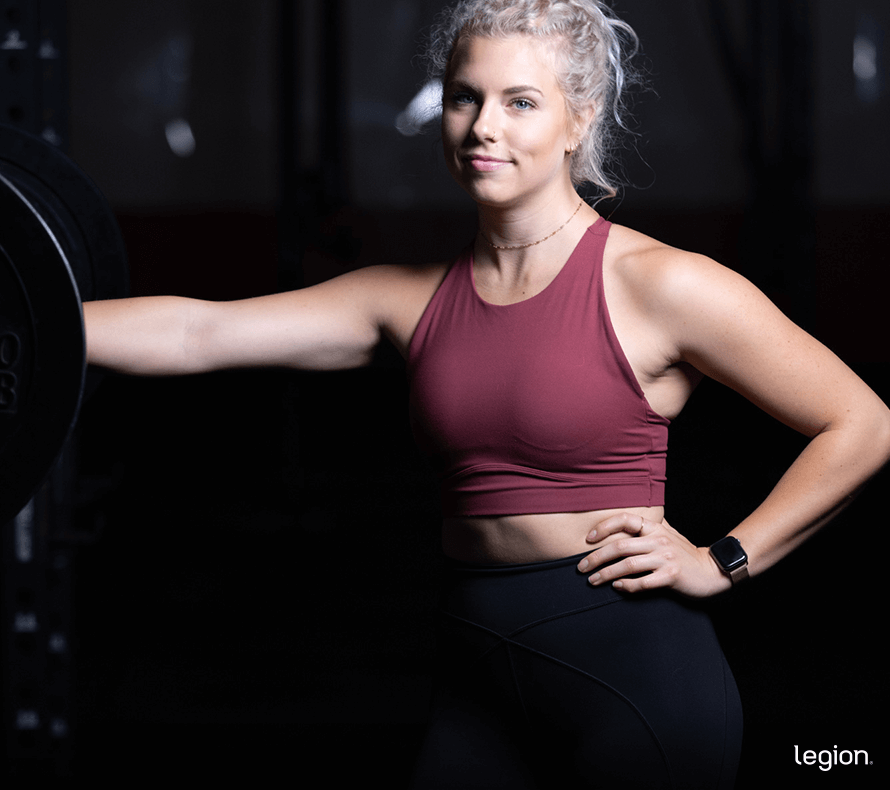
There are tons of ways to program these exercises into effective inner thigh workouts.
But to keep things simple, here are a couple of sample 45-minute workouts you can use in the gym. You could even do both in the same week as part of a well-designed workout split.
Sample Workout #1: Squat-Focused Day
- Back Squat: 3 sets | 8–10 reps | 3–5 min rest
- Dumbbell Romanian Deadlift: 3 sets | 8–10 reps | 3–5 min rest
- Bulgarian Split Squat: 3 sets | 8–10 reps | 2–3 min rest
- Machine Hip Adduction: 3 sets | 8–10 reps | 3–5 min rest
Sample Workout #2: Deadlift-Focused Day
- Sumo Deadlift: 3 sets | 8–10 reps | 3–5 min rest
- Dumbbell Sumo Squat: 3 sets | 8–10 reps | 3–5 min rest
- Bulgarian Split Squat: 3 sets | 8–10 reps | 2–3 min rest
- Machine Hip Adduction: 3 sets | 8–10 reps | 2–3 min rest
Inner Thigh Workout at Home (Minimal Equipment)
You don’t need a gym to train your inner thighs effectively. You just need a few exercises you can do at home—and that you can make harder over time. For example, here’s a simple inner thigh workout you can do at home with minimal equipment:
- Bulgarian Split Squat: 4 sets | 8–10 reps | 3–5 min rest
- Dumbbell Romanian Deadlift: 4 sets | 8–10 reps | 3–5 min rest
- Sumo Squat: 4 sets | 8–10 reps | 2–3 min rest
Supplements to Support Your Inner Thigh Workouts
You don’t need supplements to build strong, sculpted thighs, but the right ones can help. Here are three worth considering:
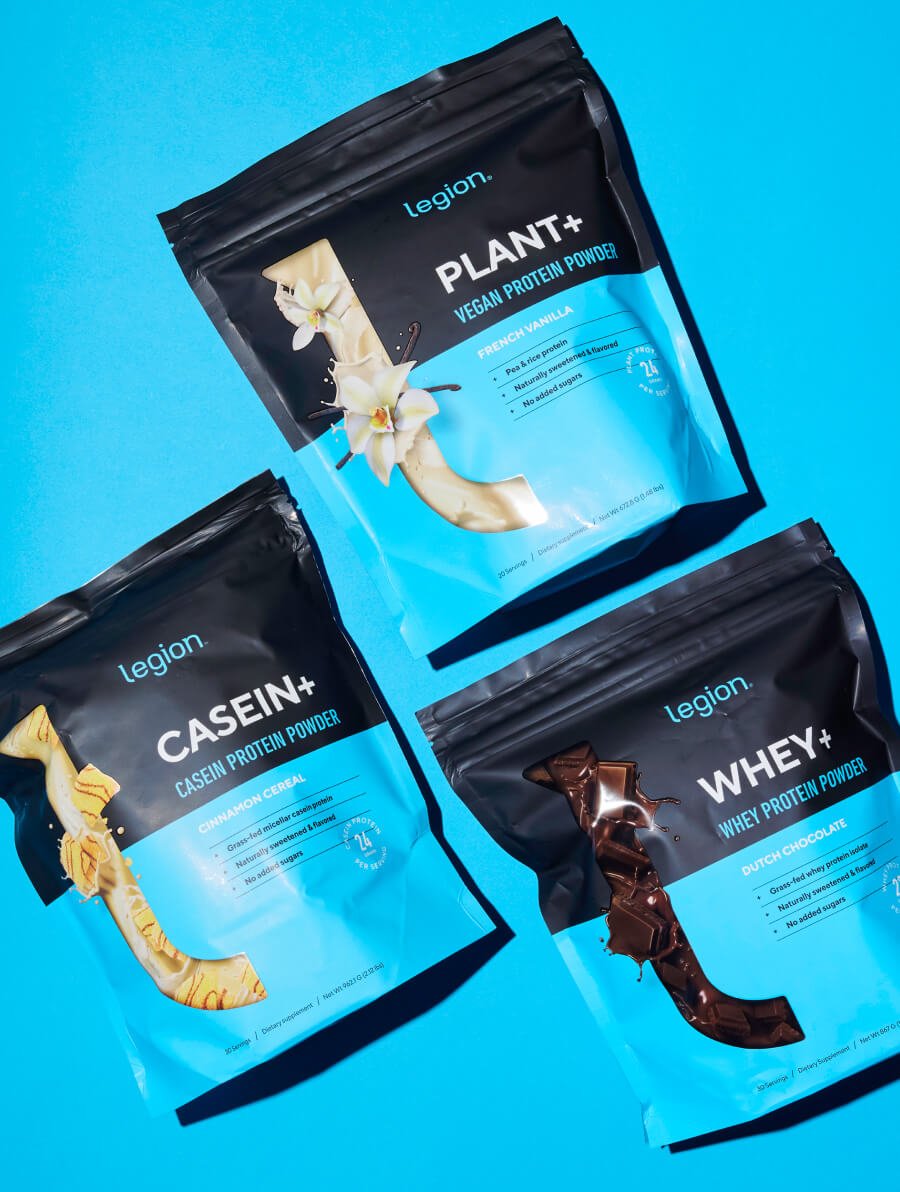
- Protein powder: Eating enough protein is essential for building lower body muscle. Protein powders like Whey+, Casein+, and Egg+ make hitting your target easier.
- Creatine: Creatine boosts muscle and strength gain, improves endurance, and reduces muscle damage and soreness. For a natural source of creatine, try Legion’s creatine monohydrate powder, creatine gummies, creatine capsules, or post-workout Recharge.
- Pre-workout: A quality pre-workout helps you train harder by boosting energy, focus, and athletic performance. Legion’s Pulse is available with or without caffeine.
Want even more specific supplement advice? Take the Legion Supplement Finder Quiz to learn exactly what supplements are right for you.
Toning, Inner Thigh Fat, and Loose Skin: What a Workout Can and Can’t Do
When people say they want to “tone” their inner thighs, they usually mean one of two things: they want the area to look firmer and more defined, or they want it to look smaller.
A good inner thigh workout can absolutely help with the first goal. Building the adductors (and the rest of your legs) gives your thighs more shape and “tightness,” especially if you’re already fairly lean and the inner thigh area is just underdeveloped.
But if what you really want is less inner thigh fat, that’s a different problem.
Exercises can strengthen and build muscle in a specific area, but they can’t help you lose fat from that area. If your inner thighs are one of the places you store fat, they’ll lean out when you get leaner overall—not because you did more sumo squats.
Loose skin is another issue, and it’s often the one people don’t want to hear about.
Skin doesn’t tighten up the same way muscle does. How much loose skin you have depends on things like how much weight you’ve lost, how quickly you lost it, your age, and genetics. Strength training can improve how the area looks by adding muscle underneath, but it can’t “tailor” skin back into place.
So the realistic takeaway is simple:
- If your inner thighs look soft because the muscles are undertrained, lifting will help.
- If they look soft because there’s fat there, you’ll need to get leaner overall.
- And if the issue is loose skin, training can improve the look, but it may not fully solve it.
The Bottom Line on an Inner Thigh Workout
If you want tighter-looking inner thighs, train your adductors the same way you’d train any muscle you want to build: use a few exercises that let you lift heavy weights, apply progressive overload, and perform through a large range of motion.
Make squats and deadlift variations the foundation, use a stance that emphasizes the adductors and feels comfortable (slightly wider with your toes turned slightly out works for most people), then finish with a little direct adductor work to round out development.
Do that consistently for a few months and your inner thighs will look and feel noticeably stronger.
FAQ #1: How do I tone my inner thighs fast?
The fastest way to tone your inner thighs is to train your lower body 1–2 times per week and diet to lose fat. To understand how to train your thighs, follow the advice in this article, and to learn how to diet to lose fat, check out this article:
The Complete Guide to Safely and Healthily Losing Weight Fast
FAQ #2: How long does it take to see inner thigh toning results?
It depends on how lean you are to start. If you’re already fairly lean and follow the workouts in this article, you can usually see visible changes within 8–12 weeks.
If you’re carrying more body fat, it may take longer, but with consistent training and dieting, most people notice a clear difference in how their legs look after 3–6 months.
FAQ #3: Can you really get rid of inner thigh fat?
Yes, but only by losing body fat overall. Exercises can build and strengthen your inner thigh muscles, but they can’t remove fat from one specific area. As your body fat percentage goes down, inner thigh fat will go down, too.
FAQ #4: Can I tighten loose skin on inner thighs?
Exercise can improve how loose skin looks, but it can’t fully tighten it. Building muscle underneath the skin can make the area look firmer, but how much improvement you see depends on factors like how much weight you lost, how fast you lost it, your age, and genetics.
Want More Content Like This?
Check out these articles:
- The Best Women’s Leg Workout for a Strong, Sculpted Lower Body
- Transform Your Pear-Shaped Body: Exercises & Diet Tips
- The Ultimate Workout Routine for Women
Scientific References +
- Delmore, Robert J., et al. “Adductor Longus Activation during Common Hip Exercises.” Journal of Sport Rehabilitation, vol. 23, no. 2, May 2014, pp. 79–87, https://doi.org/10.1123/jsr.2012-0046.
- Coratella, Giuseppe, et al. “The Activation of Gluteal, Thigh, and Lower Back Muscles in Different Squat Variations Performed by Competitive Bodybuilders: Implications for Resistance Training.” International Journal of Environmental Research and Public Health, vol. 18, no. 2, 1 Jan. 2021, www.ncbi.nlm.nih.gov/pmc/articles/PMC7831128/, https://doi.org/10.3390/ijerph18020772.
- Hopkins, Jane E., et al. “Greater Squat Stance Width Alters Three-Dimensional Hip Moment Demands.” Journal of Biomechanics, vol. 177, 28 Oct. 2024, p. 112391, www.sciencedirect.com/science/article/pii/S002192902400469X, https://doi.org/10.1016/j.jbiomech.2024.112391.
- Straub, Rachel K., and Christopher M. Powers. “A Biomechanical Review of the Squat Exercise: Implications for Clinical Practice.” International Journal of Sports Physical Therapy, vol. 19, no. 4, 2024, pp. 490–501, ijspt.scholasticahq.com/article/94600-a-biomechanical-review-of-the-squat-exercise-implications-for-clinical-practice, https://doi.org/10.26603/001c.94600.
- Hanen, N C, et al. “Biomechanical Analysis of Conventional and Sumo Deadlift.” Frontiers in Bioengineering and Biotechnology, vol. 13, 27 May 2025, https://doi.org/10.3389/fbioe.2025.1597209.
- Gullett, Jonathan C, et al. “A Biomechanical Comparison of Back and Front Squats in Healthy Trained Individuals.” Journal of Strength and Conditioning Research, vol. 23, no. 1, Jan. 2009, pp. 284–292, https://doi.org/10.1519/jsc.0b013e31818546bb.
- Eckerson, Joan M., et al. “Effect of Creatine Phosphate Supplementation on Anaerobic Working Capacity and Body Weight after Two and Six Days of Loading in Men and Women.” The Journal of Strength and Conditioning Research, vol. 19, no. 4, 2005, p. 756, https://doi.org/10.1519/r-16924.1.
- Bassit, Reinaldo Abunasser, et al. “Effect of Short-Term Creatine Supplementation on Markers of Skeletal Muscle Damage after Strenuous Contractile Activity.” European Journal of Applied Physiology, vol. 108, no. 5, 3 Dec. 2009, pp. 945–955, https://doi.org/10.1007/s00421-009-1305-1.