The “push pull legs upper lower” (PPLUL) split is a 5-day per week weightlifting program that combines the push pull legs and upper lower splits.
The push pull legs split is generally a 3-day per week routine that involves dedicating a single day to pushing, pulling, and legs (lower body), usually on Monday, Wednesday, and Friday.
The upper lower split is generally a 4-day per week routine that involves alternating between upper- and lower-body workouts, usually on Monday, Tuesday, Thursday, Friday.
With PPLUL, you essentially take half of a typical upper lower split and bolt it onto the back of a push pull legs split, and voila, you have a push pull legs upper lower split.
There are a few reasons you might want to give it a try:
- It has you training five days per week, which is more suited to intermediate and advanced weightlifters.
- It gives you a little more flexibility in terms of which exercises you do (for instance, if you want to develop your back, you can include more upper body pulling exercises in your “upper” workout).
- It allows you to train your legs twice per week, which isn’t the case on the traditional push pull legs split.
- It allows you to train your upper body three times per week, which isn’t the case on the traditional upper lower split.
- It’s a routine most people haven’t tried, and it’s just as effective as other workout routines, which makes it a great way to keep your training fun and interesting.
Keep reading to learn exactly how to make this split work for you.
Key Takeaways:
- The “push pull legs upper lower” (PPLUL) split is a 5-day workout routine that combines the push pull legs and upper lower splits.
- PPLUL organizes workouts by movement patterns or the areas of the body being trained, with push, pull, legs, upper, and lower workouts.
- Its main benefits include helping you build balanced muscle, training each major muscle group frequently enough to optimize growth, keeping your workouts simple, and balancing volume and frequency to ensure your training is high quality.
- If you dislike the PPLUL schedule, the upper lower push pull legs (ULPPL) split is a great alternative.
- To maximize your results on the PPLUL split, consider using a high-quality protein powder to help you reach your daily protein target, creatine to support recovery and muscle growth, and a pre-workout to enhance energy, focus, and performance.
Table of Contents
+
What Is the Push Pull Legs Upper Lower (PPLUL) Split?
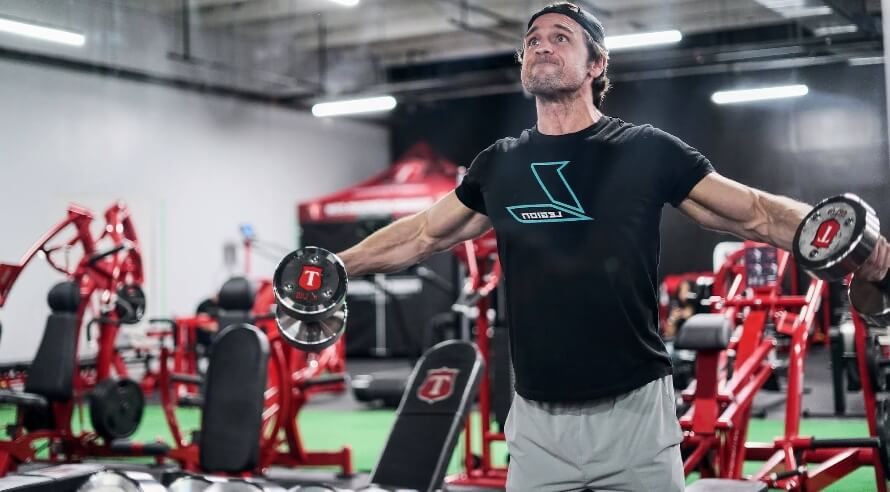
The push pull legs upper lower split (often shortened to “PPLUL split” or simply “PPLUL”) is a 5-day strength training routine combining the push pull legs and upper lower splits.
The PPLUL split can work well for gymgoers of all experience levels. That said, it usually suits people with some training experience best, because it involves more training volume and frequency than many beginners need to make good progress, and some newer lifters may find a 5-day schedule overwhelming.
PPLUL organizes workouts based on movement patterns or the area of the body you’re training. The five types of workouts in the PPLUL split are:
- Push workouts: These train all your upper body muscles that push things away from your torso, such as your chest, shoulders, and triceps
- Pull workouts: These train all the muscles involved in pulling things off the floor or toward your torso, such as your lats, traps, erector spinae (lower back), and biceps.
- Leg workouts: Leg workouts train all the lower body muscles, such as the quads, hamstrings, glutes, and calves.
- Upper body workouts: You train all the muscles in above your waist in an upper body workout.
- Lower body workouts: Lower body workouts are the same as leg workouts.
Example Push Pull Legs Upper Lower 5-Day Split Schedule
In most cases, people schedule the push pull legs upper lower 5 day split like this:
- Monday: Push
- Tuesday: Pull
- Wednesday: Legs
- Thursday: Rest
- Friday: Upper
- Saturday: Lower
- Sunday: Rest
Benefits of the PPLUL Split
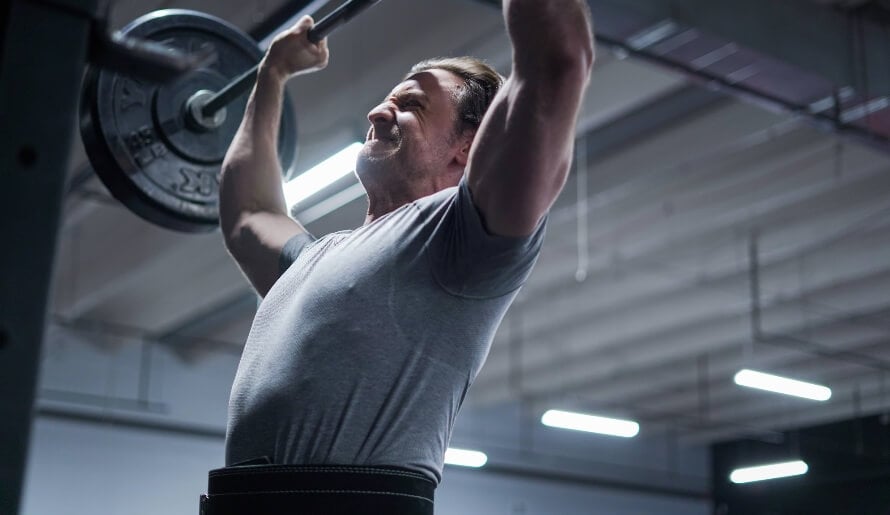
Let’s break down the key benefits that make the PPLUL split an outstanding option for gaining muscle and strength.
Balanced Development
If you follow most PPLUL splits as written, you’ll end up training your upper body 3 days per week and your lower body twice per week, which is a good balance for most people’s goals.
Most people (especially guys) prefer to train their upper body more than their lower body, and most people (men and women) find that they can train their upper body muscles more frequently than their lower bodies.
You can modify almost any workout routine to suit your goals and preferences, but the PPLUL split is an extremely good starting place for most people.
Optimal Frequency
You train each muscle group twice a week on PPLUL, which research shows is more effective for gaining mass and strength than training them less often.12
You also train different muscle groups on different days, giving each at least two days to recover while you work on others. This minimizes your risk of suffering repetitive strain injuries and ensures you can give maximal effort in your workouts, which helps with progressive tension overload—the primary driver of muscle growth.
Simple Structure
The PPLUL split keeps things simple by focusing your workouts on movement patterns and targeting large areas of your body. A straightforward routine like this makes training more enjoyable, and when you enjoy your workouts, you’re far more likely to stick with them (and see results!).
Allows for High-Quality Training
When you train just one muscle group per workout, its performance typically plummets before your workout finishes. To compensate, you usually have to lift lighter weights or do fewer reps in your later sets, which stymies your progress over time.
With the push pull legs upper lower split, you never train any one muscle group to the point of exhaustion. This allows you to perform high-quality reps with heavy weights throughout all your workouts, which is generally better for building muscle and gaining strength.
The Best 5-Day PPLUL Split for Mass & Strength Gain
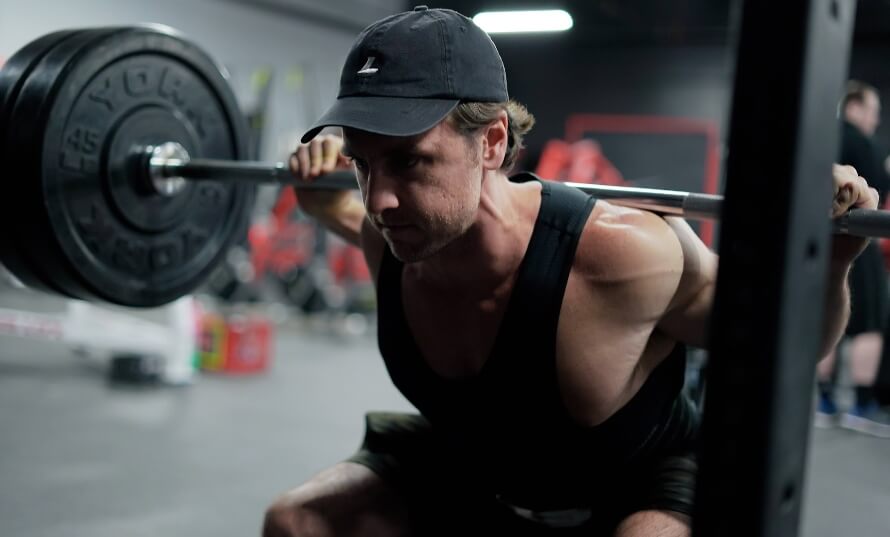
Here’s an excellent 5-day PPLUL split for building muscle and getting strong.
It works so well because it centers around compound exercises that allow you to lift heavy weights and progress regularly, so they’re ideal for gaining mass and strength.
It also includes an ideal mix of volume and intensity for getting bigger and stronger without wearing yourself out.
Day 1: Push
- Flat Barbell Bench Press: 3 sets | 4–6 reps | 3–5 min rest
- Standing Overhead Press: 3 sets | 4–6 reps | 3–5 min rest
- Incline Dumbbell Bench Press: 3 sets | 6–8 reps | 2–3 min rest
- Dumbbell Side Lateral Raise: 3 sets | 6–8 reps | 2–3 min rest
Day 2: Pull
- Deadlift: 3 sets | 4–6 reps | 3–5 min rest
- Pull-up: 3 sets | 4–6 reps | 3–5 min rest
- One-Arm Dumbbell Row: 3 sets | 6–8 reps | 2–3 min rest
- Dumbbell Curl: 3 sets | 6–8 reps | 2–3 min rest
Day 3: Legs
- Back Squat: 3 sets | 4–6 reps | 3–5 min rest
- Leg Press: 3 sets | 4–6 reps | 3–5 min rest
- Bulgarian Split Squat: 3 sets | 6–8 reps | 2–3 min rest
- Seated Calf Raise: 3 sets | 6–8 reps | 2–3 min rest
Day 4: Upper
- Incline Barbell Bench Press: 3 sets | 4–6 reps | 3–5 min rest
- Barbell Row: 3 sets | 4–6 reps | 3–5 min rest
- Dip: 3 sets | 6–8 reps | 2–3 min rest
- Overhead Triceps Extension: 3 sets | 6–8 reps | 2–3 min rest
Day 5: Lower
- Front Squat: 3 sets | 4–6 reps | 3–5 min rest
- Romanian Deadlift: 3 sets | 4–6 reps | 3–5 min rest
- Lunge: 3 sets | 6–8 reps | 2–3 min rest
- Leg Curl: 3 sets | 6–8 reps | 2–3 min rest
An Alternative to PPLUL: Upper Lower Push Pull Legs (ULPPL)
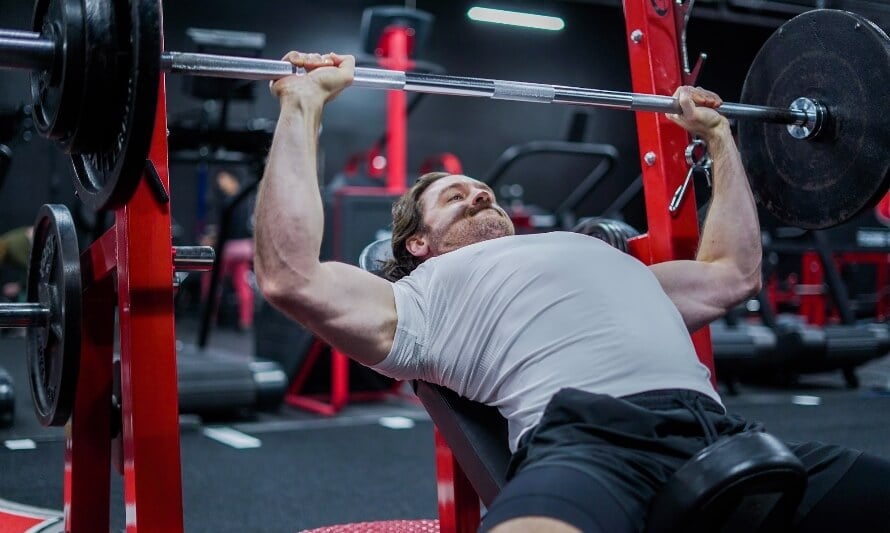
The PPLUL split works exceptionally well, but it’s not everyone’s favorite sequence. If you prefer a different approach, the ULPPL split is a solid alternative. It rearranges your training to start with upper and lower body workouts, followed by push, pull, and leg days.
You could just reshuffle your PPLUL workouts to match this format, but it generally works best if you also rejigger a few of the workout so your hardest exercises occur earlier in the week, when you’re freshest.
Here’s how:
Day 1: Upper
- Flat Barbell Bench Press: 3 sets | 4–6 reps | 3–5 min rest
- Pull-up: 3 sets | 4–6 reps | 3–5 min rest
- Incline Dumbbell Bench Press: 3 sets | 6–8 reps | 2–3 min rest
- Dumbbell Side Lateral Raise: 3 sets | 6–8 reps | 2–3 min rest
Day 2: Lower
- Back Squat: 3 sets | 4–6 reps | 3–5 min rest
- Leg Press: 3 sets | 4–6 reps | 3–5 min rest
- Bulgarian Split Squat: 3 sets | 6–8 reps | 2–3 min rest
- Seated Calf Raise: 3 sets | 6–8 reps | 2–3 min rest
Day 3: Push
- Standing Overhead Press: 3 sets | 4–6 reps | 3–5 min rest
- Incline Barbell Bench Press: 3 sets | 4–6 reps | 3–5 min rest
- Dip: 3 sets | 6–8 reps | 2–3 min rest
- Overhead Triceps Extension: 3 sets | 6–8 reps | 2–3 min rest
Day 4: Pull
- Deadlift: 3 sets | 4–6 reps | 3–5 min rest
- Seated Cable Row: 3 sets | 4–6 reps | 3–5 min rest
- Lat Pulldown: 3 sets | 6–8 reps | 2–3 min rest
- Dumbbell Curl: 3 sets | 6–8 reps | 2–3 min rest
Day 5: Legs
- Front Squat: 3 sets | 4–6 reps | 3–5 min rest
- Romanian Deadlift: 3 sets | 4–6 reps | 3–5 min rest
- Lunge: 3 sets | 6–8 reps | 2–3 min rest
- Leg Curl: 3 sets | 6–8 reps | 2–3 min rest
Supplements to Maximize Results on the PPLUL Split
You don’t need supplements to gain muscle and strength on the PPLUL split, but the right ones can help you progress faster. Here are three worth considering:
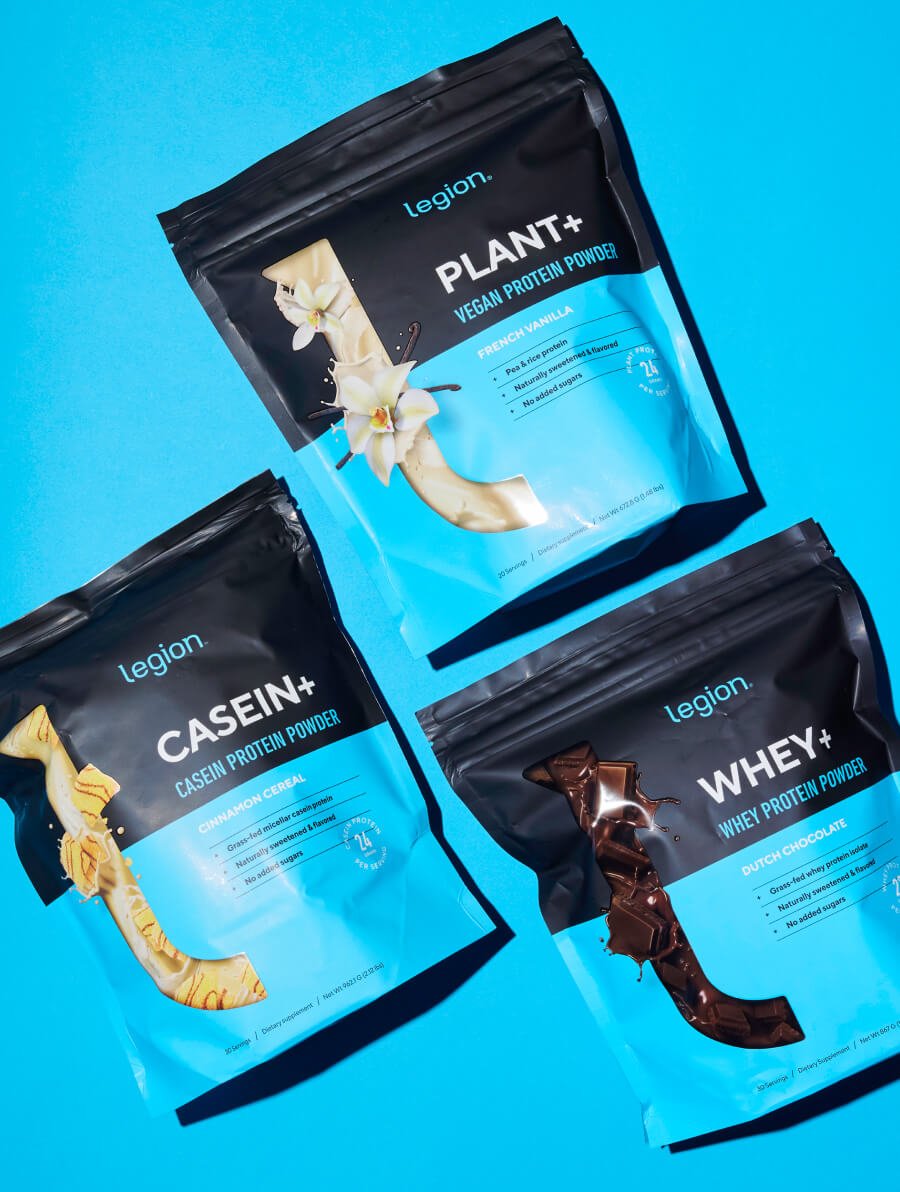
- Protein powder: Eating enough protein is essential for building and repairing muscle. Protein powders like Whey+, Casein+ and Egg+ make hitting your target easier.
- Creatine: Creatine boosts muscle and strength gain, improves anaerobic endurance, and reduces muscle damage and soreness.34 For a natural source of creatine, try Legion’s creatine monohydrate powder, creatine gummies, creatine capsules, or post-workout Recharge.
- Pre-workout: A quality pre-workout helps you train harder by boosting energy, focus, and athletic performance. Legion’s Pulse is available with or without caffeine.
Want even more specific supplement advice? Take the Legion Supplement Finder Quiz to learn exactly what supplements are right for you.
FAQ #1: Is the PPLUL split good for beginners?
Yes, PPLUL works exceptionally well for beginners. It’s a straightforward routine that balances volume and recovery effectively, making it easy to follow and helping you build strength and muscle without overloading yourself.
That said, beginners can also make excellent progress with fewer training days. If committing to five hard training days per week feels overwhelming, starting with a less frequent routine might be a better fit.
RELATED: The Complete Beginner’s Guide to Weightlifting
FAQ #2: Is PPLUL better than PPL?
It depends on how often you want to train. If you want to train 5 days a week, the PPLUL split is superior to the traditional 3-day PPL split because it allows for more frequency and volume.
On the other hand, if you can only train 3 days per week, the regular PPL split is the better option because it fits your schedule more realistically.
That said, you can easily tweak PPL to make it a 5-day routine. In that case, the two programs are nearly identical, so do whichever you prefer.
RELATED: The Best Push Pull Legs Routines for Mass Gains
FAQ #3: What is the difference between PPLUL and ULPPL?
The main difference between PPLUL and ULPPL is the order of the workouts.
In a PPLUL split, you train push, pull, and legs first, then finish the week with upper and lower body workouts. In a ULPPL split, you do upper and lower body workouts first, then finish the week with push, pull, and legs.
In practice, the two splits are very similar. The best option usually comes down to which workout order you prefer and which best fits your schedule.
FAQ #4: Is PPLUL the best split?
PPLUL is an excellent splits for people who want to train 5 days per week and build muscle and strength with a balanced, high-frequency routine.
That said, it isn’t the best split for everyone. If you can only train 3 or 4 days per week, or you recover poorly from higher-volume, higher-frequency training, another split may suit you better.
In other words, PPLUL is a solid option, but the “best” split is the one that matches your goals, schedule, recovery, and preferences and that you can stick with consistently.
FAQ #5: Is PPLUL better than the upper lower split?
This depends on your schedule and goals. An upper-lower split typically involves 4 training days per week, while PPLUL spreads your workouts over 5 days. The extra day of training allows for more volume, which should lead to slightly better results if you recover well.
However, if you can only train four days a week, an upper-lower split is an excellent alternative that can still deliver impressive results.
RELATED: The Best 3-, 4- & 5-Day Upper Lower Workout Splits for Mass
Want More Content Like This?
Check out these articles:
- The 12 Best Science-Based Strength Training Programs for Gaining Muscle and Strength
- The PHUL Workout Routine: Complete 4-Day Program Guide
- The Complete Guide to the PHAT Workout Program
Scientific References +
- ↩ “Comparison of 1 Day and 3 Days per Week of Equal-Volume… : The Journal of Strength & Conditioning Research. https://journals.lww.com/nsca-jscr/Abstract/2000/08000/Comparison_of_1_Day_and_3_Days_Per_Week_of.6.aspx
- ↩ Crewther, Blair, et al. “The Effects of Two Equal-Volume Training Protocols upon Strength, Body Composition and Salivary Hormones in Male Rugby Union Players.” https://pmc.ncbi.nlm.nih.gov/articles/PMC4885621/
- ↩ Eckerson, Joan M., et al. “Effect of Creatine Phosphate Supplementation on Anaerobic Working Capacity and Body Weight after Two and Six Days of Loading in Men and Women.” The Journal of Strength and Conditioning Research. https://pubmed.ncbi.nlm.nih.gov/16287344/
- ↩ Bassit, Reinaldo Abunasser, et al. “Effect of Short-Term Creatine Supplementation on Markers of Skeletal Muscle Damage after Strenuous Contractile Activity.” European Journal of Applied Physiology. https://pubmed.ncbi.nlm.nih.gov/19956970/