
Pre-workout is supposed to make your workout better. So why does it sometimes do the opposite—making you shaky, nauseous, wide awake at midnight, or wondering if your heart is beating too fast?
Most advice on pre-workout side effects is useless. It either tells you pre-workout is “dangerous” (it usually isn’t), or it dismisses your experience as normal and tells you to deal with it (not always a good idea).
The truth is simpler: most side effects come from a handful of predictable causes—and once you know what they are, you can usually fix them fast.
Key Takeaways
- Most pre-workout side effects are caused by taking too much caffeine or other stimulants or timing your supplement poorly.
- The most common pre-workout side effects include jitters, anxiety, sleep problems, faster heart rate, skin tingling, digestive issues, and headaches.
- In many cases, side effects can be reduced by using a smaller serving, taking pre-workout with food, and avoiding other sources of caffeine.
- Choosing products with transparent labels or switching to a stimulant-free pre-workout can also help prevent side effects.
- If you want a pre-workout that’s lab-tested for purity and accuracy and independently certified to meet or exceed strict safety guidelines, try Pulse with or without caffeine.
Table of Contents
+
Common Pre-Workout Side Effects

Pre-workout can be helpful, but it’s not unusual to feel “off” after taking it—especially if you’re new to it, you took a bigger dose than you should have, or you stacked it with other stimulants (coffee, energy drinks, fat burners, etc.).
Most of the time, the side effects are predictable—and so are the reasons they happen. Let’s start with the most common.
Jitters and Anxiety
If pre-workout gives you jitters or anxiety, you’ll usually feel shaky (often in your hands), restless, or “wired,” which can make it hard to settle into your workout.
Most of the time, this happens because you’ve taken more caffeine (or other stimulants) than your personal tolerance allows, especially if you take it on an empty stomach. It may also happen if you don’t take it as directed.
To avoid it, use a smaller serving, don’t combine pre-workout with other stimulants, and take it after a small meal if you’re sensitive. Taking a pre-workout that contains L-theanine can also take the edge off the potential jitteriness or anxiety.
Insomnia and Sleep Disruption
If pre-workout interferes with your sleep, it usually shows up as trouble falling asleep, lighter sleep, waking up during the night, or feeling “tired but wired” at bedtime.
Most of the time, this happens because caffeine (or other stimulants) is still active in your system, so your brain stays alert when it should be winding down.
It’s most common when you take pre-workout late in the day, use a high-stim formula, or stack it with other caffeine.
To avoid this, don’t take pre-workout within 6–8 hours of bedtime, keep your total daily caffeine lower, and use a stim-free option for afternoon or evening workouts.
Increased Heart Rate and Blood Pressure
Some people notice their heart beating faster than normal after taking pre-workout, especially if it contains caffeine or other stimulants. In healthy people, this is usually temporary and not dangerous, but it can feel unsettling if you’re not used to the sensation.
It happens because stimulants affect your nervous system in a way that can increase heart rate and sometimes raise blood pressure.
It’s most likely when you take larger doses, combine pre-workout with other caffeine sources, or take it when you’re dehydrated or already stressed.
To reduce the chances of this happening, use smaller servings, avoid stacking caffeine, stay well hydrated, or choose a stim-free pre-workout.
Tingling Skin (Paresthesia)
If you feel a tingling or itching sensation in your face, hands, or arms after taking pre-workout, you’re experiencing something called paresthesia. It can feel strange, but it’s harmless and usually fades within 30–60 minutes.
This happens because beta-alanine—a common pre-workout ingredient—activates nerve receptors in the skin. It’s not an allergic reaction, and it doesn’t mean anything is wrong.
To reduce or avoid the tingles, you can split your dose (for example, take half earlier in the day and half later), take beta-alanine with food, or choose a pre-workout without beta-alanine.
Digestive Issues
Some people notice an urgent need to use the bathroom after taking pre-workout. It’s inconvenient, but it’s usually not a sign that anything is seriously wrong.
Most of the time, this happens because caffeine stimulates colonic motor activity—the process that moves contents through your digestive tract. Taking pre-workout on an empty stomach can make this effect more noticeable.
To reduce the chances, use smaller servings, take pre-workout with a meal, or switch to a stim-free pre-workout.
Headaches
Some people get a dull headache or pressure behind the eyes after taking pre-workout, either during their workout or later in the day. It’s uncomfortable, but it’s usually not a sign of anything serious.
This can happen because caffeine can narrow blood vessels in the brain, which may trigger headaches in some people (while helping relieve them in others). Headaches are also more likely if you’re dehydrated, which caffeine can contribute to.
You’re more likely to get a headache if you take too much caffeine for your tolerance, don’t drink enough fluids, or stack pre-workout with other caffeine sources.
To reduce the chances, stay well hydrated, use a smaller serving, avoid stacking caffeine, or choose a lower-stim or stim-free pre-workout.
Other Ways to Reduce Pre-Workout Side Effects
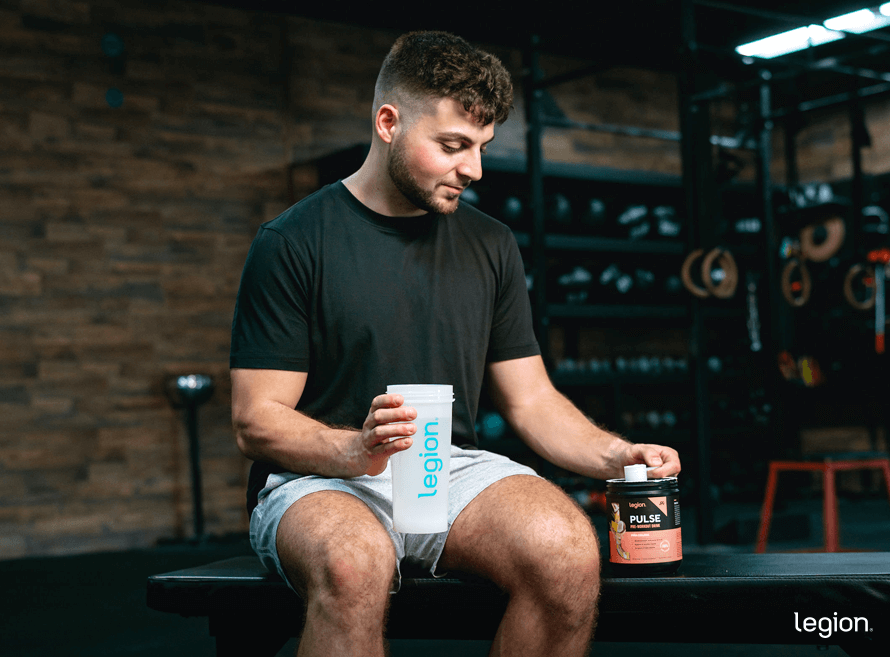
If you’re still dealing with side effects despite dialing in your dose and timing, there are two bigger-picture choices that can make a real difference: what kind of formula you use and whether it contains stimulants at all.
Choose Transparent Formulas
Avoid pre-workouts that rely on “proprietary blends,” “matrixes,” or “complexes.” Instead, choose products that clearly list every ingredient and its exact dose.
It’s also smart to stick with brands that use independent, third-party testing to verify ingredient purity and dosing accuracy. Supplements without this testing are more likely to contain undeclared ingredients or incorrect amounts, and inaccurate labels make dosing much harder to control.
In other words, transparency makes it easier to know what you’re taking—and to avoid accidentally taking more than you intended.
For a pre-workout that’s independently certified by Labdoor™ to meet or exceed FDA safety guidelines, try Pulse.
Avoid “Mega” Doses
Some pre-workouts include very large doses of caffeine and suggest that more is always better. That isn’t what the research shows.
Once total caffeine intake goes beyond about 6 mg per kilogram of body weight per day from all sources, performance benefits tend to level off while the risk of side effects increases.
For most people, the goal isn’t the most caffeine possible—it’s an effective dose you tolerate well. In practice, that usually means a pre-workout with around 350 mg of caffeine.
Consider a Stim-Free Option
Because most pre-workout side effects are linked to stimulants, using a truly stimulant-free pre-workout can significantly reduce issues like jitters, anxiety, sleep disruption, headaches, and digestive upset.
The main thing to keep in mind is that many products marketed as “stim-free” aren’t actually stimulant-free. In some cases, manufacturers remove caffeine but replace it with lesser-known stimulants like synephrine, yohimbine, hordenine, or theacrine, which can still trigger side effects.
To minimize pre-workout side effects, choose non-stim products from a reputable brand that fully discloses ingredients and doses, avoids proprietary blends, uses third-party testing, and doesn’t hide stimulants behind unfamiliar ingredient names.
And for a stim-free pre-workout that meets all these criteria, try stim-free Pulse.
When Pre-Workout Side Effects Are a Red Flag

Most pre-workout side effects are mild and easy to fix by adjusting dose or timing. That said, there are situations where side effects are a sign that pre-workout isn’t a good fit for you, or that you should stop using it altogether.
This is especially true if symptoms are severe, persistent, or show up even at low doses.
Who Should Be Extra Cautious
You should be more careful with pre-workout if you’re sensitive to stimulants, have high blood pressure, heart issues, or anxiety that’s easily triggered by caffeine. The same applies if you’re pregnant or breastfeeding, since most pre-workout ingredients haven’t been studied in these contexts.
When to Stop Using It and Talk to a Clinician
Stop using pre-workout and talk to a clinician if you experience chest pain, severe palpitations, dizziness, fainting, or ongoing sleep or anxiety problems that don’t improve when you lower the dose or switch formulas. Those symptoms aren’t something to push through.
The Bottom Line on Pre Workout Side Effects
Most pre-workout side effects are mild, predictable, and dose-related, and they’re usually easy to fix by adjusting how much you take, when you take it, or which formula you use.
For most healthy people, pre-workout isn’t dangerous—but it does require a bit of trial and error to find what your body tolerates well. Start low, avoid stacking stimulants, pay attention to how you feel, and don’t push through side effects that don’t improve.
FAQ #1: Is it okay to take pre-workout daily?
Yes, it can be okay to take pre-workout daily if you tolerate it well and keep your total stimulant intake reasonable. Problems tend to show up when people rely on very high doses, consume caffeine from multiple sources, or use pre-workout to compensate for poor sleep or recovery.
FAQ #2: Is pre-workout safe for the kidneys?
For healthy people with normal kidney function, pre-workout is generally safe when used as directed. If you have any concerns about how pre-workout might affect your kidneys, avoid it or talk to a clinician first.
FAQ #3: Is pre-workout safe for the body?
In healthy adults, pre-workout is usually safe when taken in appropriate amounts. Side effects usually come from overconsuming stimulants or not following the dosage instructions. Using transparent formulas, avoiding stimulant stacking, and paying attention to how your body responds goes a long way.
FAQ #4: Is pre-workout okay for your heart?
For healthy people, pre-workout isn’t usually dangerous for the heart, but stimulants can temporarily raise heart rate and blood pressure. If you have heart issues, high blood pressure, or are sensitive to stimulants, a stim-free option is usually a safer choice.
Want More Content Like This?
Check out these articles:
- Can You Mix Creatine with Pre-Workout for Greater Gains?
- Creatine vs. Pre-Workout: Key Differences & Which to Take
- Pre-Workout vs. Protein Powder: Which Is Best for You?
- Does Pre-Workout Cause Acne? What Science Says
- How Long Does Pre-Workout Take to Kick In?
Scientific References +
- Nehlig, Astrid. “Effects of Coffee on the Gastro-Intestinal Tract: A Narrative Review and Literature Update.” Nutrients, vol. 14, no. 2, 17 Jan. 2022, p. 399, www.ncbi.nlm.nih.gov/pmc/articles/PMC8778943/, https://doi.org/10.3390/nu14020399.
- J. Boekema, M. Samsom, G. P. van Be, P. “Coffee and Gastrointestinal Function: Facts and Fiction: A Review.” Scandinavian Journal of Gastroenterology, vol. 34, no. 230, Jan. 1999, pp. 35–39, https://doi.org/10.1080/003655299750025525.
- Zduńska, Anna, et al. “Caffeine for Headaches: Helpful or Harmful? A Brief Review of the Literature.” Nutrients, vol. 15, no. 14, 1 Jan. 2023, p. 3170, www.mdpi.com/2072-6643/15/14/3170, https://doi.org/10.3390/nu15143170.
- Harty, Patrick S., et al. “Multi-Ingredient Pre-Workout Supplements, Safety Implications, and Performance Outcomes: A Brief Review.” Journal of the International Society of Sports Nutrition, vol. 15, no. 1, 8 Aug. 2018, jissn.biomedcentral.com/articles/10.1186/s12970-018-0247-6, https://doi.org/10.1186/s12970-018-0247-6.
- Guest, Nanci S., et al. “International Society of Sports Nutrition Position Stand: Caffeine and Exercise Performance.” Journal of the International Society of Sports Nutrition, vol. 18, no. 1, 2 Jan. 2021, jissn.biomedcentral.com/articles/10.1186/s12970-020-00383-4, https://doi.org/10.1186/s12970-020-00383-4.