You can build a wider back and thicker biceps with fewer exercises, less time, and less effort than you probably think.
Most lifters assume they need marathon back and biceps workouts involving endless variations of rows, pulldowns, and curls. They don’t. What they need is the right combination of movements, in the right order, pushed with the right effort.
That’s it.
In this guide, I’ll show you a back and biceps workout built around those principles—the same ones I’ve used with thousands of people who wanted a simple, effective, repeatable approach. So if you want clarity, structure, and measurable progress, you’re in the right place.
Key Takeaways
- You don’t need marathon back and biceps workouts—a few heavy pulls (deadlifts, rows, pull-ups or pulldowns) plus 1–2 curl variations are enough to build a big, strong back and thick biceps.
- Training back and biceps together works so well because most back exercises already hammer your biceps, so training them together makes your workouts more time-efficient and easier to program and recover from.
- A simple, effective structure is: deadlift first, then a vertical pull, then a horizontal row, then 1–2 biceps isolation exercises that train your arms from different angles.
- To keep building muscle, train 1–2 reps shy of failure and strive to add weight and reps to every exercise in every workout.
- You don’t need supplements to build back and biceps size and strength, but protein powder, creatine, and pre-workout can help you get there faster.
Table of Contents
+
What Is a Back and Biceps Workout?
A back and biceps workout is a training session where you work the major muscles of your back—your lats, traps, rhomboids, rear delts, and spinal erectors—along with your biceps in the same workout. Here’s how all those muscles look on your body:
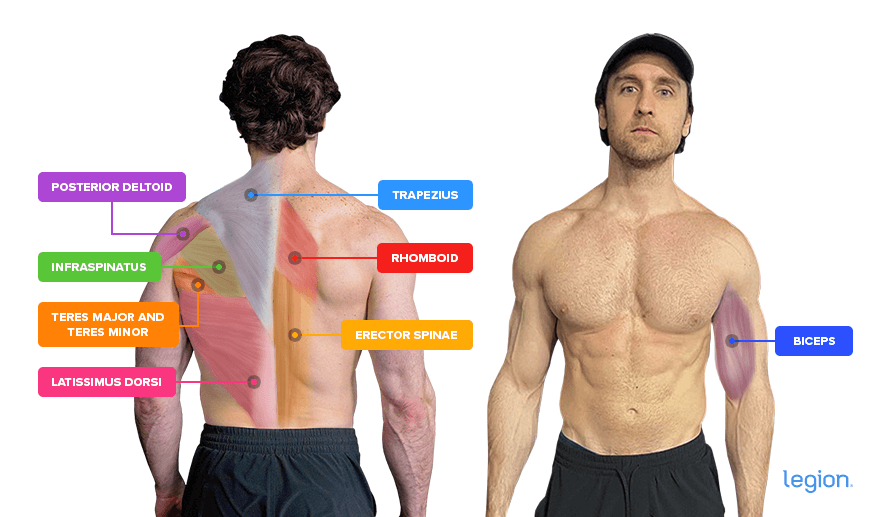
Most back exercises are pulling movements. When you do rows, pull-ups, pulldowns, or similar exercises, your biceps help bend your elbows and move the weight. Because of this natural overlap, it makes sense to train both muscle groups together.
A typical “back and bi” workout looks like this:
- A few heavy compound back exercises (deadlifts, rows, pull-ups, pulldowns).
- A couple of curl variations to train your biceps directly.
Should You Train Back and Biceps Together?
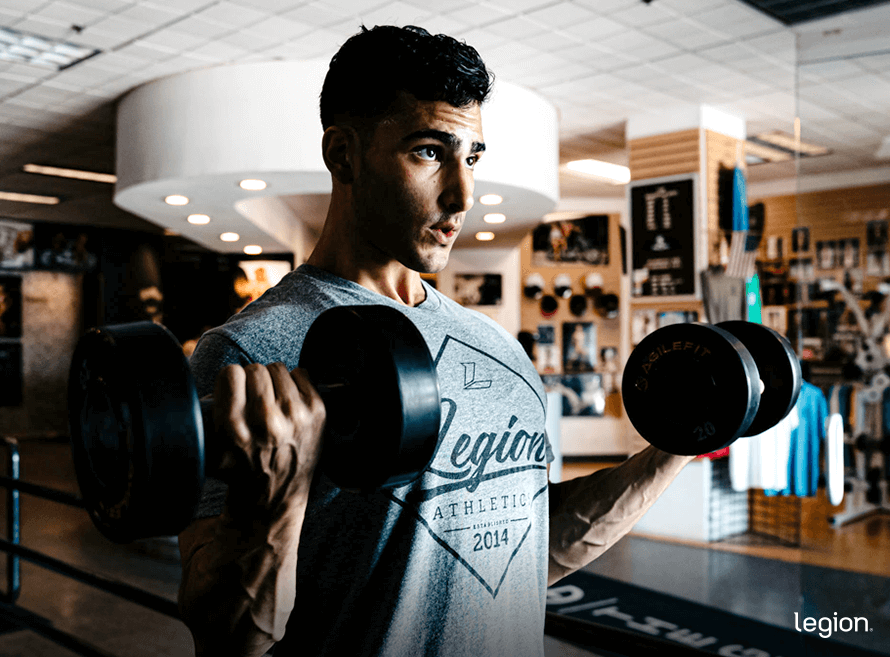
For most people, yes—training back and biceps together makes a lot of sense. In fact, many people already do it without knowing.
If you follow a push pull legs (PPL) split, your pull day is basically a back and biceps workout. And if you run an upper lower split, one of your upper body days usually focuses on pulling exercises, which again means back and biceps end up paired naturally.
The biggest benefit of training back and biceps together is time efficiency. You can train two major upper body muscle groups in one session instead of spreading them across multiple days. Since your biceps already work hard during rows, pull-ups, and pulldowns, it’s also a logical way to organize your training.
That said, there are a few cases where splitting them up can help:
- Your biceps are a major weak point: Training them twice per week—once as part of a back day and once on a separate day—gives them more total volume. It also means you train your biceps once when they’re completely fresh, which helps boost performance and gains.
- Your job or sport involves a lot of pulling: If you regularly do manual labor or play sports that tax your back and pulling strength, separating back and biceps across different days may help you manage fatigue better.
Still, for most lifters, putting back and biceps on the same day is simple, effective, and easy to recover from.
The Best Back and Biceps Exercises for Muscle Growth
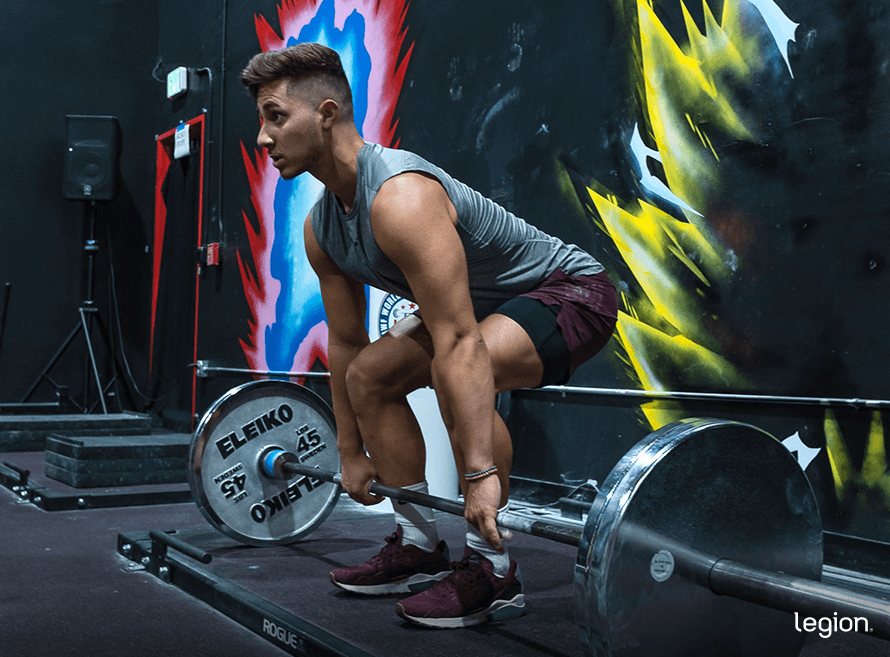
To build a big upper body with a back and biceps workout, you don’t need dozens of exercises. You need a few high-quality movements that let you:
- Lift heavy weights safely
- Challenge your muscles with progressively heavier weights over time
- Target the muscles from slightly different angles and through varying ranges of motion
With that in mind, here are the exercises that work best . . .
Key Compound Back Exercises for a Back and Biceps Workout in the Gym
These are the “meat and potatoes” of your back and biceps training. They work a lot of muscle at once and give you the most bang for your buck.
Deadlift
The deadlift is a horrible exercise for people who aren’t strength athletes,” said someone who was full of shit.
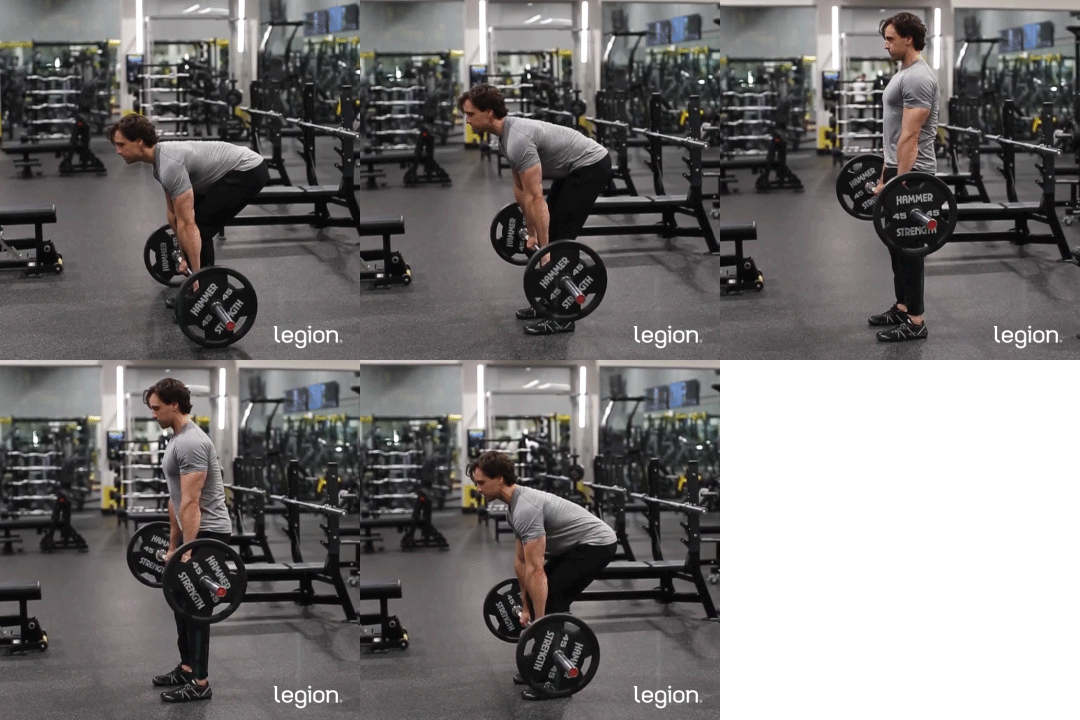
The deadlift is one of the best exercises for building overall back size and strength. It trains your spinal erectors, lats, traps, rhomboids, and teres major, and because it recruits so many large muscles at once, it lets you lift more weight—and add weight more consistently—than almost any other back movement.
How to:
- Stand with your feet slightly narrower than shoulder width, toes pointed slightly out.
- Position the bar over your midfoot, about an inch from your shins.
- Push your hips back and grip the bar just outside your legs.
- Take a deep breath, brace your core, and flatten your back.
- Drive through your heels to stand upright, keeping the bar close to your body.
- Reverse the movement and return to the starting position.
READ MORE: How to Deadlift with Proper Technique
Pull-up
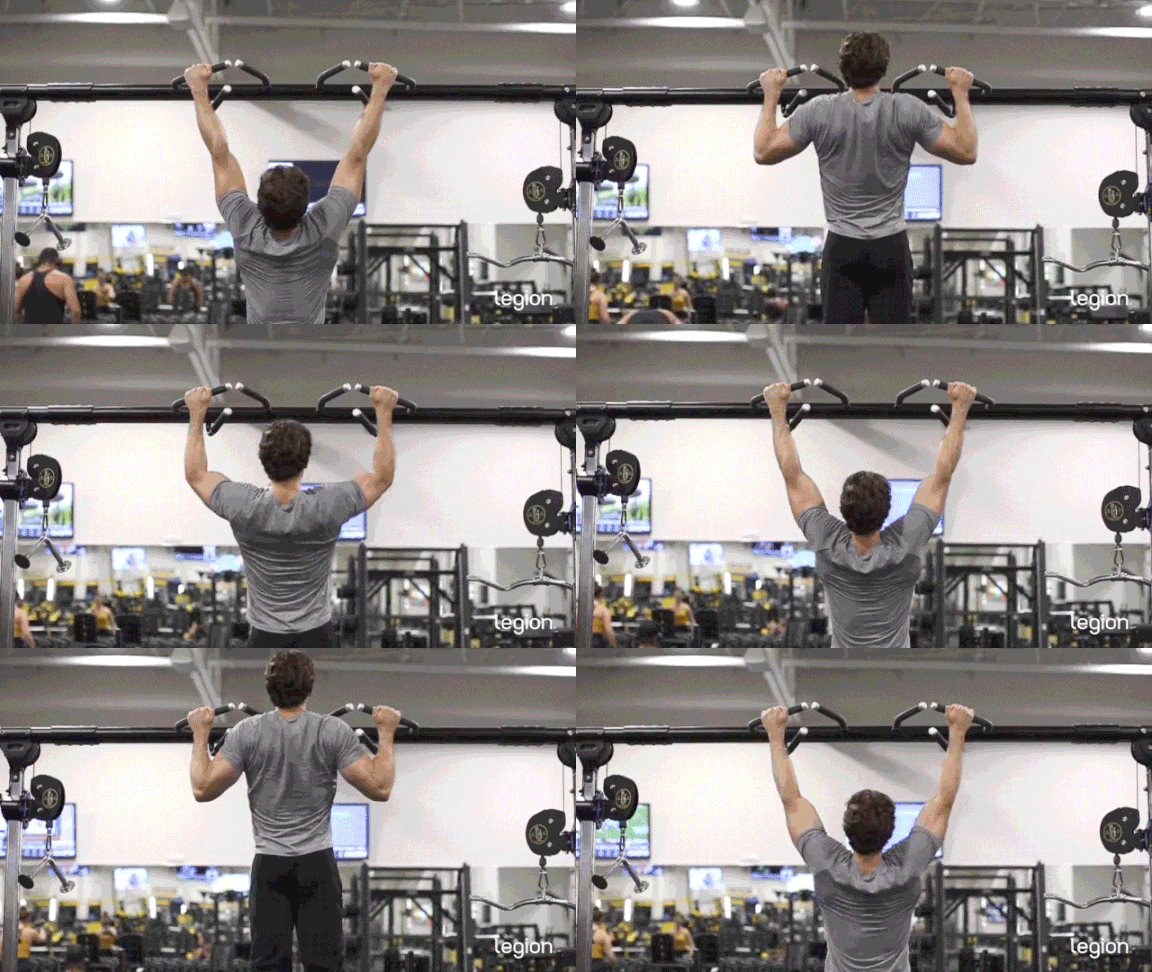
The pull-up is especially effective for developing your lats, which play a major role in creating the wide, V-shaped upper body many people want. It also trains your biceps heavily, which makes it a perfect fit for any good back and biceps workout—you get a ton of back and arm stimulation from a single movement.
In the Legion back and biceps workout routine, you’ll be doing sets of 4–6 reps. Once you hit the top of this range for a set using your body weight, start adding resistance by attaching plates to a dip belt or holding a dumbbell between your thighs or ankles.
This allows you to keep overloading your muscles when your body weight is no longer heavy enough.
How to:
- Grab a pull-up bar slightly wider than shoulder-width apart, palms facing away.
- Lift your feet so you’re hanging with your arms straight.
- Pull your body up until your chin is above the bar.
- Reverse the movements and return to the starting position.
READ MORE: How to Do Your First Pull-up with Proper Form
Lat Pulldown
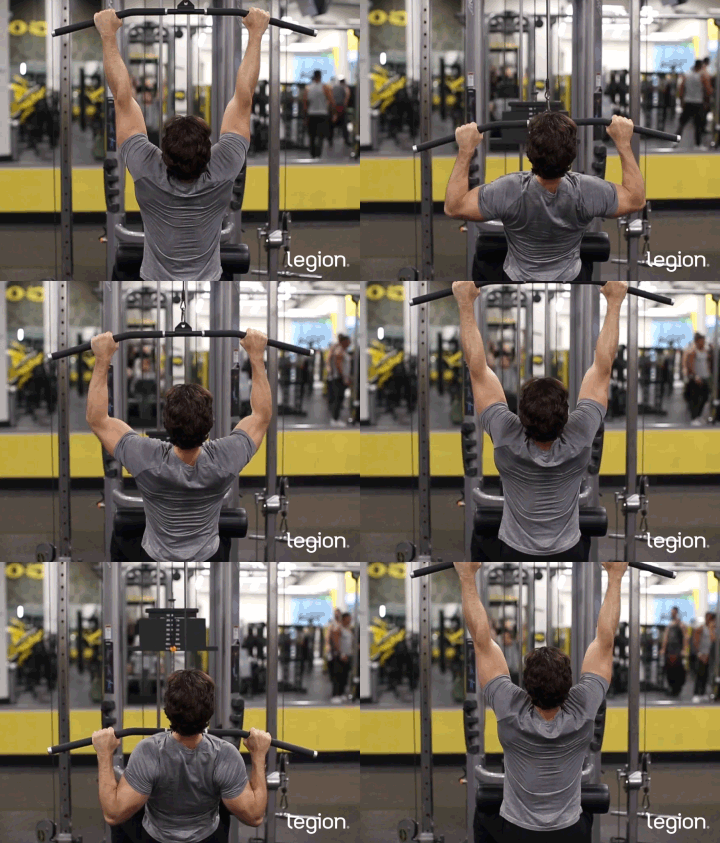
The lat pulldown is an excellent exercise for training your lats, biceps, and traps, and it’s especially useful if you can’t yet do many pull-ups because it trains the same pulling muscles with a load you can easily adjust to your strength level.
How to:
- Adjust the thigh pad so it holds your legs firmly in place.
- Stand up and grab the bar with an overhand grip slightly wider than shoulder width.
- Keeping your grip on the bar, sit down and secure your thighs under the pad.
- Pull the bar down until it reaches your upper chest.
- Reverse the movement and return to the starting position.
READ MORE: How to Do the Lat Pulldown: Form, Benefits, & Variations
Chest-Supported Dumbbell Row
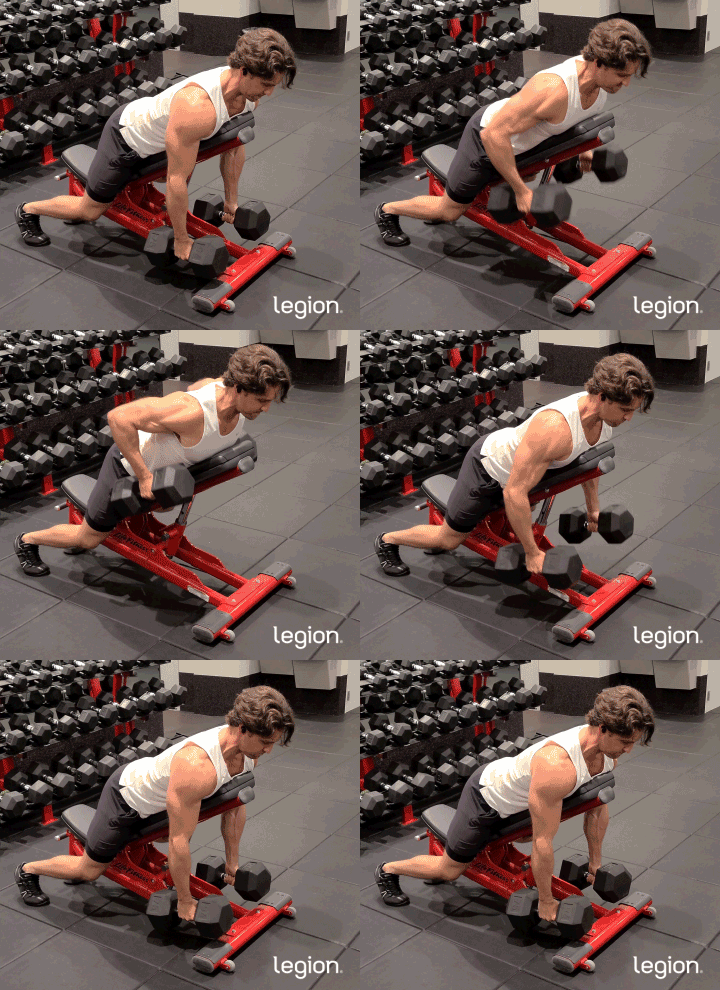
The chest-supported row removes momentum from the lift, which forces your lats, traps, and rhomboids to do all the work. It also takes the stress off your lower back, which is important when you’re already tired from deadlifting.
How to:
- Set an incline bench to roughly a 30-degree angle.
- Grab a dumbbell in each hand and lie face down on the bench with your arms hanging straight toward the floor.
- Pull the dumbbells upward until they’re by your sides
- Reverse the movement and return to the starting position.
READ MORE: Chest-Supported Row: Alternatives, Muscles Worked, and Form
One-Arm Dumbbell Row
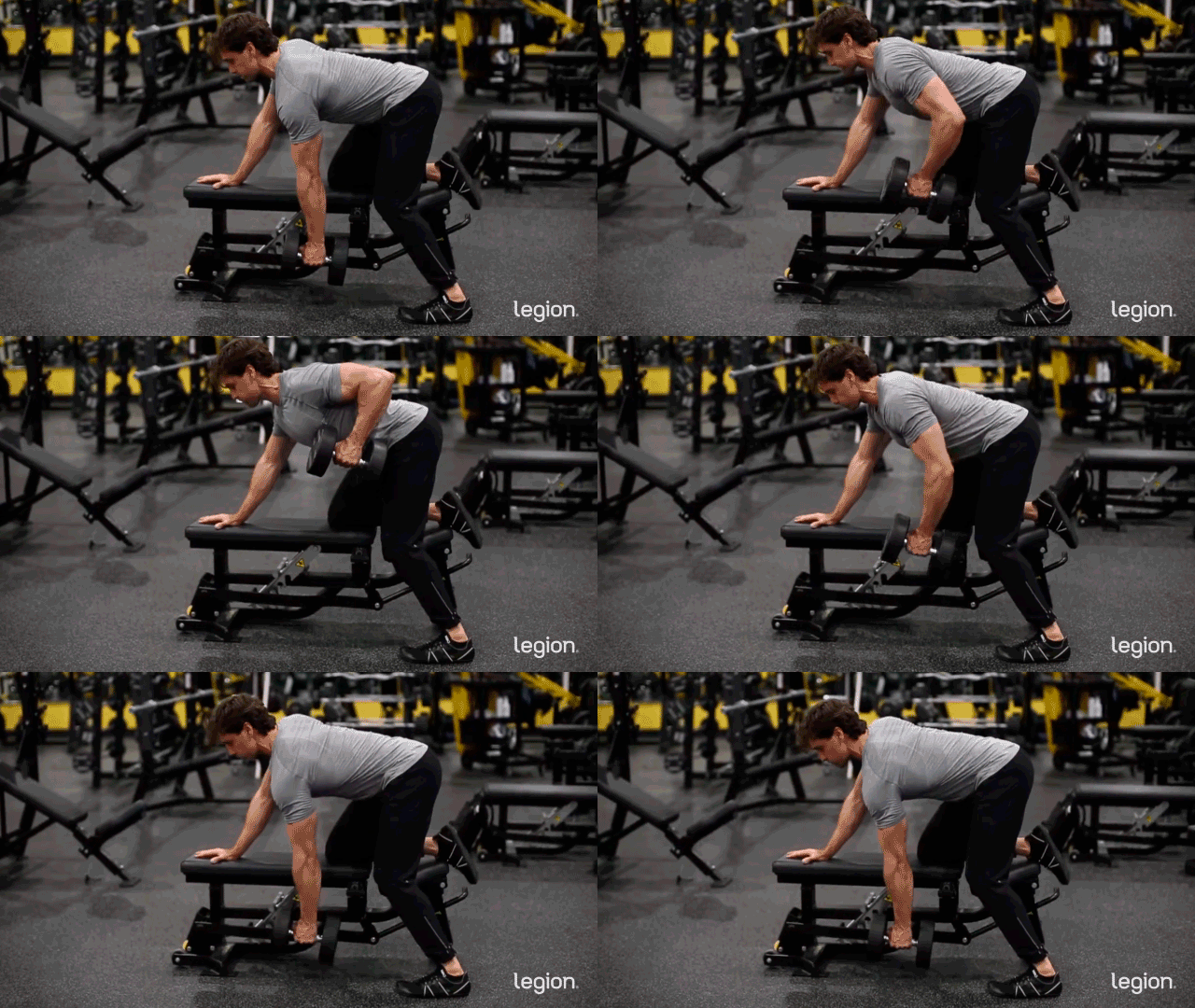
The one-arm dumbbell row lets you train each side of your body independently, which helps you build balanced size and strength. Because you brace against a bench, it also spares your lower back, which will already be fatigued from deadlifting.
How to:
- Hold a dumbbell in your right hand and place your left knee and hand on a bench.
- Keep your right foot on the floor and let your right arm hang straight down.
- With your back flat, pull the dumbbell to your torso.
- Reverse the movement and return to the starting position.
- After completing the desired number of reps, repeat on your left side.
READ MORE: How to Do the Bent-Over Dumbbell Row
Seated Cable Row
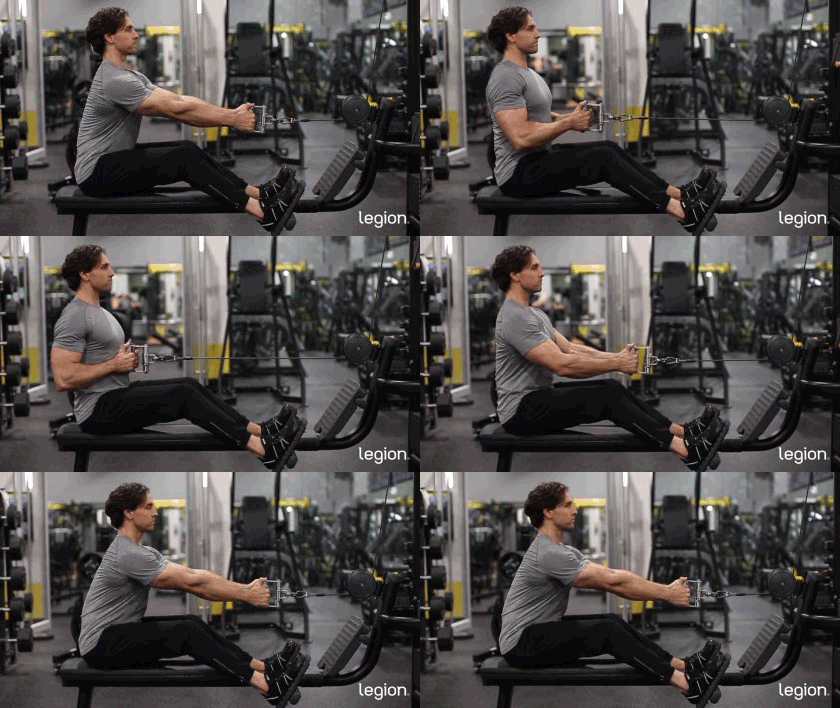
The seated cable row trains nearly every muscle in your back, including your lats, traps, rhomboids, and rear delts, making it one of the best all-around rowing exercises you can do.
Using a cable also keeps constant tension on your muscles throughout each rep, which poses a different challenge than free weights. This adds variety to your workouts, which likely aids growth.
How to:
- Sit down with your feet on the footrests and your knees slightly bent.
- Grab the handle then sit upright with your arms extended in front of you.
- Pull the handle toward your stomach.
- Reverse the movement and return to the starting position.
READ MORE: How to Do the Seated Cable Row: Muscles Worked, Form, and Alternatives
Key Biceps Exercises and Curl Variations
Once you’ve handled your heavy back work, it’s time to get direct with your biceps.
Barbell Curl
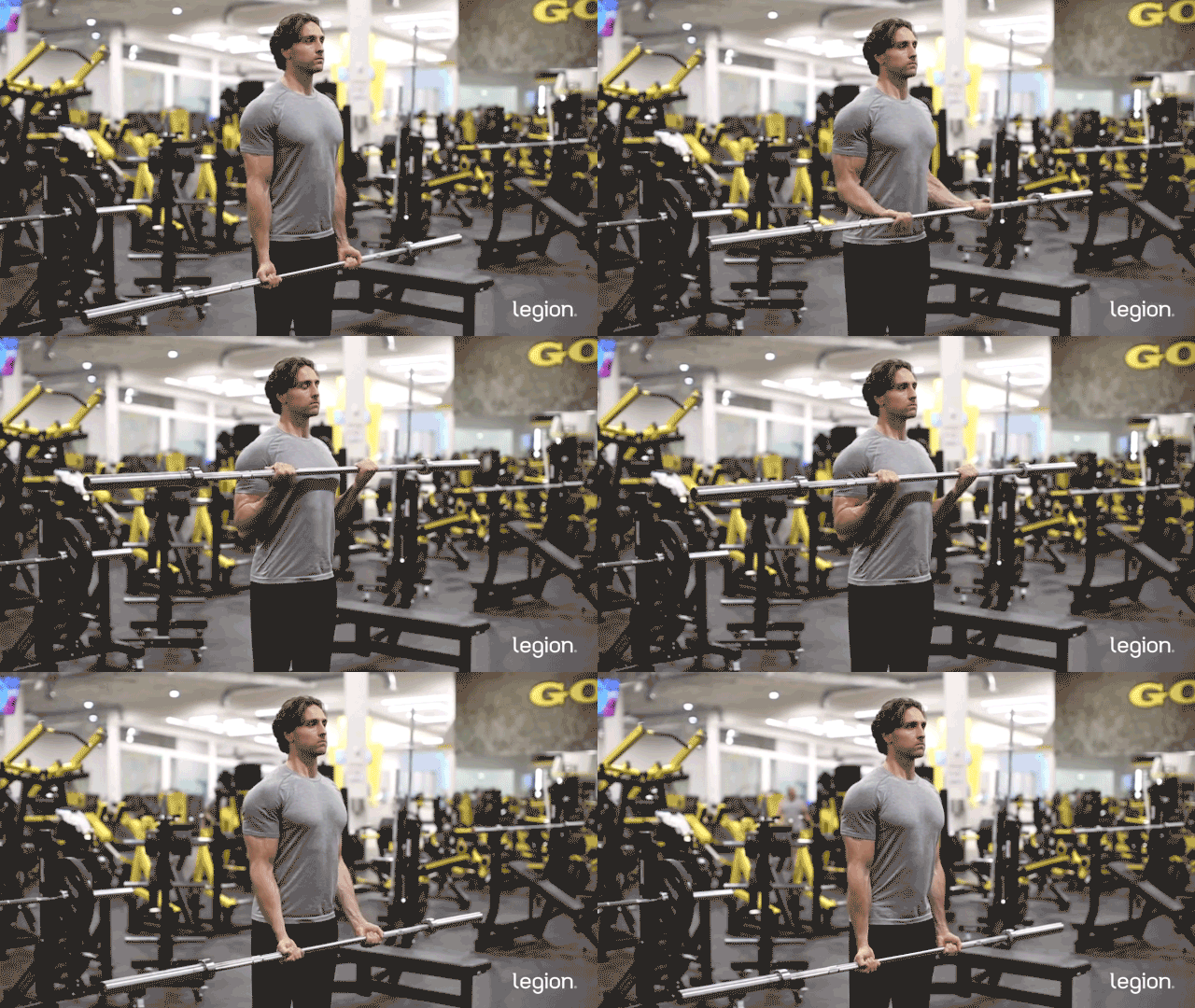
The barbell curl lets you use more weight than most curl variations and trains your biceps through a full range of motion, which makes it one of the best exercises for building size and strength.
How to:
- Stand tall holding a barbell with your palms shoulder width apart and facing forward.
- Keep your arms straight with the bar resting against your thighs.
- Bring the bar to shoulder height by bending your elbows.
- Reverse the movement and return to the starting position.
READ MORE: How to Do Barbell Curls for Massive Biceps
Dumbbell Curl
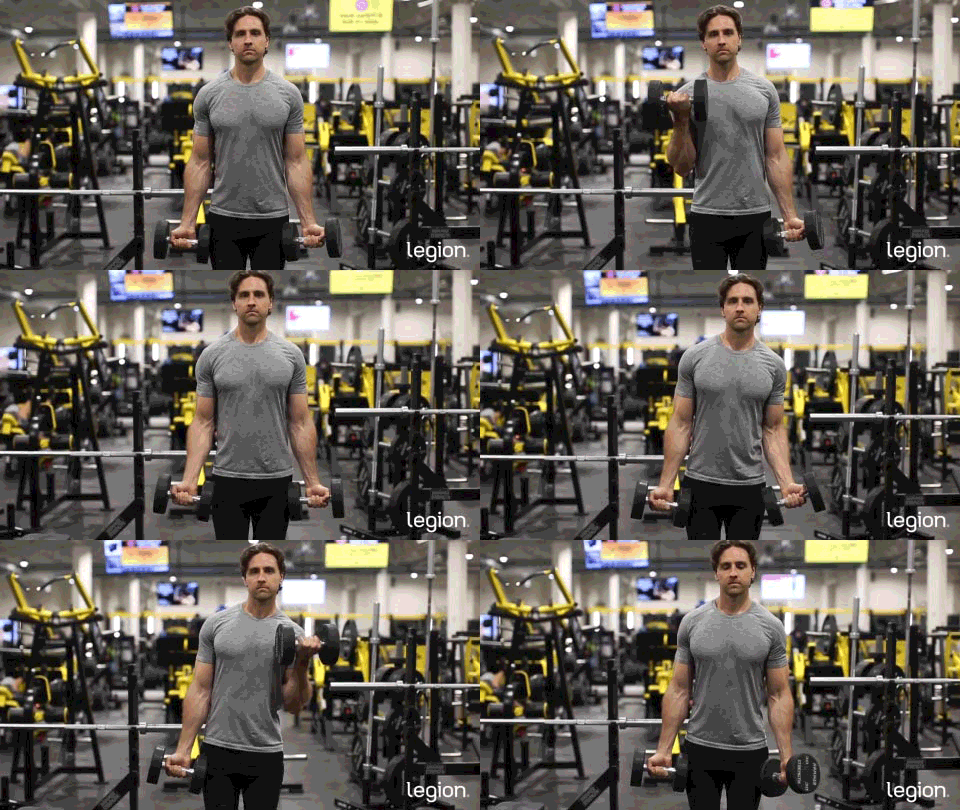
Dumbbell curls are a staple in back and biceps workouts because they’re easy to learn, let each arm work independently, and train your biceps through a full range of motion.
How to:
- Stand with your feet shoulder width apart, holding a dumbbell in each hand at your sides with your palms facing forward.
- Bend your right elbow to curl the dumbbell toward your shoulder.
- Reverse the movement and return to the starting position.
- Repeat with your left arm.
READ MORE: How to Do the Dumbbell Curl: Form, Benefits, and Variations
Preacher Curl
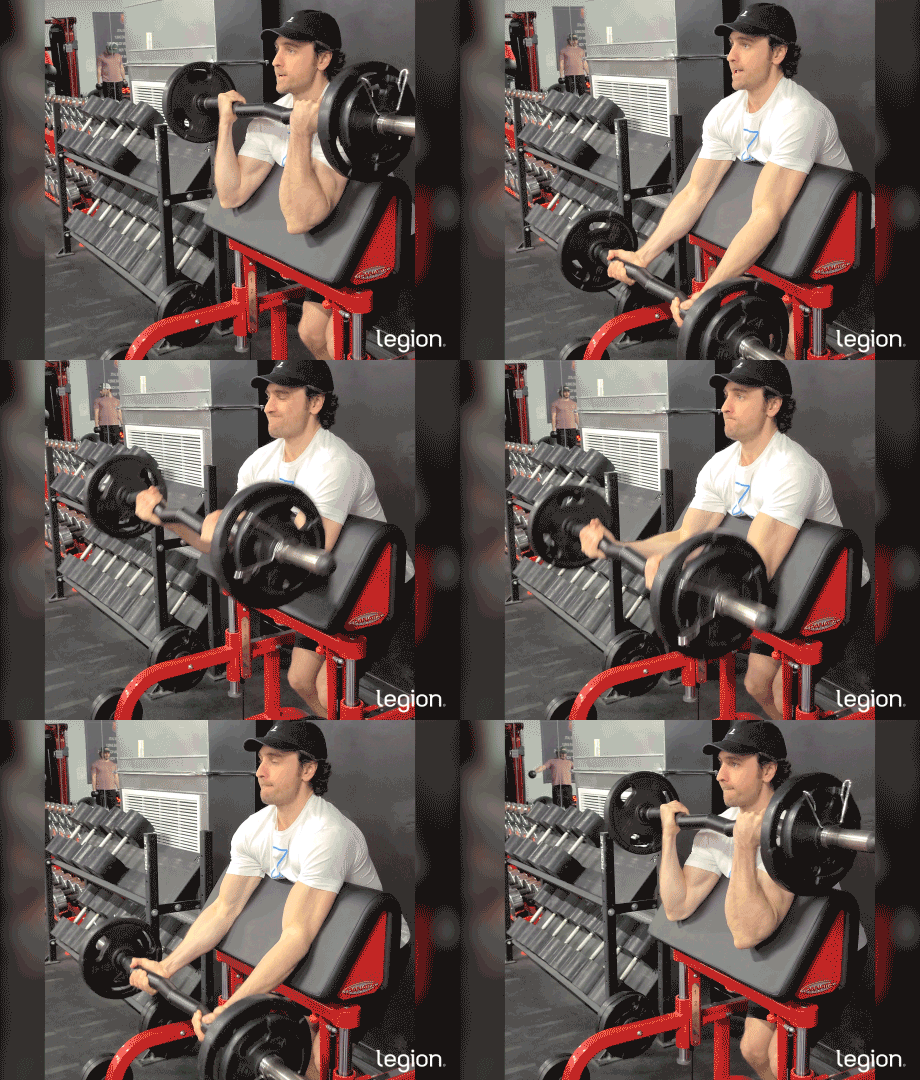
In the preacher curl, your upper arms rest on a preacher bench, which prevents you from using your hips or shoulders to swing the weight and ensures your biceps do almost all the work.
It also places a lot of tension on your biceps in the stretched position, which is likely why research shows the preacher curl is one of the best exercises for building biceps mass.
How to:
- Adjust the preacher curl station so the top of the pad sits snugly in your armpits when you’re seated.
- Grab the bar with a shoulder width, palms up grip.
- Curl the weight to shoulder height, keeping your elbows on the pad.
- Reverse the movement and return to the starting position.
READ MORE: How to Preacher Curl: Benefits, Form & Alternatives
Hammer Curl
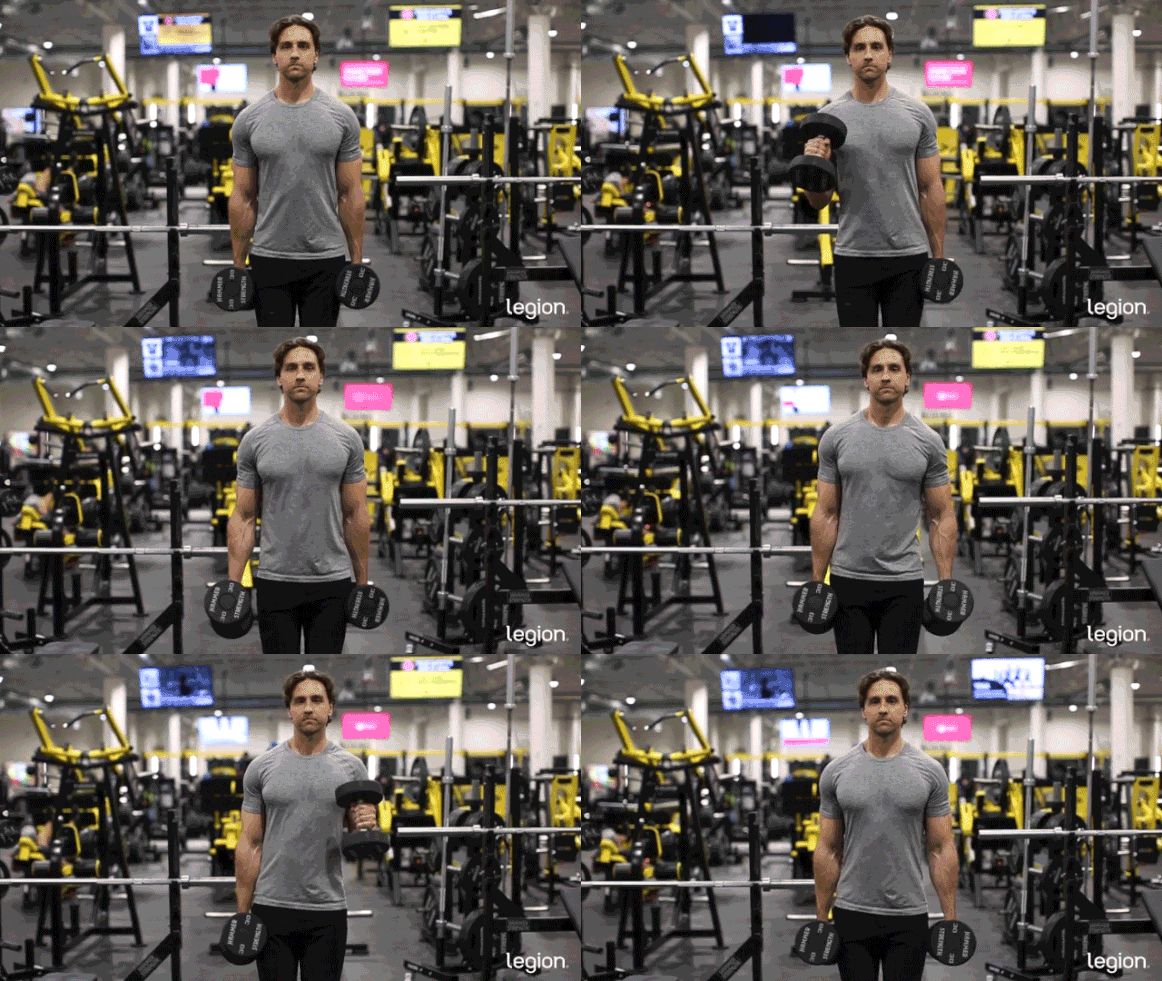
The hammer curl trains your entire biceps but places extra emphasis on the brachialis, a muscle that sits underneath your biceps and helps “push” it up, making your arms look thicker.
It’s also easier on the elbows than many curl variations because you don’t rotate your wrists. This makes it a great addition to a back and biceps workout when you want arm growth without irritating your joints.
How to:
- Stand with your feet shoulder width apart, holding a dumbbell in each hand at your sides with your palms facing your thighs.
- Without twisting your wrist, bend your right elbow to curl the dumbbell toward your shoulder.
- Reverse the movement and return to the starting position.
- Repeat with your left arm.
READ MORE: How to Do Hammer Curls for Biceps and Forearm Size
Bayesian Curl
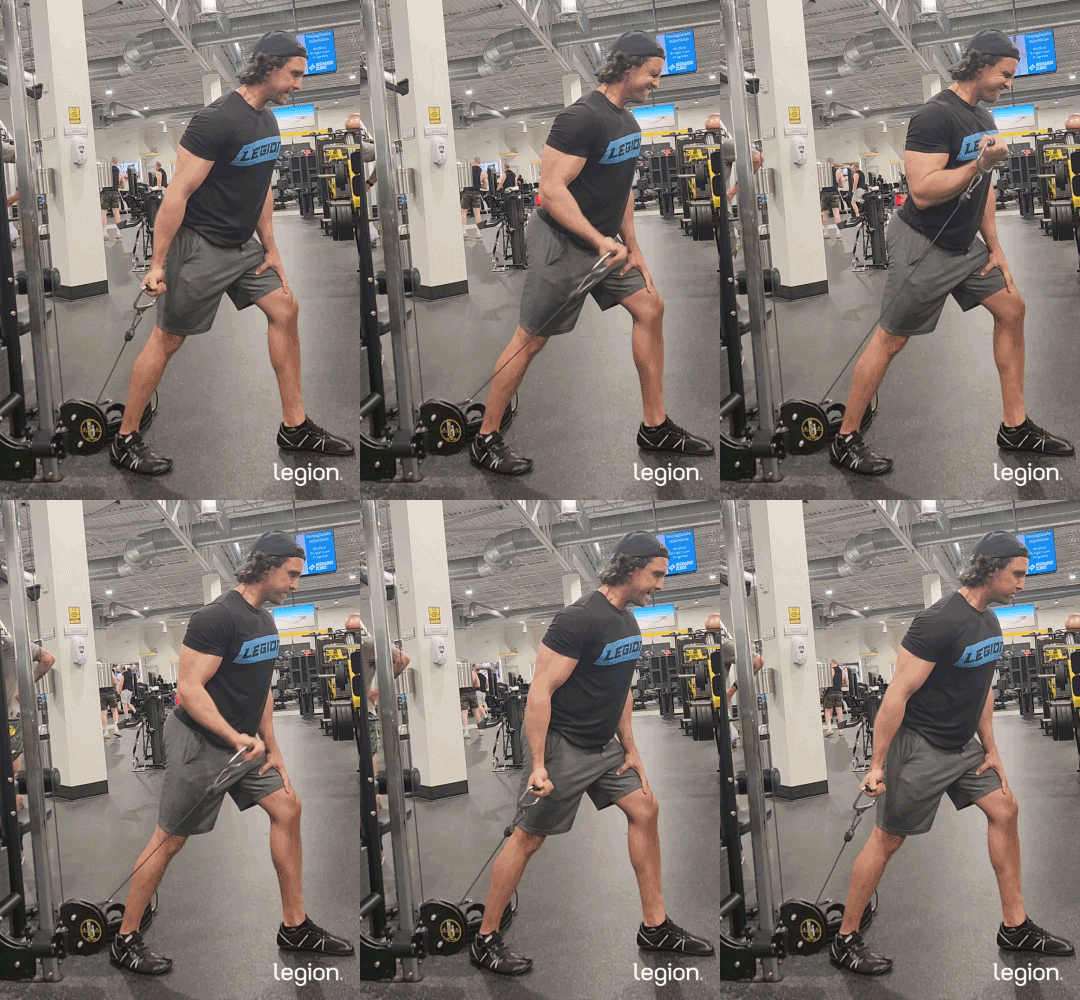
The Bayesian curl trains your biceps through a full range of motion and puts extra tension on the long head of your biceps when it’s stretched, which is ideal for adding size to the outer portion of your arms.
Because it positions your arm slightly behind your body, it also complements the other curl variations in a back and biceps workout by challenging your biceps in a different way.
How to:
- Set a cable pulley to the lowest setting and attach a single handle.
- Grab the handle with your right hand, turn away from the pulley, and take 1–2 steps forward so the cable pulls your arm slightly behind your body.
- Stagger your stance, then curl the handle to your shoulder while leaning forward slightly.
- Reverse the movement and return to the starting position.
- Repeat with your left arm.
READ MORE: Master the Bayesian Cable Curl for Bigger Biceps
How to Structure an Effective Back and Biceps Workout
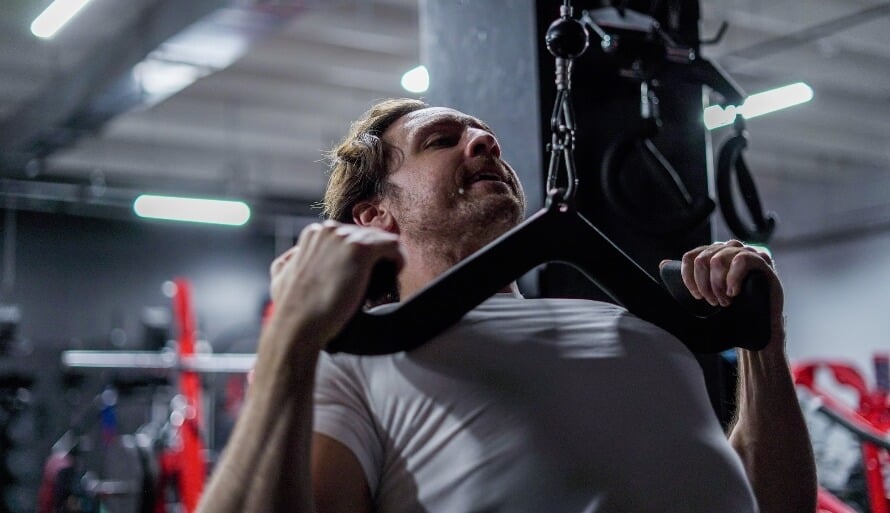
You can structure a back and biceps workout in countless ways, but a simple, reliable outline looks like this:
- Start with a deadlift when you’re freshest and can handle the most weight
- Move to a vertical pull like a pull-up, chin-up or lat pulldown to train your lats and give your lower back a break after deadlifting.
- Add a horizontal pull such as a dumbbell row. If your lower back feels beat up even for this, choose a chest-supported or machine variation instead.
- Finish with 1–2 biceps isolation exercises that train your arms from different angles. Good pairings include dumbbell curls with hammer curls or preacher curls with Bayesian curls.
This sequence lets you lift the most weight on the biggest movements, manage fatigue, and train both your back and biceps effectively in one session.
Sample Back and Biceps Day Routine for Muscle Growth
Here’s how you can put all the pieces together into a simple, effective workout:
- Deadlift: 3 sets | 4–6 reps | 3–5 min rest
- Pull-up: 3 sets | 4–6 reps | 3–5 min rest
- Chest-Supported Row: 3 sets | 6–8 reps | 2–3 min rest
- Preacher Curl: 3 sets | 6–8 reps | 2–3 min rest
- Bayesian Curl: 3 sets | 6–8 reps | 2–3 min rest
Supplements to Support Your Back and Biceps Workouts
You don’t need supplements to build a thick back and big biceps, but the right ones can help you get there faster. Here are three worth considering:
- Protein powder: Eating enough protein is essential for building and repairing muscle. Protein powders like Whey+, Casein+ and Egg+ make hitting your target easier.
- Creatine: Creatine boosts muscle and strength gain, improves anaerobic endurance, and reduces muscle damage and soreness. For a natural source of creatine, try Legion’s creatine monohydrate powder, creatine gummies, creatine capsules, or post-workout Recharge.
- Pre-workout: A quality pre-workout helps you train harder by boosting energy, focus, and athletic performance. Legion’s Pulse is available with or without caffeine.
Want even more specific supplement advice? Take the Legion Supplement Finder Quiz to learn exactly what supplements are right for you.
3 Training Tips for Back and Biceps Hypertrophy
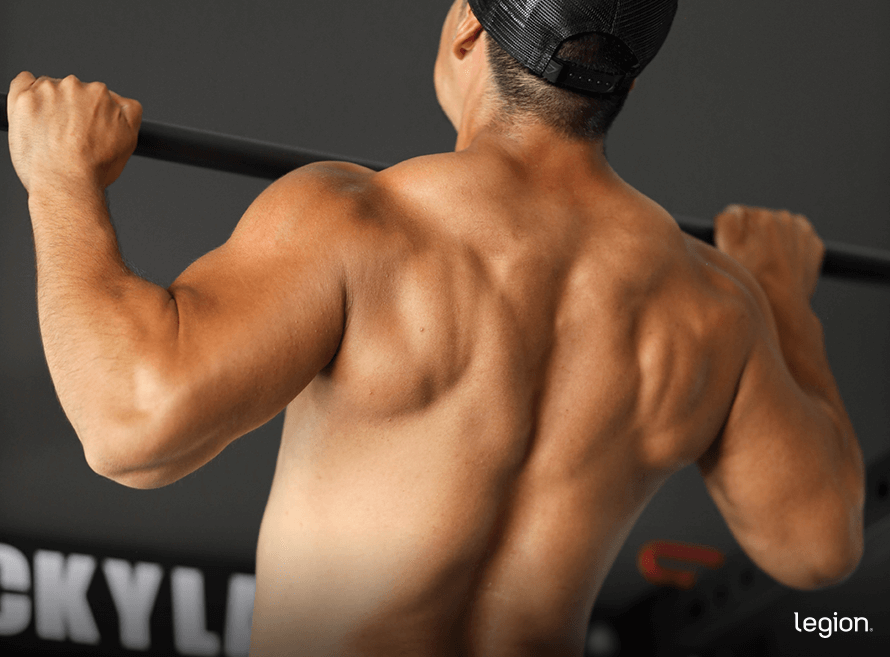
Here are three tips to get even more out of your back and biceps workouts.
Intensity
Finish most sets 1–2 reps shy of “failure”—the point where you can’t perform another rep with proper form even if you want to.
An easy way to gauge this is to ask yourself at the end of each set:
“If I had to, how many more reps could I have done with good form?”
If the answer is more than two, increase the weight or reps on your next set to make it more challenging.
Progressive Overload
To keep building muscle and getting stronger, you need to focus on getting stronger over time.
Here’s how to do it:
- If your workout calls for 4–6 reps of the deadlift and you complete 6 reps in a set, increase the weight by 10 pounds (total) for your next set.
- If you do 3 reps or fewer in subsequent sets, reduce the load by 5 pounds to stay in the 4–6 rep range.
Do this for every exercise, in every workout, and your back and biceps will continue to get stronger and bigger over time.
Weightlifting Cues
Here are a few simple cues you can apply to most back and biceps exercises that help you perform at your best:
- Deadlifts: Imagine squeezing oranges in your armpits. This “switches on” your lats and keeps the weights close to your body, which is safer and more efficient.
- Rows, pull-ups, and pulldowns: On rows, think about slamming your elbows into the ceiling or the wall behind you. On vertical pulls, think about slamming them into the floor. These cues help you pull more powerfully.
- Curls: Research shows that focusing on squeezing your biceps during every rep helps you build more muscle. Also, control the lowering phase—don’t let the weight fall. A slower eccentric can boost growth.
How Back and Biceps Workouts Fit Into Your Weekly Split
A back and biceps workout doesn’t exist in a vacuum—it has to fit into the rest of your training.
The good news is that back and biceps pair easily with most popular splits.
Back and Biceps in a Push Pull Legs or Upper Lower Routine
In a PPL routine, your back and biceps live on your pull day. For example:
- Monday: Push (chest, shoulders, triceps)
- Tuesday: Rest
- Wednesday: Pull (back, biceps)
- Thursday: Rest
- Friday: Legs (quads, glutes, hamstrings, calves)
- Saturday: Rest
- Sunday: Rest
In an upper lower split, make your back and biceps the focus of one of your upper days. For example:
- Monday: Upper A (chest, shoulders, triceps)
- Tuesday: Lower A (quads, glutes)
- Wednesday: Rest
- Thursday: Upper B (back, biceps, abs)
- Friday: Lower B (hamstrings, calves)
- Saturday: Rest
- Sunday: Rest
Other Muscle Groups You Can Combine With Biceps
If you decide not to pair back and biceps, you still have solid options:
- Chest and biceps
- Shoulders and biceps
- “Arm day” (biceps and triceps)
Whichever option you choose, avoid crushing your biceps with heavy pulling one day and then trying to do a bunch of curls the next. Leave at least one day of rest between a back workout and a workout that trains your biceps directly.
The Bottom Line on Back and Biceps Workouts
Back and biceps workouts work well because most big back exercises—pull-ups and pulldowns especially—already hammer your biceps. Pairing them keeps your pulling volume in one place and makes your training simple and time-efficient.
You don’t need many exercises, either. A few heavy pulls plus 1–2 curl variations are enough to build a big, strong back and thick arms, as long as you train hard and strive to get stronger over time.
FAQ #1: Can I train my back and biceps together more than once per week?
Yes. If your back or biceps are lagging, training them twice per week can help them grow faster. Just keep in mind that some routines—like push pull legs upper lower (PPLUL)—already hit your pulling muscles multiple times per week, so adding even more sets may be unnecessary.
FAQ #2: What is a good back and biceps day routine for beginners?
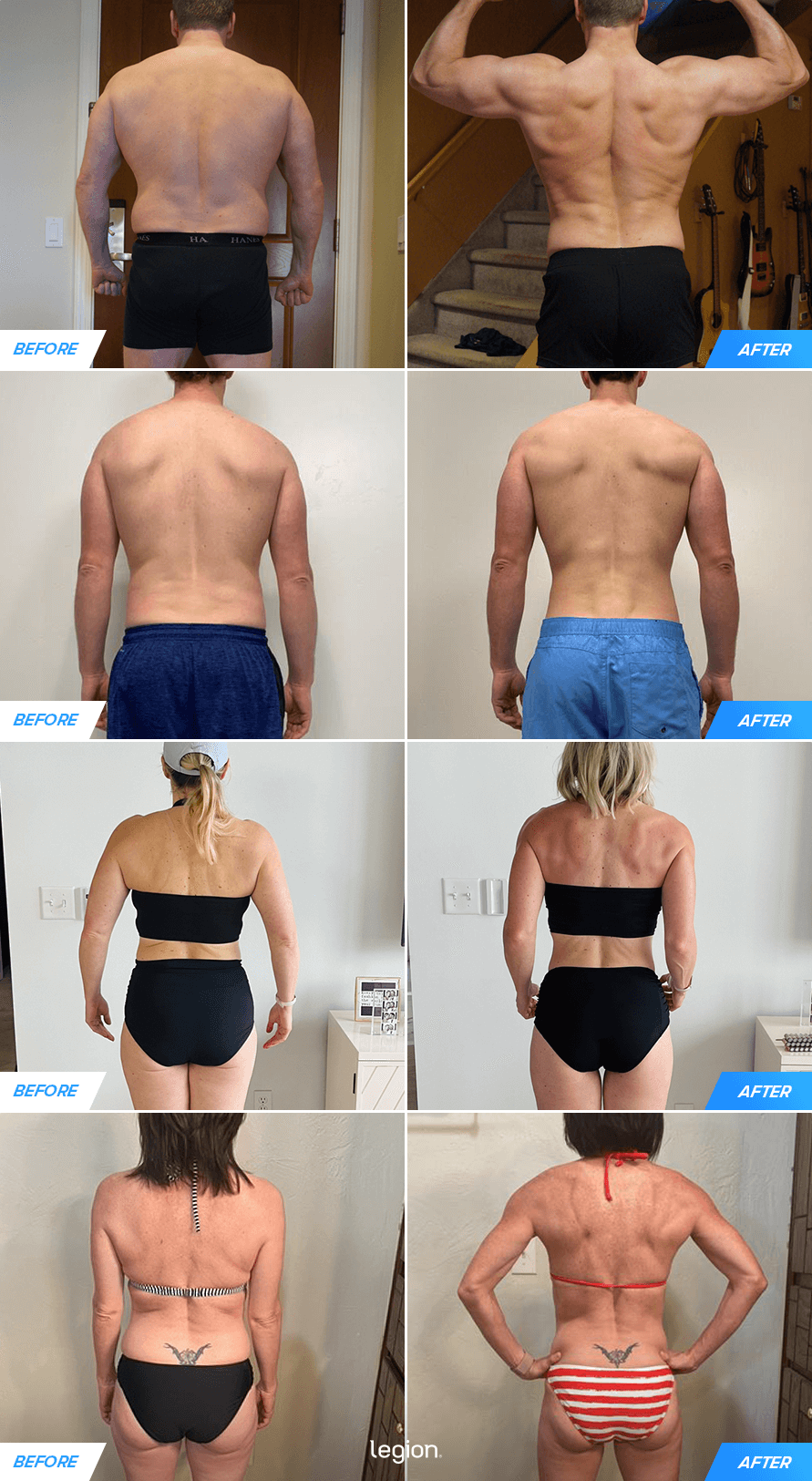
This routine works very well for beginners—and if you want proof, here are some people who joined Legion’s body transformation coaching service. These guys were new to weightlifting and made excellent back and biceps gains using a similar approach:
FAQ #3: What dumbbell exercises are best for a back and biceps workout at home?
Great options include the one-arm dumbbell row, dumbbell deadlift, dumbbell pullover, dumbbell curl, hammer curl, and incline curl if you have a bench.
FAQ #4: What should I combine with biceps if I’m not training back on the same day?
Common pairings include chest and biceps, shoulders and biceps, or an arm day where you train biceps and triceps together. All work well—just avoid training biceps the day after heavy pulling so you’re not training your biceps when you’re already fatigued.
FAQ #5: Is back and biceps a good split compared to other options?
Yes. Back and biceps is a great split because your biceps already work during almost every back exercise, so pairing them keeps all your pulling work in one place and makes recovery easier to manage.
That said, pairing biceps with chest or shoulders also works well. Your biceps are fresher on those days, which helps you lift heavier and perform better reps. It also means you train your biceps more than once per week—something research shows is generally better for muscle growth than training a muscle only once.
Want More Content Like This?
Check out these articles:
- The Best “Push Pull” Workout Routines for Building Your Chest, Back, and Arms
- The Best Back and Shoulder Workouts for Upper-Body Width and Mass
- The Best Chest and Shoulder Workout Routine for Mass
Scientific References +
- Youdas, James W, et al. “Surface Electromyographic Activation Patterns and Elbow Joint Motion during a Pull-Up, Chin-Up, or Perfect-PullupTM Rotational Exercise.” Journal of Strength and Conditioning Research, vol. 24, no. 12, Dec. 2010, pp. 3404–3414, https://doi.org/10.1519/jsc.0b013e3181f1598c.
- HANDA, TOHRU, et al. “COMPARATIVE ELECTROMYOGRAPHICAL INVESTIGATION of the BICEPS BRACHII, LATISSIMUS DORSI, and TRAPEZIUS MUSCLES during FIVE PULL EXERCISES.” Japanese Journal of Physical Fitness and Sports Medicine, vol. 54, no. 2, 2005, pp. 159–168, https://doi.org/10.7600/jspfsm.54.159.
- Costa, Bruna Daniella de Vasconcelos, et al. “Does Performing Different Resistance Exercises for the Same Muscle Group Induce Non-Homogeneous Hypertrophy?” International Journal of Sports Medicine, vol. 42, no. 09, 13 Jan. 2021, pp. 803–811, https://doi.org/10.1055/a-1308-3674.
- Zabaleta-Korta, Aitor , et al. Regional Hypertrophy: The Effect of Exercises at Long and Short Muscle Lengths in Recreationally Trained Women. 15 July 2023, https://doi.org/10.5114/jhk/163561.
- Schoenfeld, Brad J. “The Mechanisms of Muscle Hypertrophy and Their Application to Resistance Training.” Journal of Strength and Conditioning Research, vol. 24, no. 10, Oct. 2010, pp. 2857–72, https://doi.org/10.1519/JSC.0b013e3181e840f3.
- Oranchuk, Dustin J., et al. “Isometric Training and Long-Term Adaptations: Effects of Muscle Length, Intensity, and Intent: A Systematic Review.” Scandinavian Journal of Medicine & Science in Sports, vol. 29, no. 4, 13 Jan. 2019, pp. 484–503, onlinelibrary.wiley.com/doi/full/10.1111/sms.13375, https://doi.org/10.1111/sms.13375.
- Eckerson, Joan M., et al. “Effect of Creatine Phosphate Supplementation on Anaerobic Working Capacity and Body Weight after Two and Six Days of Loading in Men and Women.” The Journal of Strength and Conditioning Research, vol. 19, no. 4, 2005, p. 756, https://doi.org/10.1519/r-16924.1.
- Bassit, Reinaldo Abunasser, et al. “Effect of Short-Term Creatine Supplementation on Markers of Skeletal Muscle Damage after Strenuous Contractile Activity.” European Journal of Applied Physiology, vol. 108, no. 5, 3 Dec. 2009, pp. 945–955, https://doi.org/10.1007/s00421-009-1305-1.
- Schoenfeld, Brad Jon, et al. “Differential Effects of Attentional Focus Strategies during Long-Term Resistance Training.” European Journal of Sport Science, vol. 18, no. 5, 13 Mar. 2018, pp. 705–712, https://doi.org/10.1080/17461391.2018.1447020.
- Farthing, Jonathan P., and Philip D. Chilibeck. “The Effects of Eccentric and Concentric Training at Different Velocities on Muscle Hypertrophy.” European Journal of Applied Physiology, vol. 89, no. 6, 1 Aug. 2003, pp. 578–586, https://doi.org/10.1007/s00421-003-0842-2.
- Schoenfeld, Brad J., et al. “Effects of Resistance Training Frequency on Measures of Muscle Hypertrophy: A Systematic Review and Meta-Analysis.” Sports Medicine, vol. 46, no. 11, 21 Apr. 2016, pp. 1689–1697, pubmed.ncbi.nlm.nih.gov/27102172/, https://doi.org/10.1007/s40279-016-0543-8.
- Er, Helms, et al. “Recommendations for Natural Bodybuilding Contest Preparation: Resistance and Cardiovascular Training.” The Journal of Sports Medicine and Physical Fitness, 1 Mar. 2015, pubmed.ncbi.nlm.nih.gov/24998610/.