Building your chest and triceps isn’t complicated.
That doesn’t stop most gymgoers from making it way more knotty than it needs to be.
They’ll tell you you need a lower chest section, an upper chest finisher, three fly variations, two types of pushdowns, and a superset designed mainly to make your muscles burn.
Here’s the truth: you need a few big presses, a smart progression plan, and just enough direct triceps work to round things out. When you get those pieces right, chest and triceps training becomes much simpler—and it actually works.
This guide shows you exactly how to do that—starting with whether training chest and triceps together is the right move in the first place.
Key Takeaways
- Training chest and triceps together is efficient and effective because your triceps already do a lot of work during pressing exercises like bench presses, dips, and push-ups.
- You don’t need a long list of chest and triceps exercises to grow—most people get the best results from a handful of heavy presses and a small amount of direct triceps work.
- For a well-designed chest and tricep workout, do the bench press, incline dumbbell bench press, dip, close-grip bench press, and skullcrusher.
- To maximize results, train close to failure and strive to add weight or reps to every exercise in every workout.
- You don’t need supplements to build chest and triceps size and strength, but protein powder, creatine, and pre-workout can help you get there faster.
Table of Contents
+
Can You Train Chest and Triceps Together?
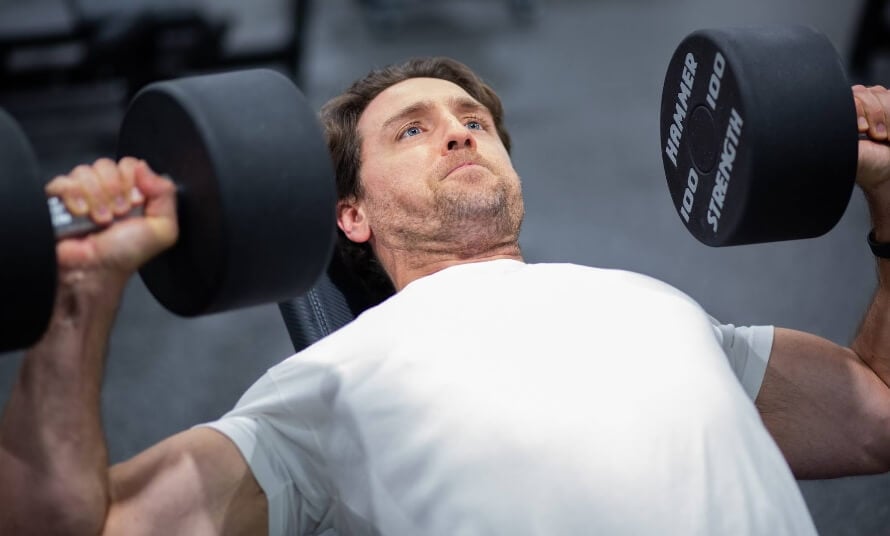
Yes—and in most cases, it’s a smart option.
The biggest benefit of training chest and triceps together is time efficiency. You train two major upper-body muscle groups in one session instead of spreading them across multiple days.
It’s also a natural pairing because almost every good compound chest exercise is also a triceps exercise. When you bench press, dip, or do push-ups, your chest does most of the work to move the weight, but your triceps still have to contribute to finish every rep.
That also makes the workout easy to structure:
- Start with your big presses (the lifts that let you use the most weight and get the most bang for your time).
- Finish with triceps work (the stuff that’s easier to do safely when you’re a little tired and already warmed up).
The only time training chest and triceps together becomes a problem is if you flip that order.
If you smoke your triceps first (lots of pushdowns, extensions, skullcrushers, etc.), your pressing strength will suffer. Your chest may still be capable of doing more, but your triceps become the weak link and force you to cut your sets short.
So the rule is simple: train chest and triceps together if you want an efficient workout—just make sure your workout is built around chest-focused pressing first, then triceps work last.
Chest and Tricep Workout: How to Build a Session That Works
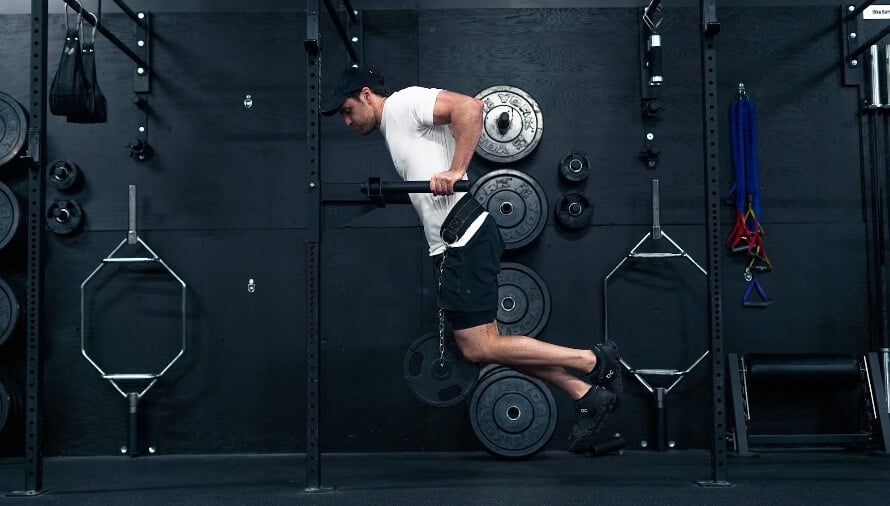
This workout revolves around the handful of exercises that give most people the best results.
You start with two heavy presses that let you train your entire chest hard, then you do two more pressing exercises that involve the triceps to a greater degree, and you finish with one isolation movement to fully train the triceps without turning the workout into a circus of variations.
Do it once weekly, take the sets close to failure, and focus on getting stronger over time.
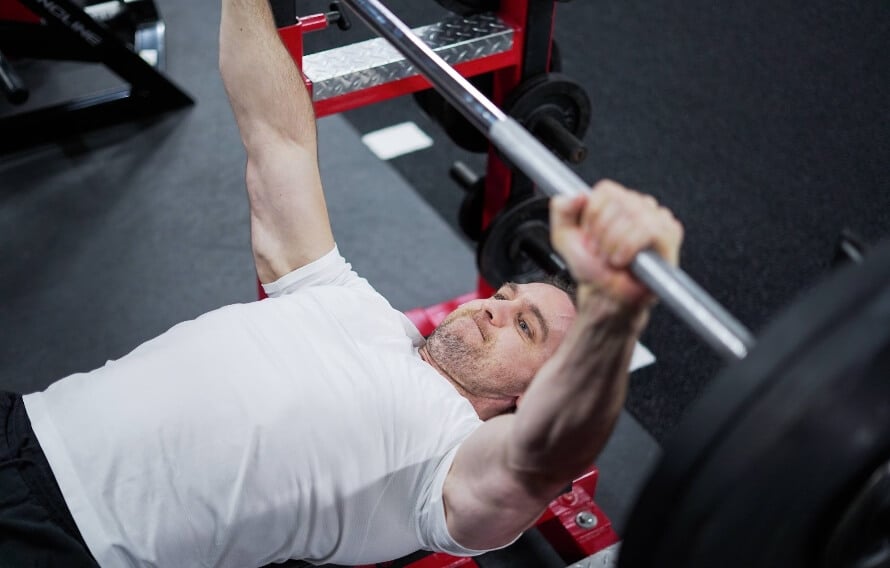
Bench Press
How to:
- Lie on a flat bench and place your feet flat on the floor.
- Pull your shoulder blades together and down, and without lifting your butt or shoulders, slightly arch your back.
- Grab the bar with a slightly wider than shoulder-width grip and unrack the barbell.
- Lower the barbell to your chest, keeping your elbows tucked 6–8 inches from your sides.
- Press the bar back to the starting position.
Sets, reps, and rest: 3 sets | 4–6 reps | 3–5 min rest
READ MORE: The Definitive Guide to Proper Bench Press Form
Incline Dumbbell Bench Press
How to:
- Set a bench to a 30–45-degree incline and sit with a dumbbell in each hand resting on your thighs.
- Lie back and “kick” the dumbbells up into position so you’re holding them by your chest.
- Press the dumbbells over your upper chest until your arms are straight and your elbows are locked.
- Reverse the movement and return to the starting position.
Sets, reps, and rest: 3 sets | 4–6 reps | 3–5 min rest
READ MORE: How to Do an Incline Dumbbell Press & Common Alternatives
Dip
How to:
- If you’re using a dip belt, wrap the chain around your waist, add the desired amount of weight to the chain, and fasten the carabiner.
- Grab both handles of a dip bar or dip station, then press yourself up by straightening your arms and gently jumping off the ground so that your arms are straight and support your entire body weight.
- Keep your body upright to put the emphasis on your triceps, bend your knees to keep your feet from touching the ground, and lower your body by bending your elbows until your upper arms are roughly parallel to the floor.
- Press into the handles to drive your body back to the starting position.
Sets, reps, and rest: 3 sets | 4–6 reps | 3–5 min rest
READ MORE: The Ultimate Guide to Chest Dips for Building Your Chest
Close-Grip Bench Press
How to:
- Lie on a flat bench and place your feet flat on the floor.
- Pull your shoulder blades together and down, and without lifting your butt or shoulders, slightly arch your back.
- Grip the barbell with a shoulder-width grip or slightly narrower and unrack the barbell.
- Lower the barbell to your lower chest, keeping your elbows tucked 2–4 inches from your sides.
- Press the bar back to the starting position.
Sets, reps, and rest: 3 sets | 6–8 reps | 2–3 min rest
READ MORE: How to Close-Grip Bench Press: Tips & Variations
Skullcrusher
How to:
- Lie on a flat bench and hold an EZ Bar above your chest with a shoulder-width grip.
- Bring the bar down to your forehead by bending at the elbow.
- Extend your arms and return to the starting position.
Sets, reps, and rest: 3 sets | 6–8 reps | 2–3 min rest
READ MORE: How to Do the Skullcrusher: Form, Benefits, and Variations
Supplements to Support Your Chest and Triceps Workouts
You don’t need supplements to build big pecs and triceps, but the right ones can help you get there faster. Here are three worth considering:
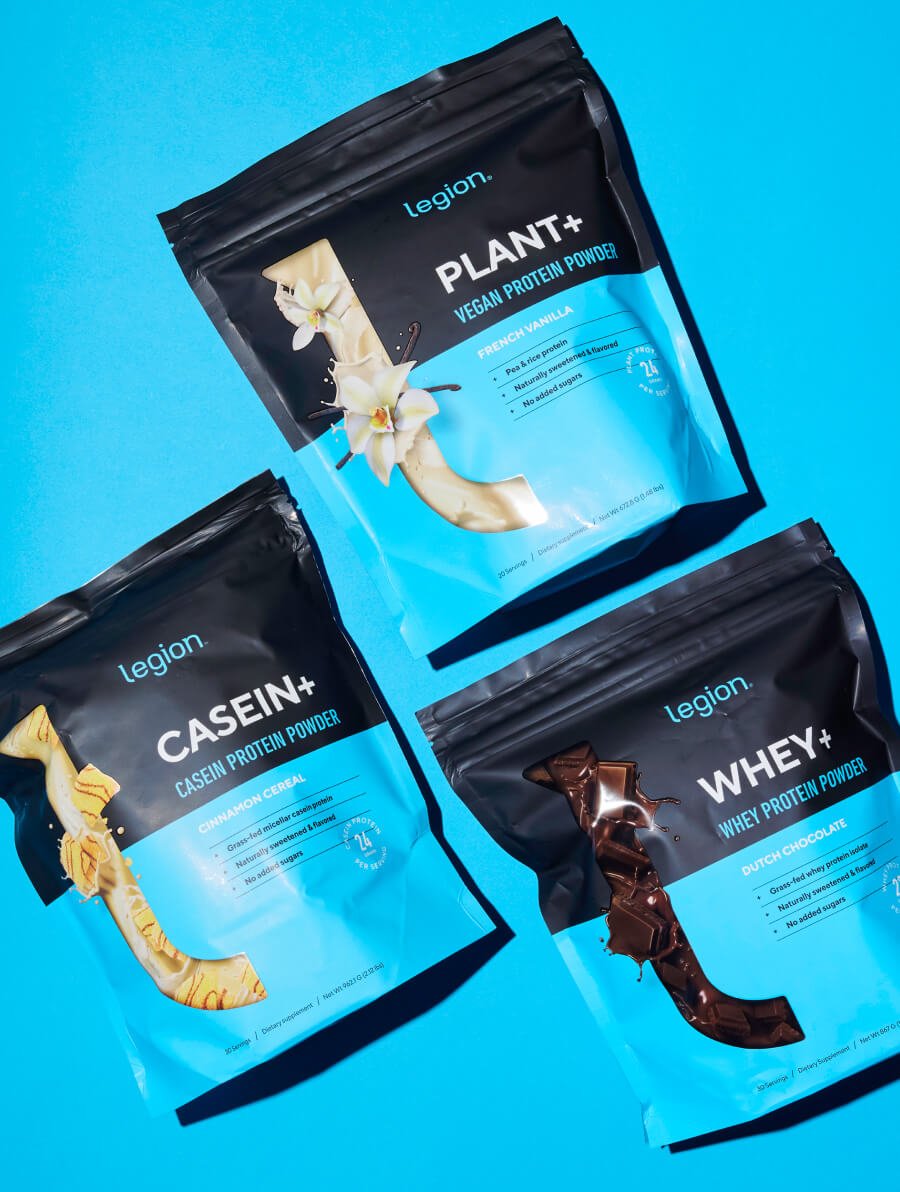
- Protein powder: Eating enough protein is essential for building and repairing muscle. Protein powders like Whey+, Casein+ and Egg+ make hitting your target easier.
- Creatine: Creatine boosts muscle and strength gain, improves anaerobic endurance, and reduces muscle damage and soreness. For a natural source of creatine, try Legion’s creatine monohydrate powder, creatine gummies, creatine capsules, or post-workout Recharge.
- Pre-workout: A quality pre-workout helps you train harder by boosting energy, focus, and athletic performance. Legion’s Pulse is available with or without caffeine.
Want even more specific supplement advice? Take the Legion Supplement Finder Quiz to learn exactly what supplements are right for you.
How to Progress Your Chest and Tricep Workouts
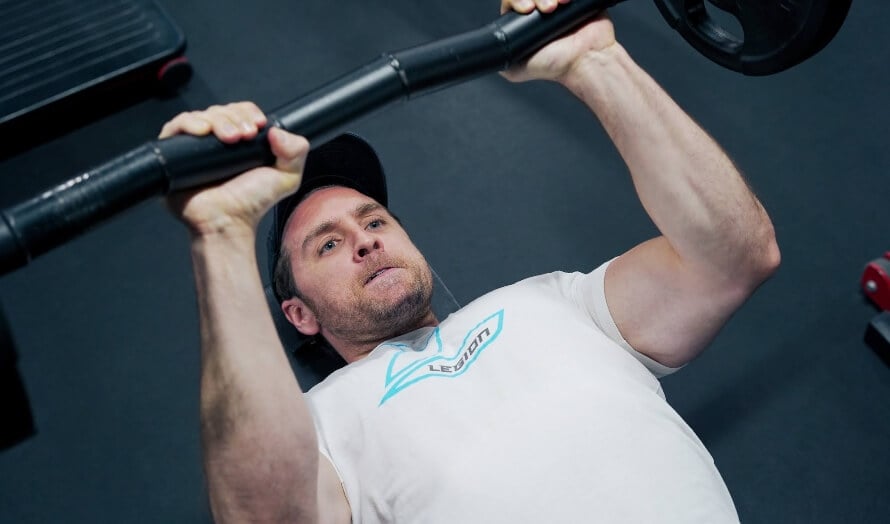
Intensity
To make your chest and “tris” workouts as effective as possible, take most of your sets to within 1–2 reps of failure—the point where you can’t perform another rep with proper form.
To gauge whether you’re reaching this point, ask yourself at the end of each set: “If I had to, how many more reps could I have done with good form?”
If the answer is more than two, increase the weight or reps on your next set to make it more challenging.
Progressive Overload
To keep building muscle and getting stronger, you also need to focus on progressive overload—gradually lifting heavier weights over time.
Here’s how to do it:
If your workout calls for 4–6 reps of the bench press and you complete 6 reps in a set, increase the weight by 10 pounds for your next set. If you do 3 reps or fewer in subsequent sets, reduce the load by 5 pounds to stay in the 4–6 rep range.
Apply this approach to every chest and triceps exercise in your workouts, aiming to add either weight or reps every session.
By combining the right intensity (training close enough to failure) with progressive overload, you’ll consistently challenge your muscles, making each workout as effective as possible.
Chest and Tricep Workout for Strength vs. Size
The workout above works for both goals, though it’s slightly more geared towards building muscle than maximal strength.
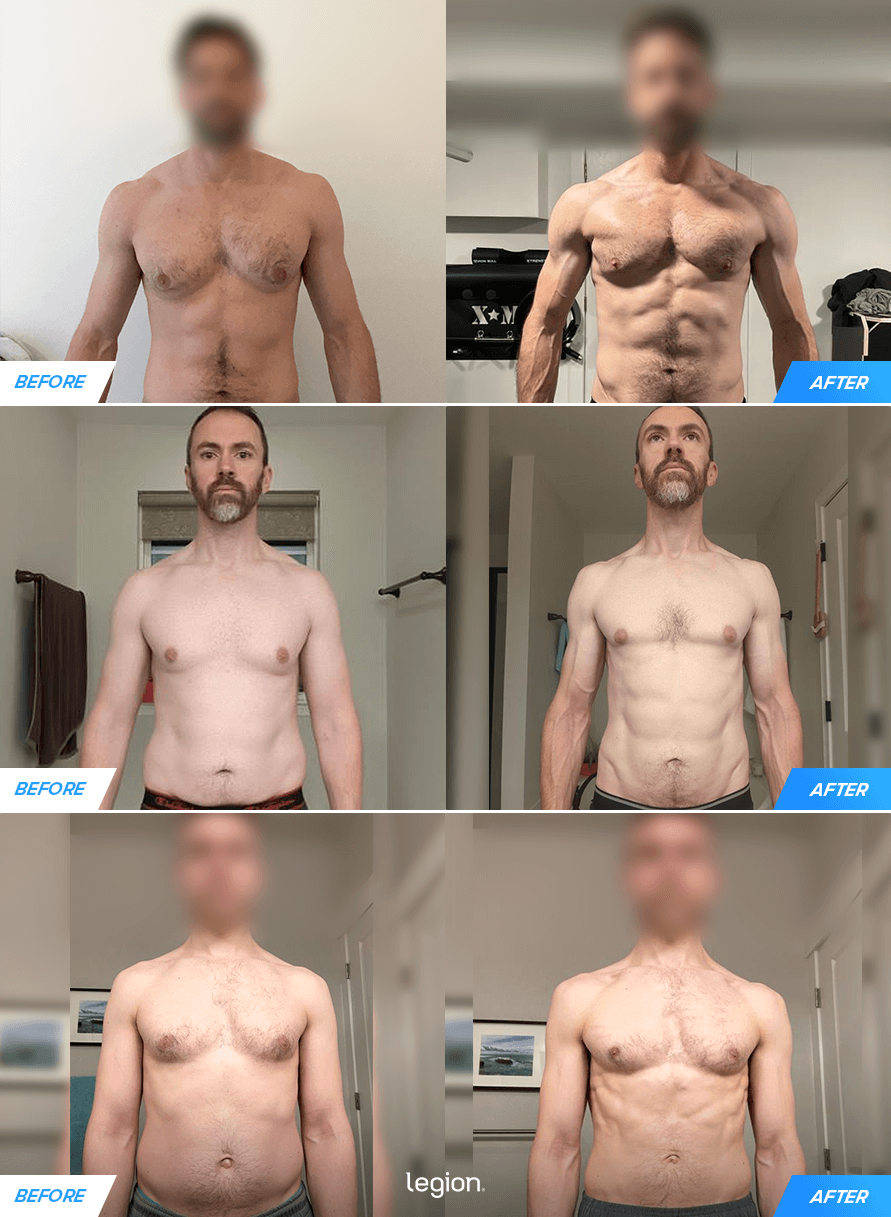
So if size is your top priority, you can run it exactly as written and do very well. And if you want proof, here are a few coaching clients who built noticeably stronger, more defined pecs in just a few months using very similar workouts:
If strength is your main goal, you need to spend more time lifting heavier weights.
That matters for two reasons.
First, strength is a skill. The more often you practice lifting heavy loads with solid technique, the better you get at producing force in that specific context.
Second, heavier training can improve your nervous system’s ability to recruit muscle and generate force. Basically, it helps you “turn on” more of what you already have when you need it.
Here’s a simple way to apply that:
Use the 1–5 rep range on the bench press only, train that lift a bit further from failure (about 3–5 reps shy), keep the rest of the workout unchanged, and focus on adding weight over time with solid technique.
The Bottom Line on Chest and Tricep Workouts
Training chest and triceps together is one of the most efficient ways to build a stronger, better-looking upper body, because the two muscle groups already overlap on most pressing exercises.
Any time you bench, dip, or do push-ups, your chest drives the weight, but your triceps have to finish every rep—so splitting them into separate days often just makes training less time efficient.
A good chest and tricep workout in the gym starts with a few heavy presses, then shifts to more triceps-focused pressing and one isolation exercise to fully train the arms. Do it once per week, take sets close to failure, progress steadily, and you’ll have no issues building pec and triceps size and strength.
FAQ #1: Are four exercises enough for chest and triceps?
Yes—four can work, especially if you do more pressing later in the week (like another bench variation on a second push day).
But if you train chest and triceps only once per week, you’ll usually get slightly better results with the routine in this article, since the extra exercise adds a bit more volume without turning the workout into a marathon.
FAQ #2: What should I pair my chest with?
You can pair chest with almost anything—it mostly comes down to what fits your schedule and keeps your training balanced.
That said, the most common pairings are chest and triceps, chest and shoulders, or chest, shoulders, and triceps in one “push” workout, since all of those muscles work together on most pressing exercises.
You can also get good results from training your chest with your back, which was Arnold Schwarzenegger’s favorite setup (and it’s a great way to fit more upper-body work into each week).
FAQ #3: Is chest and triceps a good combination?
Yes—it’s one of the most logical pairings you can do. Most chest exercises require your triceps to extend your elbows on every rep, so the overlap is built in. Putting them in the same workout lets you warm up once, hit your pressing hard, and then finish with direct triceps work.
Just don’t pre-fatigue your triceps before your main presses, or your chest work will suffer.
Want More Content Like This?
Check out these articles:
- The Best Back and Biceps Workout for Upper-Body Width & Size
- The Best Back and Shoulder Workouts for Upper-Body Width and Mass
- The Best Chest and Shoulder Workout Routine for Mass
Scientific References +
- Eckerson, Joan M., et al. “Effect of Creatine Phosphate Supplementation on Anaerobic Working Capacity and Body Weight after Two and Six Days of Loading in Men and Women.” The Journal of Strength and Conditioning Research, vol. 19, no. 4, 2005, p. 756, https://doi.org/10.1519/r-16924.1.
- Bassit, Reinaldo Abunasser, et al. “Effect of Short-Term Creatine Supplementation on Markers of Skeletal Muscle Damage after Strenuous Contractile Activity.” European Journal of Applied Physiology, vol. 108, no. 5, 3 Dec. 2009, pp. 945–955, https://doi.org/10.1007/s00421-009-1305-1.
- Lacio, Marcio, et al. “Effects of Resistance Training Performed with Different Loads in Untrained and Trained Male Adult Individuals on Maximal Strength and Muscle Hypertrophy: A Systematic Review.” International Journal of Environmental Research and Public Health, vol. 18, no. 21, 26 Oct. 2021, p. 11237, pubmed.ncbi.nlm.nih.gov/34769755/, https://doi.org/10.3390/ijerph182111237.
- Robinson, Zac P, et al. “Exploring the Dose–Response Relationship between Estimated Resistance Training Proximity to Failure, Strength Gain, and Muscle Hypertrophy: A Series of Meta-Regressions.” Sports Medicine, vol. 54, 6 July 2024, pp. 2209–2231, https://doi.org/10.1007/s40279-024-02069-2.