
Some bodybuilding programs promise results by adding more exercises, more sets, or more time in the gym.
Doggcrapp training takes the opposite approach.
Instead of increasing volume, it focuses on extremely hard sets, careful tracking of your lifts, and trying to beat your previous performance whenever you repeat an exercise.
This high-intensity system has developed a loyal following among gymgoers who enjoy pushing their limits. At the same time, its demanding workouts and “advanced” techniques—such as widowmaker sets and extreme stretching—make it one of the more intense bodybuilding programs.
In this article, you’ll learn what Doggcrapp training is, how it works, and whether it’s a good fit for your goals.
Key Takeaways
- Doggcrapp training is a high-intensity bodybuilding program created by Dante Trudel.
- The program uses relatively low training volume but fairly high frequency, typically alternating two types of workout across three training days per week.
- Doggcrapp training includes several distinctive techniques, such as rest-pause, high-rep “widowmaker” sets, extreme stretching, and periods of “blasting” and “cruising” to manage fatigue and recovery.
- Although Doggcrapp training can be effective, many of its intensity techniques aren’t necessary for building muscle, and most lifters can achieve excellent results with simpler programs that emphasize consistent training and progressive overload.
- You don’t need supplements to build muscle with Doggcrapp training, but protein powder, creatine, and pre-workout may help you progress faster.
Table of Contents
+
What Is Doggcrapp Training?
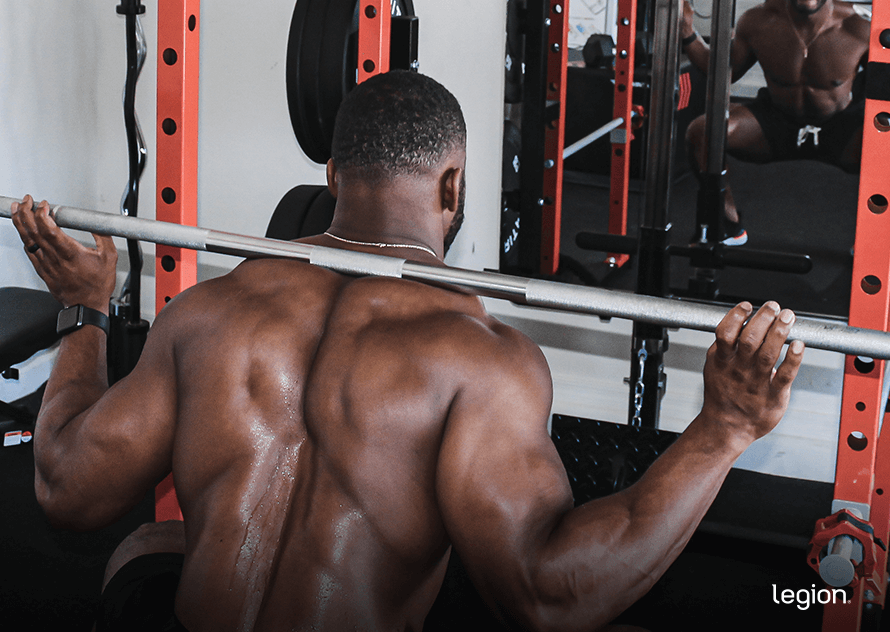
Doggcrapp training—usually shortened to DC training—is a bodybuilding program created by Dante Trudel that takes a different approach from many traditional bodybuilding routines.
Instead of doing lots of exercises and sets, you do a relatively small amount of work and perform it with very high effort and a heavy emphasis on progression.
The system is also known for a few defining features, including rest-pause sets, exercise rotation, and extreme stretching, which are intended to allow lifters to train intensely while still recovering well enough to keep improving.
To understand why some lifters swear by it—and why others find it too demanding—you need to look at how the program actually works.
How Doggcrapp Training Works
Doggcrapp training organizes workouts around a few core principles that determine how you train and how you progress.
Progressive Overload
Doggcrapp training places a heavy emphasis on progressive overload, which simply means trying to improve your performance over time.
Each time you repeat an exercise, the goal is to either lift more weight or complete more reps than you did the last time you performed that movement.
To make this possible, DC training encourages lifters to track their workouts carefully. Many followers of the program keep a detailed logbook so they always know the numbers they’re trying to beat.
Warming Up
Before each working set, DC training uses as many warm-up sets as needed to prepare your muscles and joints for heavy lifting.
The exact number of warm-up sets depends on the exercise, the weight you’re using, and your experience level. Someone lifting very heavy loads will usually need several warm-up sets to gradually build up to their working weight, while someone using lighter weights may only need one or two.
The goal of these warm-up sets isn’t to fatigue the muscles but to prepare your body for the hard set that follows.
Rest-Pause
Doggcrapp training also relies heavily on rest-pause sets. Instead of performing several traditional sets with rest periods between them, you extend a single set by briefly resting and continuing with the same weight.
Most rest-pause sets fall in roughly the 11-to-15-rep range, although the exact rep target can vary depending on the exercise, the muscle you’re training, and how safe it is. The key idea is that each rest-pause set includes three separate failure points.
In practice, you perform a set to failure, rack the weight, take about 10–15 deep breaths, and then perform another set with the same weight to failure. After another 10–15 breaths, you perform a final set to failure. Together, these mini-sets form one extended, high-intensity set (similar to myo-reps).
Not every exercise in DC training uses this approach, however.
Lifters usually avoid rest-pausing exercises that involve extremely heavy loads—such as many quad and rowing exercises—because fatigue can cause your form to break down.
For quad training, the system typically uses a different method: one heavy set of 4–8 reps followed by a brutally hard 20-rep set with slightly less weight. This high-rep set is commonly known in DC training as a “widowmaker.”
Exercise Rotation
Doggcrapp training also involves regular exercise rotation to help you continue progressing over time.
Instead of performing the exact same exercise every time you train a muscle group, you typically select three exercises for each muscle and rotate through them across successive workouts.
For example, you might perform one exercise the first time a workout appears in the rotation, a different exercise the next time it appears, and another variation the third time. (We’ll look at a concrete example of this soon.)
When the rotation cycles back to the first exercise, the goal is to beat the previous performance by lifting more weight or completing more reps.
This approach allows lifters to keep pushing for progressive overload while reducing the risk of overuse injuries from repeating the same movements week after week.
Extreme Stretching
Doggcrapp training also includes a practice known as extreme stretching.
After finishing the working sets for a muscle group, you move into a deep stretch for that muscle and hold it for about 30–90 seconds. For example, you could hold the bottom position of a sissy squat, a dip, or a pull-up.
Advocates of DC training argue that these prolonged stretches may help improve recovery and potentially create a better environment for muscle growth.
That said, the idea that short-duration extreme stretching directly increases muscle growth is mostly theoretical.
While research shows that training muscles at longer muscle lengths can sometimes enhance hypertrophy, especially in less experienced lifters, there’s limited evidence that performing stretches after a set provides the same benefit.
Cardio
Doggcrapp training doesn’t prohibit cardio, but it keeps it separate from lifting sessions.
For instance, you lift weights three days per week and perform cardio on the remaining days. This approach allows you to maintain cardiovascular fitness and manage body fat without interfering with your workouts.
The exact type and amount of cardio usually varies from person to person though most people following DC training stick to walking.
Blasting and Cruising Phases
Doggcrapp training also organizes training into phases known as “blasting” and “cruising.”
Blast phases last 6–8 weeks, during which you train with maximum effort and try to keep adding weight or reps whenever you repeat an exercise.
After this period of hard training, you enter a cruise phase, which usually lasts 10–14 days. During this time, you reduce your training intensity and workload to allow your body to recover.
Practically speaking, this means performing 3 straight sets of about 8–10 reps per exercise, lifting weights that are roughly 20% lighter than usual, and stopping about 3 reps shy of failure.
You might also use this time to try new exercises you could rotate into your program later.
By alternating between blasting and cruising, you give your body time to recover from the demands of high-intensity training while preparing yourself to push hard again in the next phase.
The Doggcrapp Training Split
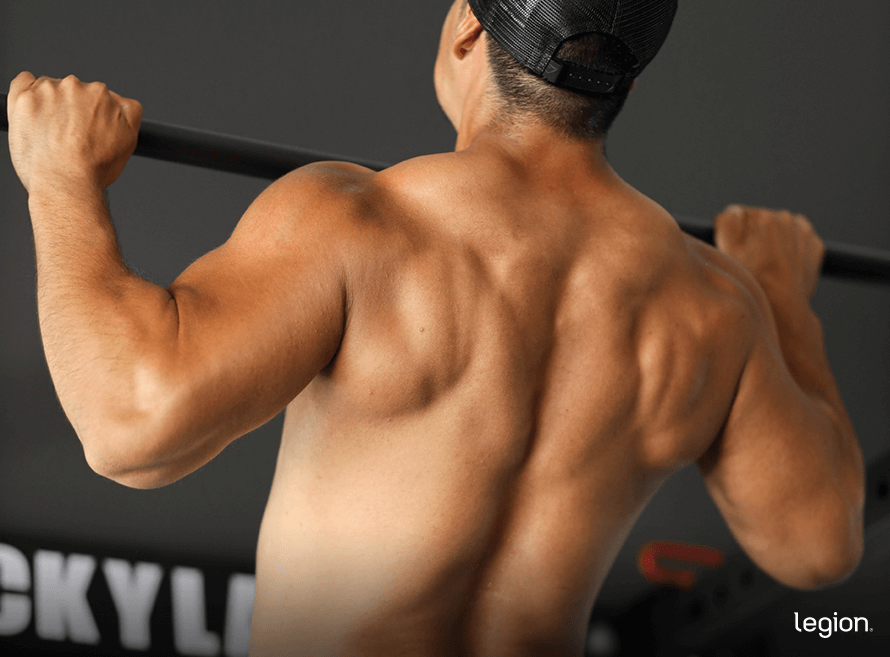
In the classic DC setup, the two workouts are organized like this:
- Workout A: chest, shoulders, triceps, and back
- Workout B: biceps, forearms, quads, hamstrings, and calves
(Note: For the back, you do two exercises: one vertical pull for width and one horizontal pull for thickness.)
You alternate these workouts each time you train.
So if you train three days per week, your schedule might look something like this:
Week 1:
- Monday: Workout A
- Tuesday: Rest
- Wednesday: Workout B
- Thursday: Rest
- Friday: Workout A
- Saturday: Rest
- Sunday: Rest
Week 2:
- Monday: Workout B
- Tuesday: Rest
- Wednesday: Workout A
- Thursday: Rest
- Friday: Workout B
- Saturday: Rest
- Sunday: Rest
Week 3 would repeat Week 1, Week 4 would repeat Week 2, and the pattern would continue.
As discussed earlier, Doggcrapp training rotates exercises within each workout using what are often called “1, 2, and 3” workouts.
For each muscle group, you cycle through three exercises across successive workouts. Each time a workout repeats, you perform a different variation.
So instead of repeating the exact same workout every time, your rotation might look something like this:
- Week 1: A1, B1, A2
- Week 2: B2, A3, B3
- Week 3: A1, B1, A2
This system allows you to train each muscle group regularly while rotating the exercises you push hardest, which can help lifters continue progressing without overusing the same movements.
Together, the A/B split and the exercise rotation allow DC training to combine frequent training with a relatively small number of exercises per workout.
Example Doggcrapp Training Routine
To see how these ideas fit together, here’s an example of a DC training routine using the A/B split and exercise rotation described earlier.
Remember that the exact exercises can vary—the important part is the structure of the program, not the specific movements.
Two notes on the routine:
- It doesn’t include warm-up sets. As discussed earlier, perform as many warm-up sets as needed before your working sets.
- It also doesn’t include extreme stretches. If you want to follow Doggcrapp training closely, perform a deep stretch of 30–90 seconds for the muscle you just trained after your rest-pause set.
A1 Workout
- Flat Barbell Bench Press: 11–15 total reps using rest-pause
- Barbell Overhead Press: 11–15 total reps using rest-pause
- Close-Grip Bench Press: 11–15 total reps using rest-pause
- Pull-up: 11–15 total reps using rest-pause
- Barbell Row: 1 straight set of 5–8 reps
B1 Workout
- Barbell Curl: 11–15 total reps using rest-pause
- Hammer Curl: 10–15 reps using a straight set
- Leg Press: 4–8 reps, followed by a 20-rep widowmaker set
- Lying Leg Curl: 11–15 total reps using rest-pause
- Standing Calf Raise: 10–12 reps
A2 Workout
- Incline Barbell Bench Press: 11–15 total reps using rest-pause
- Dumbbell Shoulder Press: 11–15 total reps using rest-pause
- Skullcrusher: 11–15 total reps using rest-pause
- Wide-Grip Lat Pulldown: 11–15 total reps using rest-pause
- Dumbbell Row: 1 straight set of 5–8 reps
B2 Workout
- Preacher Curl: 11–15 total reps using rest-pause
- Reverse Curl: 10–15 reps using a straight set
- Back Squat: 4–8 reps, followed by a 20-rep widowmaker set
- Romanian Deadlift: 11–15 total reps using rest-pause
- Seated Calf Raise: 10–12 reps
A3 Workout
- Dip: 11–15 total reps using rest-pause
- Arnold Press: 11–15 total reps using rest-pause
- Overhead Triceps Extension: 11–15 total reps using rest-pause
- Neutral-Grip Pulldown: 11–15 total reps using rest-pause
- T-Bar Row: 1 straight set of 5–8 reps
B3 Workout
- Dumbbell Curl: 11–15 total reps using rest-pause
- Wrist Curl: 10–15 reps using a straight set
- Hack Squat: 4–8 reps, followed by a 20-rep widowmaker set
- Seated Leg Curl: 11–15 total reps using rest-pause
- Standing Calf Raise: 10–12 reps
Doggcrapp Nutrition Overview
Diet
Doggcrapp training also has a nutritional philosophy designed to support aggressive muscle growth. The general guidelines look something like this:
- Eat a high-protein diet. Many followers aim for roughly 1.5–2 grams of protein per pound of body weight per day, which is higher than most evidence-based recommendations.
- Stay well hydrated. The program often recommends drinking around a gallon of water per day or more, especially when protein intake is high.
- Limit carbohydrates later in the day. Some advocates of the program recommend avoiding carbs in the evening unless you’re eating them after training. The idea is that lower glycogen levels may make morning cardio more effective, though research on this is mixed.
- Separate protein-and-carb meals from protein-and-fat meals. Some DC followers avoid combining large amounts of carbohydrates and fats in the same meal, although there’s no evidence this is a valid dieting strategy.
Beyond these guidelines, Doggcrapp training doesn’t prescribe a precise calorie target.
The general idea is simply to eat enough food to support aggressive muscle growth. In some discussions of the program, this has translated into extremely high calorie recommendations—sometimes as much as 6,000 calories per day. In practice, that level of intake is unnecessary for most lifters.
If you’re a natural weightlifter, a more sustainable approach is usually a lean bulk, which involves eating roughly 5–10% more calories than your total daily energy expenditure (TDEE).
Supplements
Doggcrapp training doesn’t mention supplement specifically, but if you want to get the best results possible, here are three worth considering:
- Protein powder: Eating enough protein is essential for building and repairing muscle. Protein powders like Whey+, Casein+ and Egg+ make hitting your target easier.
- Creatine: Creatine boosts muscle and strength gain, improves anaerobic endurance, and reduces muscle damage and soreness. For a natural source of creatine, try Legion’s creatine monohydrate powder, creatine gummies, creatine capsules, or post-workout Recharge.
- Pre-workout: A quality pre-workout helps you train harder by boosting energy, focus, and athletic performance. Legion’s Pulse is available with or without caffeine.
Want even more specific supplement advice? Take the Legion Supplement Finder Quiz to learn exactly what supplements are right for you.
Is Doggcrapp Training a Good Fit for You?
Doggcrapp training has several strengths. In particular, it emphasizes tracking your workouts and consistently trying to improve your performance, both of which are essential for gaining muscle and strength.
That said, the program can also be extremely demanding. Using rest-pause sets for multiple compound exercises in the same workout can be both physically and mentally taxing. Add in widowmaker sets and extreme stretching, and the training can become overwhelming for many lifters.
Some people enjoy that challenge and find the structure motivating. Others may find it exhausting or discouraging—especially during periods when they can’t beat their previous numbers.
It’s also worth noting that while some elements of the program—such as rest-pause training—have research supporting their effectiveness, there’s limited evidence that structuring an entire training program around these techniques produces better results than more conventional approaches.
For beginners in particular, many of the system’s intensity techniques are unnecessary.
You don’t need rest-pause sets, widowmakers, or other “advanced” methods to build muscle. If you train consistently, eat and sleep enough, and gradually lift heavier weights over time, you will make excellent progress with simpler programs.
In other words, the fundamentals still matter most. Doggcrapp training is one way to apply them—but it isn’t the only way.
The Bottom Line on Doggcrapp Training
Doggcrapp training is a high-intensity bodybuilding program built around rest-pause sets and trying to improve your performance every time you repeat an exercise.
Some lifters enjoy this aggressive, structured style of training and find it highly motivating. However, the workouts can be extremely demanding, and many of the program’s intensity techniques aren’t necessary for building muscle.
While Doggcrapp training can work, you don’t need to follow its methods to get results. If you train consistently, recover well, and gradually lift heavier weights over time, you can achieve excellent progress with a simpler, less demanding program.
FAQ #1: Who created Doggcrapp training?
Doggcrapp training was created by bodybuilder and coach Dante Trudel in the early 2000s. He originally shared the program on bodybuilding forums under the username “Doggcrapp,” which is where the unusual name comes from. Despite the name, the program became popular among experienced lifters interested in high-intensity bodybuilding training.
FAQ #2: Why does Doggcrapp training use rest-pause sets?
Doggcrapp training uses rest-pause sets to increase training intensity without performing many traditional sets. Instead of stopping after one set to failure, you briefly rest and continue with the same weight. This allows you to accumulate more reps with a heavy load and push the muscles harder in less time.
FAQ #3: Is Doggcrapp training good for beginners?
Doggcrapp training is generally better suited to experienced lifters. The workouts involve very intense techniques—such as rest-pause sets and high-rep “widowmaker” leg sets—that can be physically and mentally demanding.
Beginners can usually build muscle and strength just as effectively using simpler programs that emphasize consistent training and progressive overload.
Want More Content Like This?
Check out these articles:
- The Arnold Split Workout: Build Muscle Like Schwarzenegger
- The Complete Guide to Mike Mentzer’s Workout Routine
- The Complete Guide to the PHUL Workout Routine
- The Complete Guide to the PHAT Workout Program
- An Expert Guide to Lyle McDonald’s Generic Bulking Routine
Scientific References +
- Warneke, Konstantin, et al. “Physiology of Stretch-Mediated Hypertrophy and Strength Increases: A Narrative Review.” Sports Medicine (Auckland, N.Z.), vol. 53, no. 11, 9 Aug. 2023, pubmed.ncbi.nlm.nih.gov/37556026/, https://doi.org/10.1007/s40279-023-01898-x.
- Wolf, Milo, et al. “Does Longer-Muscle Length Resistance Training Cause Greater Longitudinal Growth in Humans? A Systematic Review.” Sports Medicine and Health Science, 6 Mar. 2025, www.sciencedirect.com/science/article/pii/S2666337625000332, https://doi.org/10.1016/j.smhs.2025.03.001.
- Schoenfeld, Brad Jon, et al. “Body Composition Changes Associated with Fasted versus Non-Fasted Aerobic Exercise.” Journal of the International Society of Sports Nutrition, vol. 11, no. 1, 18 Nov. 2014, www.ncbi.nlm.nih.gov/pmc/articles/PMC4242477/, https://doi.org/10.1186/s12970-014-0054-7.
- Golay, A., et al. “Similar Weight Loss with Low-Energy Food Combining or Balanced Diets.” International Journal of Obesity and Related Metabolic Disorders: Journal of the International Association for the Study of Obesity, vol. 24, no. 4, 1 Apr. 2000, pp. 492–496, pubmed.ncbi.nlm.nih.gov/10805507/, https://doi.org/10.1038/sj.ijo.0801185. Accessed 13 Dec. 2021.
- Eckerson, Joan M., et al. “Effect of Creatine Phosphate Supplementation on Anaerobic Working Capacity and Body Weight after Two and Six Days of Loading in Men and Women.” The Journal of Strength and Conditioning Research, vol. 19, no. 4, 2005, p. 756, https://doi.org/10.1519/r-16924.1.
- Bassit, Reinaldo Abunasser, et al. “Effect of Short-Term Creatine Supplementation on Markers of Skeletal Muscle Damage after Strenuous Contractile Activity.” European Journal of Applied Physiology, vol. 108, no. 5, 3 Dec. 2009, pp. 945–955, https://doi.org/10.1007/s00421-009-1305-1.