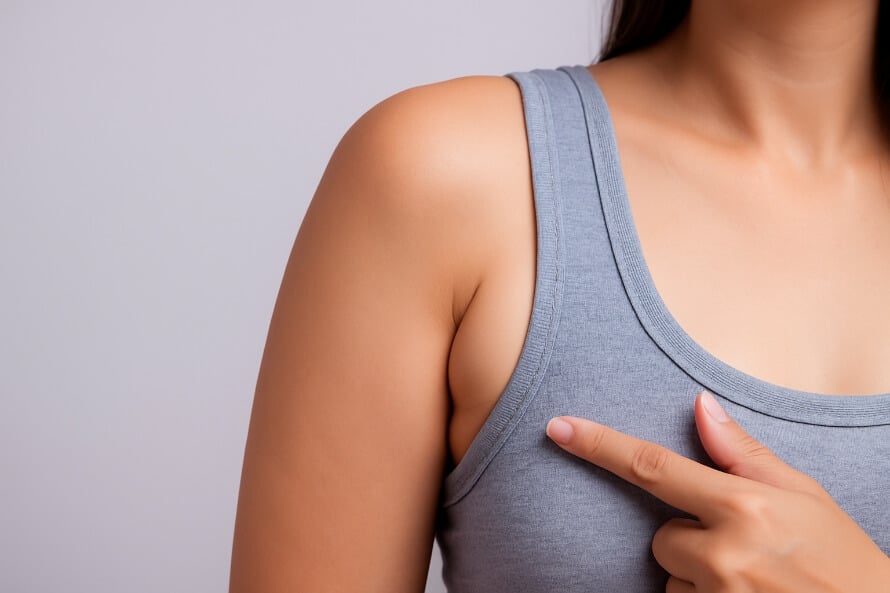
Most advice on how to get rid of armpit fat is backwards.
You’re told to flap your arms, do “toning” moves with tiny dumbbells, or buy a new bra and hope the bulge just disappears.
None of that fixes the real problem, which is how your body actually loses fat and what makes this area so stubborn in the first place.
Armpit fat, bra bulge, and side-boob fat aren’t mysterious biological anomalies. They’re normal fat-storage spots where your chest, shoulders, and upper arms meet, and they’re heavily influenced by your overall body-fat level, but also by your genetics, your hormones, and even your posture and bra fit.
In this article, you’ll learn what really causes armpit fat, why it can be so hard to get rid of, and the exact combination of training, diet, and lifestyle tweaks that actually makes it shrink.
Key Takeaways
- Armpit fat, bra bulge, and side-boob fat are usually just normal body fat where your chest, shoulder, and upper arm meet—not a sign something is “wrong” with your body.
- The main driver is having too much body fat, but genetics, hormones, posture, and sometimes swollen lymph nodes (which is why any hard, painful, or fast-growing lumps should be checked by a doctor) may play a role.
- You can’t spot-reduce armpit fat with special moves, but you can shrink it by losing overall body fat, which is best achieved by doing heavy compound exercises and a moderate amount of cardio.
- Bras that actually fit, better posture, good sleep, and lower stress won’t change how much fat you have, but they can make armpit fat and bra bulge look much less noticeable while you lean out.
- You don’t need supplements to get rid of armpit fat, but caffeine, yohimbine, and a fat burner can help you get there faster.
Table of Contents
+
What Is Armpit Fat (and Is It Normal?)
“Armpit fat” is fat that bulges from the underarm area where the arm and chest meet. Here’s how it looks:
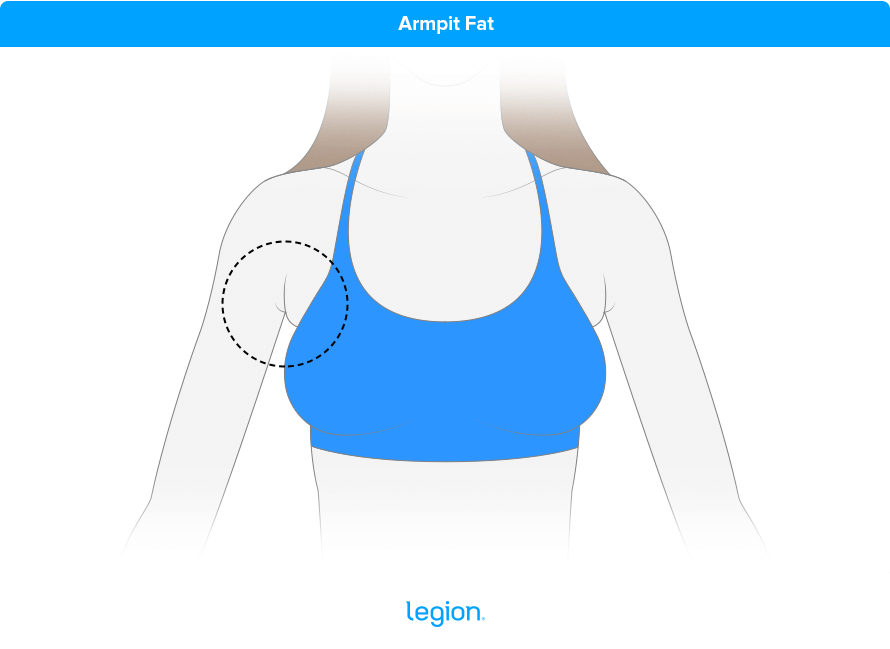
Women often notice it most when they wear bras, sports bras, swimsuits, or tops with tighter straps, which is why you’ll often hear it called “bra bulge.” Men can have armpit fat, too, especially if they carry extra body fat in their upper body.
In most cases, this is completely normal. It’s just one of the common places your body likes to store fat.
Armpit Fat vs Bra Bulge vs Side-Boob Fat
People use these terms as if they’re totally different things, but they mostly describe the same basic issue from slightly different angles:
- Armpit fat usually means the soft tissue that spills out at the front of the armpit, between your chest and upper arm.
- Bra bulge usually means any fat or skin that spills out around the edges of a bra—mostly at the back, though also at the front and side.
- Side-boob fat usually means the fat and breast tissue at the outer edge of the chest that gets pushed forward or sideways by a bra or swimsuit.
The main point: these are all normal fat-storage areas, and they all respond to the same things—overall fat loss, more muscle in the upper body, better posture, and a bra that actually fits.
What Causes Armpit Fat and Bra Bulge?
Look around online and you’ll find many fantastical ideas about what causes armpit fat and bra bulge. In reality, it usually comes down to five things: body fat, genetics, hormones, swollen lymph nodes, and posture.
Body Fat
In most cases, armpit fat appears when your overall body fat percentage is too high.
Your body doesn’t lose fat evenly. Some areas lean out quickly, and others are “stubborn” and are the last places to tighten up.
For many people, the armpit area is one of those stubborn spots. The good news is that most people can reduce armpit fat by losing weight through diet and exercise (more on the specifics soon).
Genetics
Your genes influence where your body stores fat.
If your parents or grandparents had armpit fat or bra bulge, you might be more likely to store fat there, too. Your ethnicity might also play a role in how likely you are to hold onto fat in the armpit region.
You can’t change your genetics, but you can change your overall body composition.
Hormones
Changes in hormone levels, especially during puberty, menstruation, pregnancy, or menopause, can cause the tissue in the upper arm and breast area to swell and hold more fluid, which can make these areas look fuller or puffier.
This doesn’t mean your hormones are “broken.” It just means your body’s normal hormone changes can temporarily change how the area looks.
Lymphedema
Lymphedema is swelling that happens when lymph fluid builds up in the underarm area. If an infection or injury causes the lymph nodes or lymph vessels in your armpit to swell, you may appear to have more tissue there than usual.
In mild cases, any bulge should shrink when the swelling goes away.
More serious conditions—such as lymphoma or skin and breast cancer—can also cause swelling in the underarm lymph nodes. If you notice hard, painful, or fast-growing lumps in or around your armpit, or swelling that doesn’t go away, you should see a doctor.
Posture
Poor posture can’t increase the actual amount of fat or tissue in your underarm, but it can make any armpit fat more obvious.
Slouching forward can push the skin and fat around your chest together and forward, which makes bra bulge stand out. Standing taller, opening your chest, and keeping your shoulders back often makes the area look better right away.
Can You Spot-Reduce Armpit Fat?
Most guides on how to get rid of armpit fat recommend silly exercises, such as high-fiving the air while performing jumping jacks.
These won’t give you the results you want—you can’t lose fat from a specific area (“spot reduction”) by performing movements that jiggle that bit of your body.
What you can do is:
- Lose overall body fat.
- Build the muscles around the area (chest, shoulders, upper back, arms).
- Improve posture so the area looks smoother.
Strength training helps with all of these points. To get the biggest benefit, focus on the following:
- Compound exercises: A compound exercise is any exercise that targets multiple muscle groups at once. Studies show that compound exercises produce the greatest increases in metabolic rate, muscle mass, and strength, which means they’re the best type of exercise for increasing fat loss.
- Heavy weightlifting: Research shows that training with 75–85% of your one-rep max (weights that you can do 6–12 reps with before failing) builds more muscle and burns more fat than training with lighter weights.
- Progressive overload: To maximize the muscle-building and fat-burning effects of weightlifting, strive to add weight or reps to every exercise in every workout. This is known as progressive overload, and it’s the single most important driver of muscle growth.
You can’t force your body to burn fat only from your armpits, but this combination of lifting heavy, getting stronger, and losing fat overall is what eventually shrinks that area.
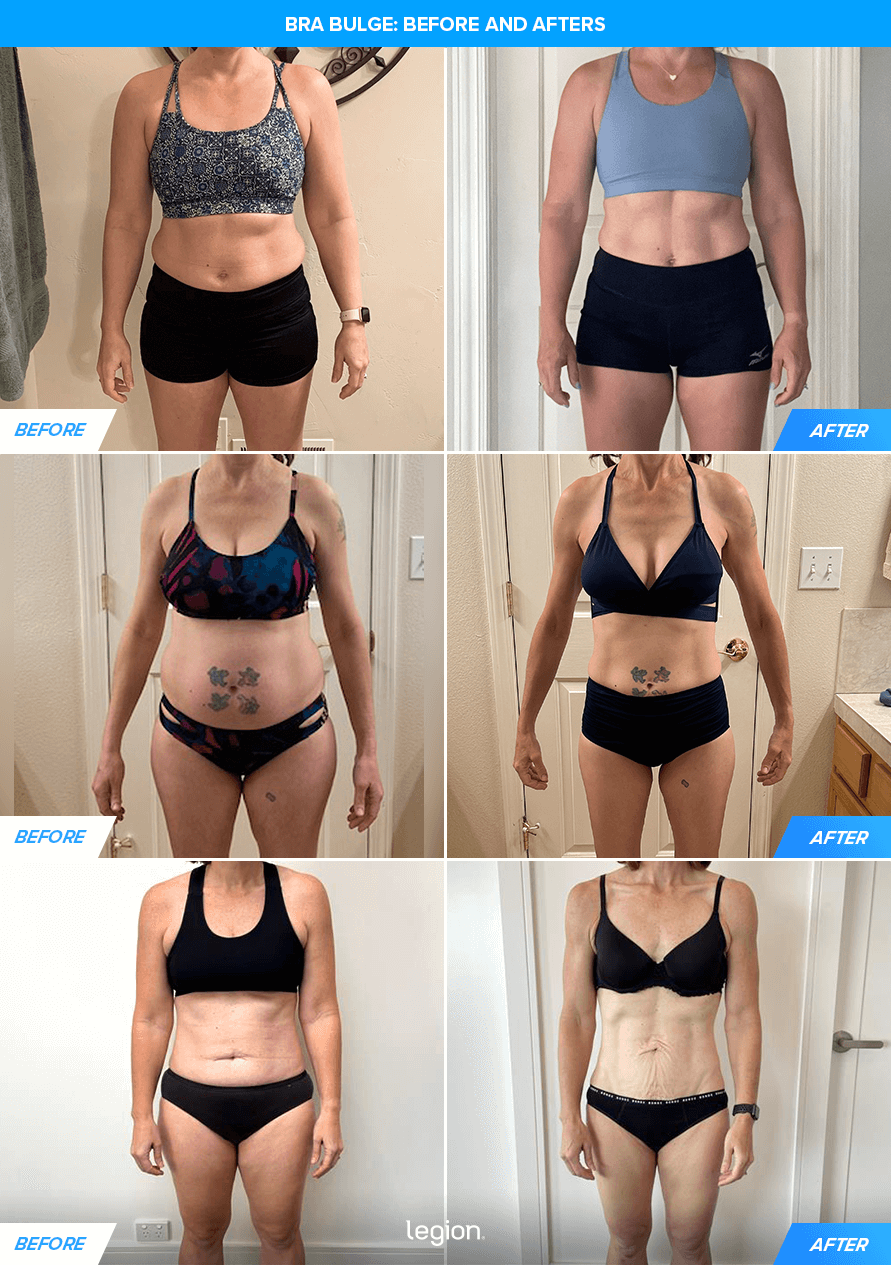
And if you want proof, check out the before-and-after photos below.
With the help of Legion’s body transformation coaching service, all these women shrunk their bra bulge in a matter of months by applying these principles:
The Best Exercises for Armpit Fat, Bra Bulge, and Side-Boob Fat
These exercises don’t magically burn armpit fat, but together they help you build muscle in your legs, core, chest, shoulders, and back, which boosts your overall calorie burn and makes your upper body look tighter and more defined as you lose fat.
Back Squat
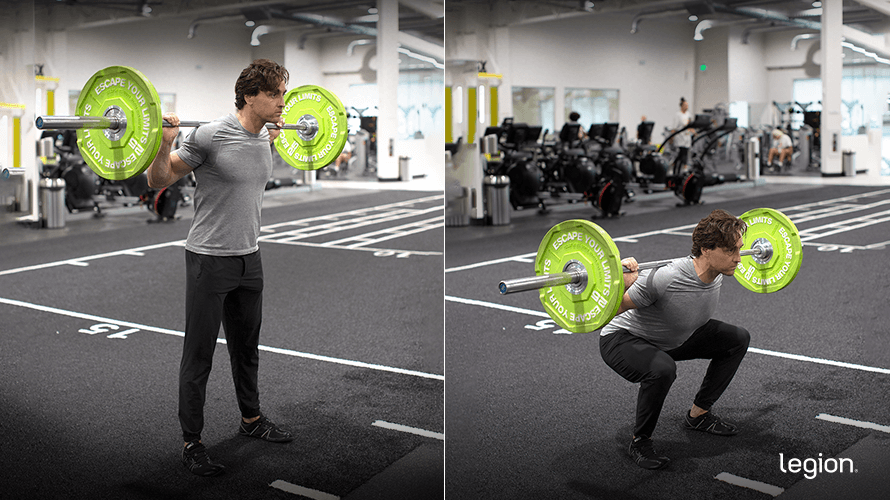
How to:
- Set a barbell in a rack at about chest height.
- Step under it, pinch your shoulder blades together, and rest the bar across your upper back.
- Lift the bar out, step back, and set your feet slightly wider than shoulder-width with your toes turned out.
- Keeping your back straight, sit down and push your knees out in the same direction as your toes.
- Reverse the movement and return to the starting position.
Deadlift
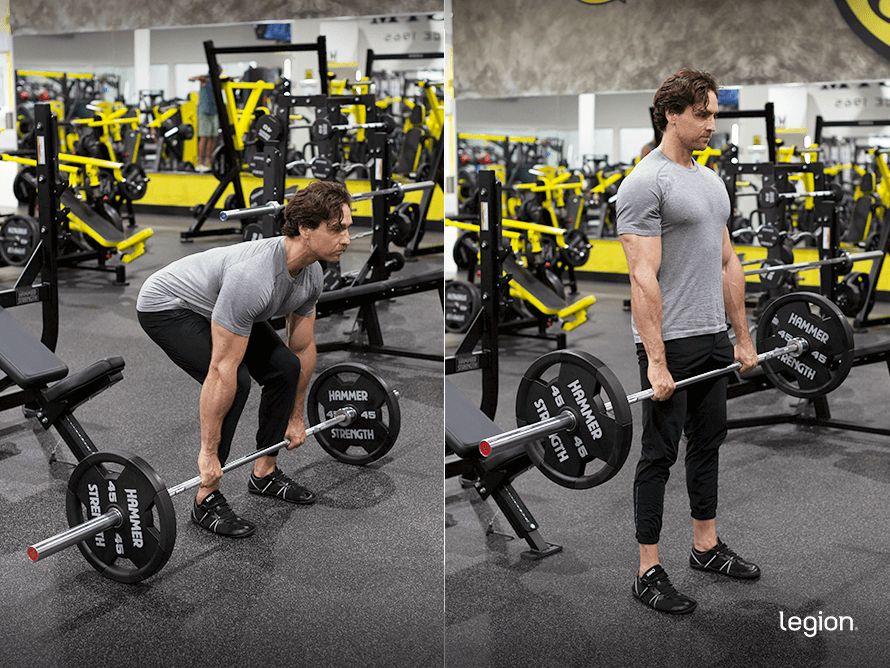
How to:
- Stand with your feet slightly narrower than shoulder width, toes pointed slightly out.
- Position the bar over your midfoot, about an inch from your shins.
- Push your hips back and grip the bar just outside your legs.
- Take a deep breath, brace your core, and flatten your back.
- Drive through your heels to stand upright, keeping the bar close to your body.
- Reverse the movement and return to the starting position.
Push-up
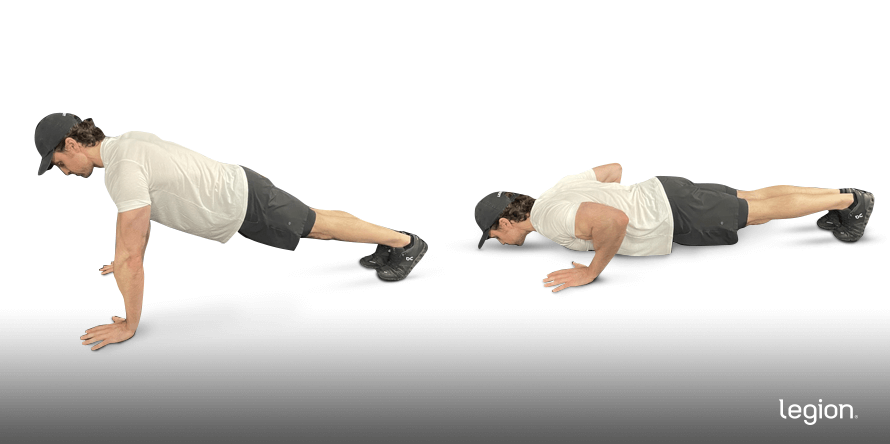
How to:
- Start in a high plank with your hands slightly wider than shoulder-width.
- Lower your chest toward the floor by bending your elbows.
- Reverse the movement and return to the starting position.
(If a full push-up is too hard right now, you can do them on your knees or with your hands on a bench.)
Shoulder Press
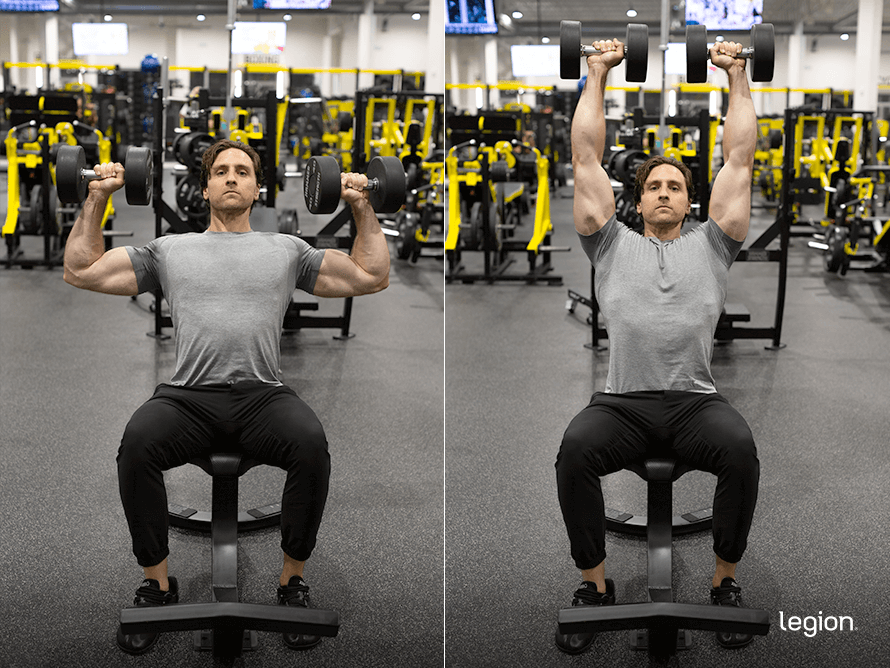
How to:
- Sit on an upright bench and hold a dumbbell in each hand, resting them on your thighs.
- Bring the dumbbells up in front of your shoulders with your palms facing away.
- Press the dumbbells overhead.
- Reverse the movement and return to the starting position.
Lat Pulldown
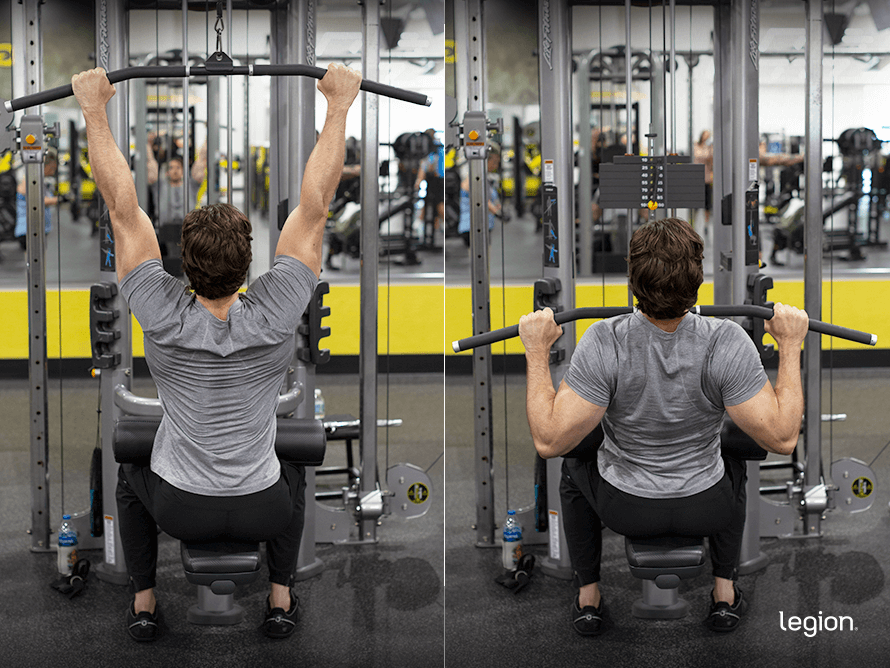
How to:
- Adjust the thigh pad so it holds your legs firmly in place.
- Stand up and grab the bar with an overhand grip slightly wider than shoulder width.
- Keeping your grip on the bar, sit down and secure your thighs under the pad.
- Pull the bar down until it reaches your upper chest.
- Reverse the movement and return to the starting position
One-Arm Dumbbell Row
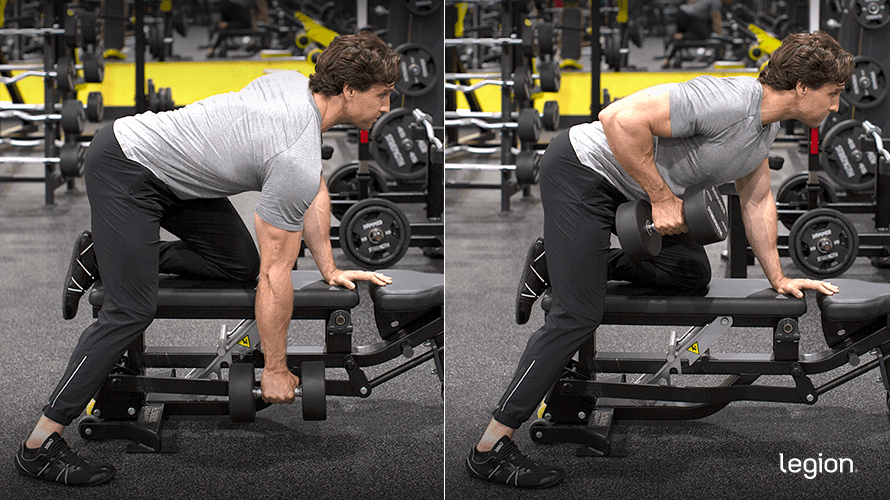
How to:
- Hold a dumbbell in your right hand.
- Plant your left knee and arm firmly on a bench, your right foot on the floor a foot or two from the bench, and let your right arm hang straight down.
- Keeping your back straight, pull the dumbbell up until it touches your torso, and then return it to the starting position.
- Once you’ve completed the desired number of reps, repeat the process with your left arm.
Cardio for Faster Armpit Fat Loss
If you want to get rid of your armpit fat as quickly as possible, research shows that combining strength training and cardio is better for fat loss than doing either alone.
Here’s what I recommend:
- Do 2–3 sessions of low- or moderate-intensity cardio workouts per week (e.g., walking, swimming, or rucking) for 20–60 minutes each.
- Do one HIIT workout weekly if you enjoy it.
- Limit total cardio to 2–3 hours weekly.
- Do cardio and weightlifting on separate days if possible. If you have to do both in one day, lift first and separate the sessions by at least 6 hours.
This is enough cardio to speed up fat loss—including from stubborn spots like the armpits—without beating you up or getting in the way of your strength training.
And if you want to learn more about how to combine strength training and cardio, check out this article:
Concurrent Training: The Right Way to Combine Cardio and Strength Training
Diet Tips for Getting Rid of Underarm Fat

Strength training builds muscle and boosts calorie burn, but your diet is what ultimately determines whether that stubborn armpit fat comes off.
The good news?
Losing fat doesn’t require extreme dieting or cutting out all your favorite foods. Here’s a simple three-step approach that makes fat loss—including armpit fat—far more manageable:
Calories
Research shows that eating 20–25% fewer calories than you burn every day is the sweet spot for losing fat quickly without feeling miserable, losing muscle, or dealing with ravenous hunger.
This moderate deficit is big enough to produce weekly progress but small enough to maintain for several months—which is usually what’s needed for stubborn areas like the armpits and other common trouble spots.
Macros
No matter your calorie goal, aim for:
- About 1 gram of protein per pound of body weight per day
- Around 20–30% of your daily calories from fats
- The rest of your daily calories from carbs
This balance supports muscle growth, performance, and overall health while you’re dieting.
To learn more about how to calculate your macros, check out this article:
How to Calculate Your Macros for Weight Loss & Muscle Gain
Supplements
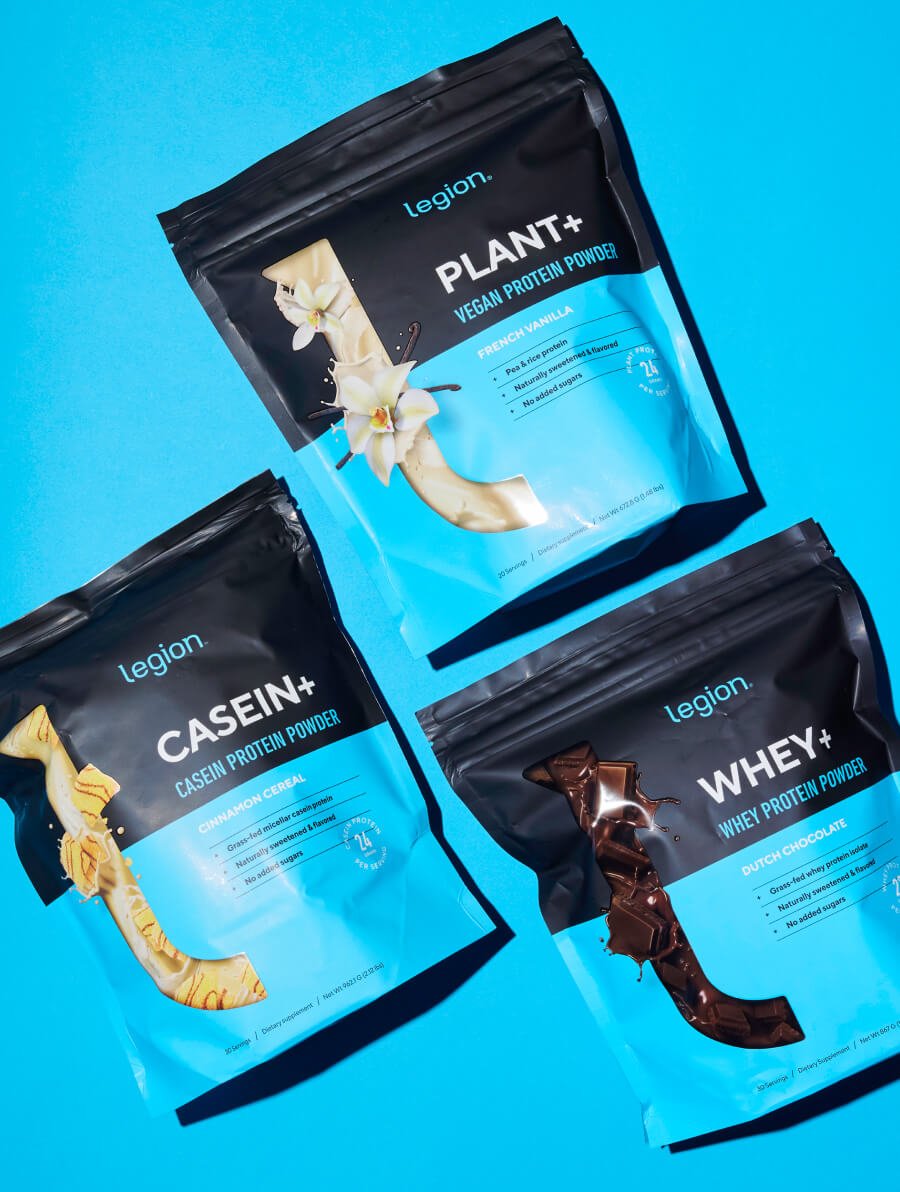
You don’t need supplements to get rid of armpit fat, but the right ones can make the process faster and more comfortable.
- Caffeine: 3–6 mg of caffeine per kilogram of body weight per day increases metabolic rate and helps you train harder while dieting.
- Yohimbine: 0.1–0.2 milligrams of yohimbine per kilogram of body weight before fasted training enhances fat loss.
- Fat Burner: Effective fat burners contain ingredients that boost the number of calories you burn and reduce hunger and cravings, making weight loss more straightforward.
And if you’d like to know exactly what other supplements you should take to reach any and all of your fitness goals, take the Legion Supplement Finder Quiz.
Bras, Posture, Sleep, and Stress: Reducing the Look of Armpit Fat
You can’t control exactly where your body loses fat first, but you can control how noticeable armpit fat looks while you’re working on it.
- Bras: A well-fitting bra with the right band size, cup size, and strap width can make a huge difference. If the band is too tight or the cups are too small, it will push tissue up and out, which creates more bulge. A proper fit supports the tissue instead of squeezing it.
- Posture: Standing tall with your chest up and shoulders back instantly changes how your upper body looks. Good posture spreads the tissue more evenly instead of bunching it at the front of your armpit.
- Sleep: Getting enough sleep (most people do best with 7–9 hours per night) helps regulate appetite, cravings, and energy levels. That makes it much easier to stick to your diet and training plan.
- Stress: High stress can lead to more snacking, less movement, and worse sleep. Simple stress-management tools—like walking, journaling, or a short stretching routine—can make it easier to stay on track long enough to see real change.
These habits don’t replace a good training and nutrition plan, but they support it and help you feel better in your clothes while you’re losing fat.
When Should You Consider Professional Treatments for Underarm Fat?
For most people, you don’t need medical or cosmetic treatments to improve armpit fat. A smart training program, a sensible diet, and time will usually do the job.
That said, professional treatments might be worth discussing if:
- You’ve been consistent with training, diet, and lifestyle for several months or more.
- You’re at a healthy body weight, but you still have a small, stubborn bulge that really bothers you.
Common options your doctor might talk about include liposuction and non-surgical fat-reduction treatments.
If you’re thinking about this route, talk to a board-certified doctor who can explain what’s realistic for your body, and who will tell you if you’re not a good candidate instead of just trying to sell you a procedure.
How Long Does It Take to Get Rid of Armpit Fat?
There’s no exact timeline, because it depends on:
- How much fat you have to lose overall
- How fast you lose weight
- How your body chooses to let go of fat from different areas
If you maintain a moderate calorie deficit and train hard, you should notice some change in stubborn areas like the armpits within 8–12 weeks.
For bigger changes, you’re usually looking at several months of consistent effort. And if your genetics make the armpit area very stubborn, it may be one of the last places to lean out.
That doesn’t mean your plan isn’t working—it just means you have to stick with it long enough to let your body catch up.
The Bottom Line on How to Get Rid of Armpit Fat
Armpit fat, bra bulge, and side-boob fat are normal fat-storage patterns, not proof that your body is broken.
You can’t spot-reduce them with special “armpit moves,” but you can shrink them by:
- Doing heavy compound exercises and getting stronger over time
- Doing some cardio
- Eating in a moderate calorie deficit and plenty of protein
- Improving your bra fit, posture, sleep, and stress
If you do those things consistently, your whole body will get leaner, your upper body will look more athletic, and the tissue around your armpits will gradually smooth out.
FAQ #1: What is the main cause of armpit fat?
The main cause of armpit fat is simply carrying too much body fat overall. That said, your genetics may make it more likely for you to store fat in that area even when you’re relatively lean.
FAQ #2: Why is underarm fat so hard to lose?
Underarm fat is often a “stubborn” area, which means your body tends to lose fat from other places (like your face or waist) first.
You can’t force it to go away, but if you stay in a calorie deficit and keep training, your body will eventually pull fat from that area, too—it just takes patience.
FAQ #3: How long does it take for underarm fat to go away?
If you’re consistent with diet and training, you might notice some difference in 8–12 weeks, with larger changes happening over 3–6 months as your overall body fat drops.
FAQ #4: Can I lose arm fat in 1 month?
You can make some progress on arm fat in a month, especially if you’re new to lifting and tighten up your diet.
But you probably won’t erase all your arm or armpit fat in 4 weeks. Think of a month as a good starting block, not the finish line.
FAQ #5: Do bras and posture really affect armpit fat and bra bulge?
They don’t change how much fat you have, but they do change how it looks.
A bra that’s too tight or the wrong size will push tissue out and create bulges. Slouching will do the same thing. A well-fitting bra and better posture can make the area look smoother right away.
Want More Content Like This?
Check out these articles:
- 13 Best Exercises to Lift Your Breasts Naturally
- Transform Your Pear-Shaped Body: Exercises & Diet Tips
- The Best Hourglass Body Workout Routine for a Slim Waist & Big Curves
Scientific References +
- Rask-Andersen, Mathias, et al. “Genome-Wide Association Study of Body Fat Distribution Identifies Adiposity Loci and Sex-Specific Genetic Effects.” Nature Communications, vol. 10, no. 1, 21 Jan. 2019, https://doi.org/10.1038/s41467-018-08000-4.
- Sun, Chang, et al. “Genetics of Body Fat Distribution: Comparative Analyses in Populations with European, Asian and African Ancestries.” Genes, vol. 12, no. 6, 29 May 2021, p. 841, https://doi.org/10.3390/genes12060841. Accessed 5 Oct. 2021.
- Jemstrom, H., and H. Olsson. “Breast Size in Relation to Endogenous Hormone Levels, Body Constitution, and Oral Contraceptive Use in Healthy Nulligravid Women Aged 19-25 Years.” American Journal of Epidemiology, vol. 145, no. 7, 1 Apr. 1997, pp. 571–580, https://doi.org/10.1093/oxfordjournals.aje.a009153. Accessed 29 Mar. 2022.
- Farinatti, Paulo TV, and Antonio G Castinheiras Neto. “The Effect of Between-Set Rest Intervals on the Oxygen Uptake during and after Resistance Exercise Sessions Performed with Large- and Small-Muscle Mass.” Journal of Strength and Conditioning Research, vol. 25, no. 11, Nov. 2011, pp. 3181–3190, https://doi.org/10.1519/jsc.0b013e318212e415. Accessed 6 Jan. 2020.
- MARX, JAMES O., et al. “Low-Volume Circuit versus High-Volume Periodized Resistance Training in Women.” Medicine and Science in Sports and Exercise, Apr. 2001, pp. 635–643, https://doi.org/10.1097/00005768-200104000-00019. Accessed 24 Nov. 2020.
- Schoenfeld, Brad J. “The Mechanisms of Muscle Hypertrophy and Their Application to Resistance Training.” Journal of Strength and Conditioning Research, vol. 24, no. 10, 2010, pp. 2857–72, journals.lww.com/nsca-jscr/fulltext/2010/10000/the_mechanisms_of_muscle_hypertrophy_and_their.40.aspx, https://doi.org/10.1519/JSC.0b013e3181e840f3.
- Ho, Suleen S, et al. “The Effect of 12 Weeks of Aerobic, Resistance or Combination Exercise Training on Cardiovascular Risk Factors in the Overweight and Obese in a Randomized Trial.” BMC Public Health, vol. 12, no. 1, 28 Aug. 2012, bmcpublichealth.biomedcentral.com/articles/10.1186/1471-2458-12-704, https://doi.org/10.1186/1471-2458-12-704.
- Brellenthin, Angelique G., et al. “Resistance Exercise, Alone and in Combination with Aerobic Exercise, and Obesity in Dallas, Texas, US: A Prospective Cohort Study.” PLOS Medicine, vol. 18, no. 6, 23 June 2021, p. e1003687, https://doi.org/10.1371/journal.pmed.1003687.
- Huovinen, Heikki T., et al. “Body Composition and Power Performance Improved after Weight Reduction in Male Athletes without Hampering Hormonal Balance.” Journal of Strength and Conditioning Research, vol. 29, no. 1, Jan. 2015, pp. 29–36, https://doi.org/10.1519/jsc.0000000000000619.
- Michela Figorilli, et al. “Obesity and Sleep Disorders: A Bidirectional Relationship.” Nutrition Metabolism and Cardiovascular Diseases, vol. 35, no. 6, 1 Mar. 2025, pp. 104014–104014, https://doi.org/10.1016/j.numecd.2025.104014.
- Sánchez-Sánchez, Eduardo, et al. “Perceived Stress and Increased Food Consumption during the “Third Wave” of the COVID-19 Pandemic in Spain.” Nutrients, vol. 13, no. 7, 12 July 2021, p. 2380, https://doi.org/10.3390/nu13072380. Accessed 25 Sept. 2021.
- Hill, Deborah, et al. “Daily Stress and Eating Behaviours in Adolescents and Young Adults:Investigating the Role of Cortisol Reactivity and Eating Styles.” Psychoneuroendocrinology, vol. 153, 31 Mar. 2023, p. 106105, www.sciencedirect.com/science/article/pii/S0306453023000835, https://doi.org/10.1016/j.psyneuen.2023.106105.
- Yoon, Eun Sun, et al. “Association between Perceived Psychological Stress and Exercise Behaviors: A Cross-Sectional Study Using the Survey of National Physical Fitness.” ProQuest, vol. 13, no. 10, 14 Oct. 2023, p. 2059, www.proquest.com/docview/2882598005?accountid=12654, https://doi.org/10.3390/life13102059.
- Brockmann, Andrea N., and Kathryn M. Ross. “Bidirectional Association between Stress and Physical Activity in Adults with Overweight and Obesity.” Journal of Behavioral Medicine, vol. 43, no. 2, 4 Mar. 2020, pp. 246–253, https://doi.org/10.1007/s10865-020-00145-2. Accessed 12 Mar. 2021.
- Gardani, M., et al. “A Systematic Review and Meta-Analysis of Poor Sleep, Insomnia Symptoms and Stress in Undergraduate Students.” Sleep Medicine Reviews, vol. 61, no. 101565, Nov. 2022, p. 101565, https://doi.org/10.1016/j.smrv.2021.101565.
- Aastha Rajbahak, et al. “Understanding the Academic Stress-Sleep Quality: Implications for Academic Performance.” International Journal of Atharva, vol. 3, no. 1, 18 Mar. 2025, pp. 59–72, https://doi.org/10.3126/ija.v3i1.76715. Accessed 25 Apr. 2025.