
Instructions
- Set both pulleys on a dual cable machine to the highest setting and attach a single handle to each.
- Grab a handle in each hand and stand between the two cable stacks, allowing the cables to pull your arms out to your sides.
- Take one or two steps forward and get into a staggered stance. Your arms should be extended with a slight bend in the elbow and your elbows should be slightly behind your torso.
- Lift your chest, pinch your shoulder blades together and down, and take a deep breath (this keeps your torso stable throughout each rep).
- Bring your hands together in a wide arc, keeping a slight bend in your elbows.
- Reverse the movement, letting your arms travel back and out until you feel a deep stretch in your chest, then repeat.
- When you’re finished, step back between the cable stacks and release one handle at a time.
Expert Tips
- If you struggle to feel your pecs working, think about pulling your upper arms across your chest rather than pushing your hands together. Do a few reps with light weights before your first set to practice this technique.
- If you have to bend your elbows more than about 30 degrees, you’re using too much weight. Don’t turn the exercise into a chest press.
- Some people like to keep their palms open during this exercise and others like to grip the handles firmly—try both methods and see what works best for you. Neither is better than the other.
- When you need to take a breath, do it at the top of each rep (when your hands are close together). Doing it when your arms are spread makes it harder to maintain a stable torso.
- Keep your torso as stable as possible—the more your body moves, the less effective the exercise is for your pecs.
Muscles Worked
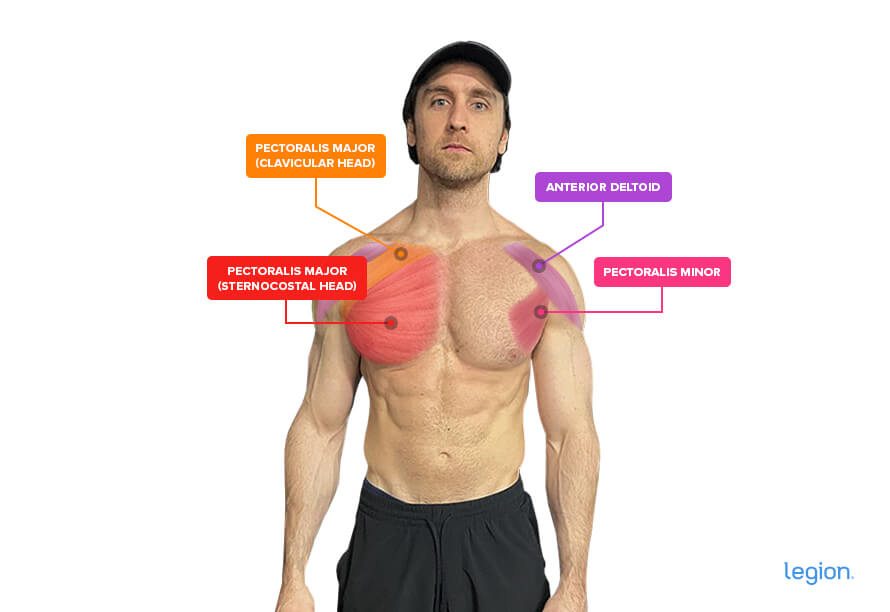
The lower chest cable fly primarily works the:
- Pectoralis major (sternocostal and clavicular heads)
- Pectoralis minor
It also works the anterior (“front”) deltoid to a lesser degree.
3 Lower Chest Cable Fly Workouts for More Defined Pecs
Here are three sample workouts incorporating the lower chest cable fly.
Chest Workout with Lower Chest Cable Fly
Barbell Bench Press: 3 sets of 4–6 reps
Incline Dumbbell Bench Press: 3 sets of 4–6
Lower Chest Cable Fly: 3 sets of 8–12 reps
Cable Triceps Pushdown: 3 sets of 8–12 reps
Push Workout with Lower Chest Cable Fly
Incline Barbell Bench Press: 3 sets of 4–6 reps
Barbell Overhead Press: 3 sets of 4–6 reps
Lower Chest Cable Fly: 3 sets of 8–12 reps
Cable Overhead Triceps Extension: 3 sets of 8–12 reps
Upper Body Workout with Lower Chest Cable Fly
Dumbbell Bench Press: 3 sets of 4–6 reps
Pull-up: 3 sets of 4–6 reps
Lower Chest Cable Fly: 3 sets of 8–12–6 reps
Dumbbell Lateral Raise: 3 sets of 8–12 reps
Barbell Curl: 3 sets of 8–12 reps
The main reason to do the lower chest cable fly is that it lets you keep training your pecs after your shoulders and triceps are already fatigued from compound pressing exercises. So it’s generally best to do 2 or 3 sets toward the middle or end of workouts that start with heavy flat or incline pressing.
The lower chest cable fly is also tricky to load heavily—it becomes harder to get into the right position, hold that position, and keep the tension on your pecs.
That’s why moderate weight usually works best. The lowest rep range I’d recommend is 6–8, but most people do better with 8–10, 10–12, or even 12–15 reps.
Here are several more workouts that incorporate the lateral raise:
Is the High-to-Low Cable Fly Really Best for Training Your Lower Chest?
Most people think that to develop your lower pecs, you need to do presses and flys where your hands travel from chest height downward—like the decline bench press, chest dip, or high-to-low cable fly.
The reasoning is that the lower pec fibers run upward from your sternum and ribs to your upper arm, so movements that follow that angle should train them more directly.
For example, one study conducted by scientists at the University of Wollongong used EMG to measure how different parts of the pecs worked as lifters moved their arms in different directions.1 The lowest parts of the pecs were most active during movements that looked like the decline bench press, the high-to-low cable fly, and—interestingly—the dumbbell pullover.
Here are some images adapted from the study that illustrate this. Dark blue is high activation, light blue is moderate, gray is low:
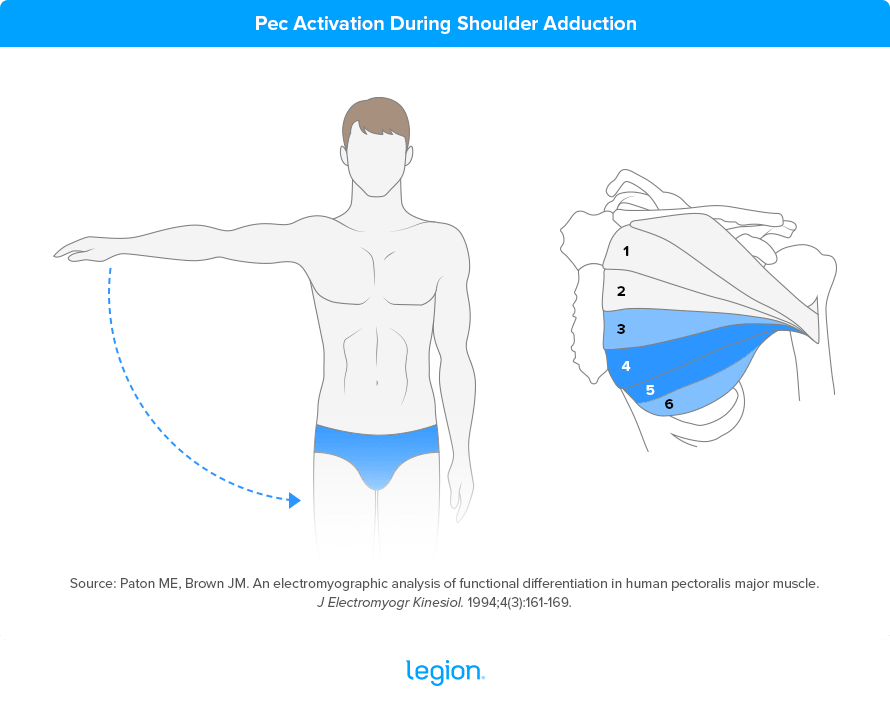
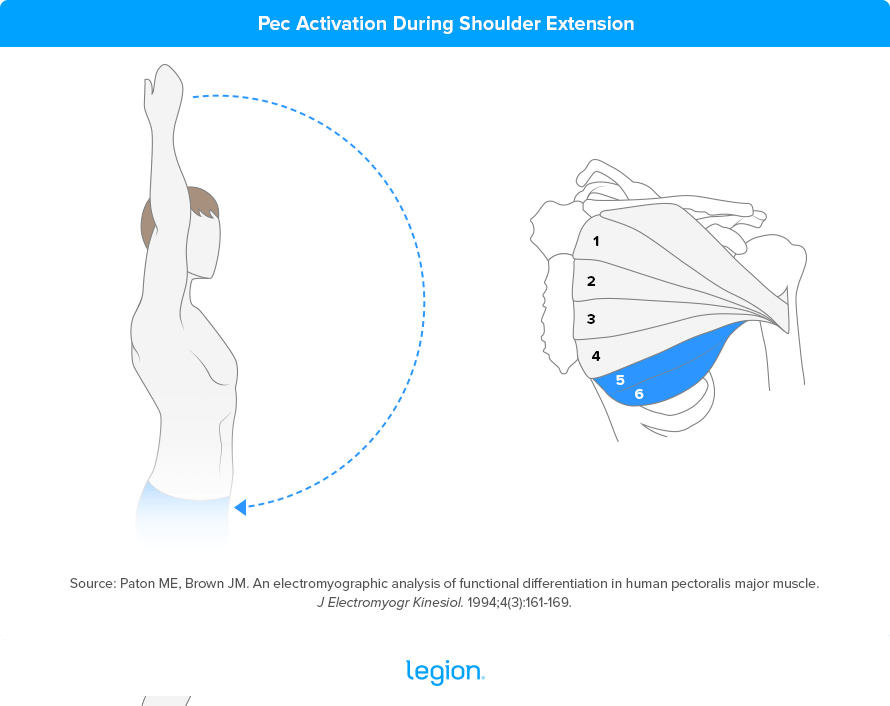
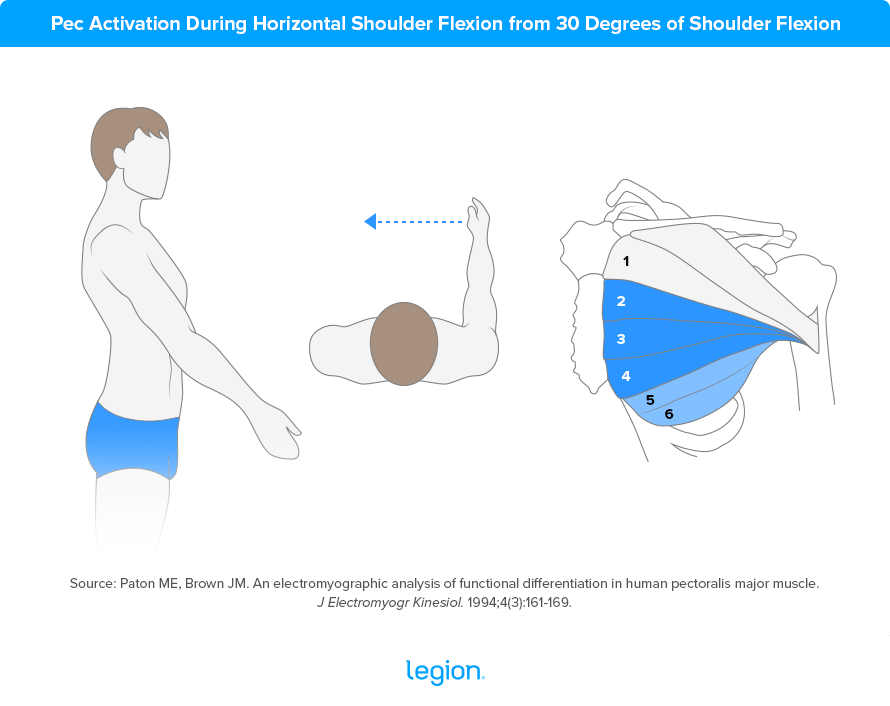
This sounds like a strong argument for the high-to-low cable fly being better for the lower chest—but it isn’t as airtight as it seems.
First, the study only measured muscle activation—and more activation doesn’t always translate into more growth.2 Second, it measured activation during simple arm movements—not actual exercises that people do in the gym with real weights. And when researchers have compared the bench press to the decline bench press head-to-head, both activate the lower pecs equally.345
All in all, the body of evidence shows that if you’re training hard with proper technique, most chest pressing exercises—including the regular and low-to-high cable fly—train your lower chest just as effectively as the high-to-low version.
The more important question is this: should you even bother trying to isolate your lower chest?
I think not.
If you’re doing any amount of pressing—bench, incline bench, chest press machine, and so on—then your lower pecs are already getting plenty of volume.
Unless you’ve been training for years and your lower pecs are clearly lagging behind the rest of your chest, it’s almost certainly a better use of time to work on your upper chest, which isn’t trained as effectively by regular pressing exercises.
Or, if you’re happy with your chest development, just focus on a different body part altogether like your arms, legs, back, or, dare I say, your calves.
That said, if you feel like your lower chest really is underdeveloped and you want to do everything you can to bring it up, the high-to-low cable fly is a reasonable choice. But it’s better to think of it as a comparable alternative to regular or low-to-high cable flyes, rather than a better option. And, of course, heavy flat and incline pressing should still make of the bulk of your chest training, regardless of what portion of the chest you’re trying to build.
Lower Chest Cable Fly vs. Dumbbell Fly: Which Should You Do?
The key advantage the lower-chest cable fly has over the dumbbell fly is that it keeps constant tension on your pec muscles throughout the entire rep. In more technical terms, the cable chest fly has a better resistance curve, which refers to how the difficulty of an exercise changes throughout the range of motion.
The dumbbell fly feels hardest at the bottom of each rep, when your arms are spread wide, gets significantly easier as you raise the weights, and for the last ~⅓ of each rep, there’s almost no tension on your pecs whatsoever.
And in general, more tension on a muscle = more muscle growth over time.
Now, one study has found no difference in muscle growth between the cable and dumbbell exercise variations (in this case, the lateral raise), which some people claim is proof positive the dumbbell fly is just as good for building your pecs as the lower-chest cable fly.6 The study only lasted 8 weeks, though, which is simply not enough time for small differences like this to become statistically significant, much less visible.
All of that said, the dumbbell fly still puts significant tension on your pecs through most of each rep and the differences in actual muscle growth are probably small. I like, use, and recommend both exercises.
But if I had to pick one, I’d pick the cable fly over the dumbbell fly for this reason.
Want More Content Like This?
Check out these articles:
- How to Do the Cable Crossover for Chest Size and Symmetry
- The Best Chest Workouts at Home for Pec Size & Strength
- How Many Chest Exercises Should You Do Per Workout?
Scientific References +
- ↩ Paton ME, Brown JM. An electromyographic analysis of functional differentiation in human pectoralis major muscle. J Electromyogr Kinesiol. 1994;4(3):161-169.
- ↩ Vigotsky AD, Beardsley C, Contreras B, et al. Greater electromyographic responses do not imply greater motor unit recruitment and ‘hypertrophic potential’ cannot be inferred. J Strength Cond Res. 2017;31(1):e1-e4.
- ↩ Barnett C, Kippers V, Turner P. Effects of Variations of the Bench Press Exercise on the EMG Activity of Five Shoulder Muscles. J Strength Cond Res. 1995;9(4):222-227.
- ↩ Lauver JD, Cayot TE, Scheuermann BW. Influence of bench angle on upper extremity muscular activation during bench press exercise. Eur J Sport Sci. 2016;16(3):309-316.
- ↩ Roy X, Arseneault K, Sercia P. The effect of 12 variations of the bench press exercise on the EMG activity of three heads of the pectoralis major. Int J Strength Cond. 2021;1(1).
- ↩ Larsen S, Wolf M, Schoenfeld BJ, et al. Dumbbell versus cable lateral raises for lateral deltoid hypertrophy: an experimental study. Front Physiol. 2025;16:1611468.