Not happy with your purchase?
Simply let us know, and you'll get a full refund, no questions asked. And you don't even need to return anything.
So that means you can say "yes" now and decide later.
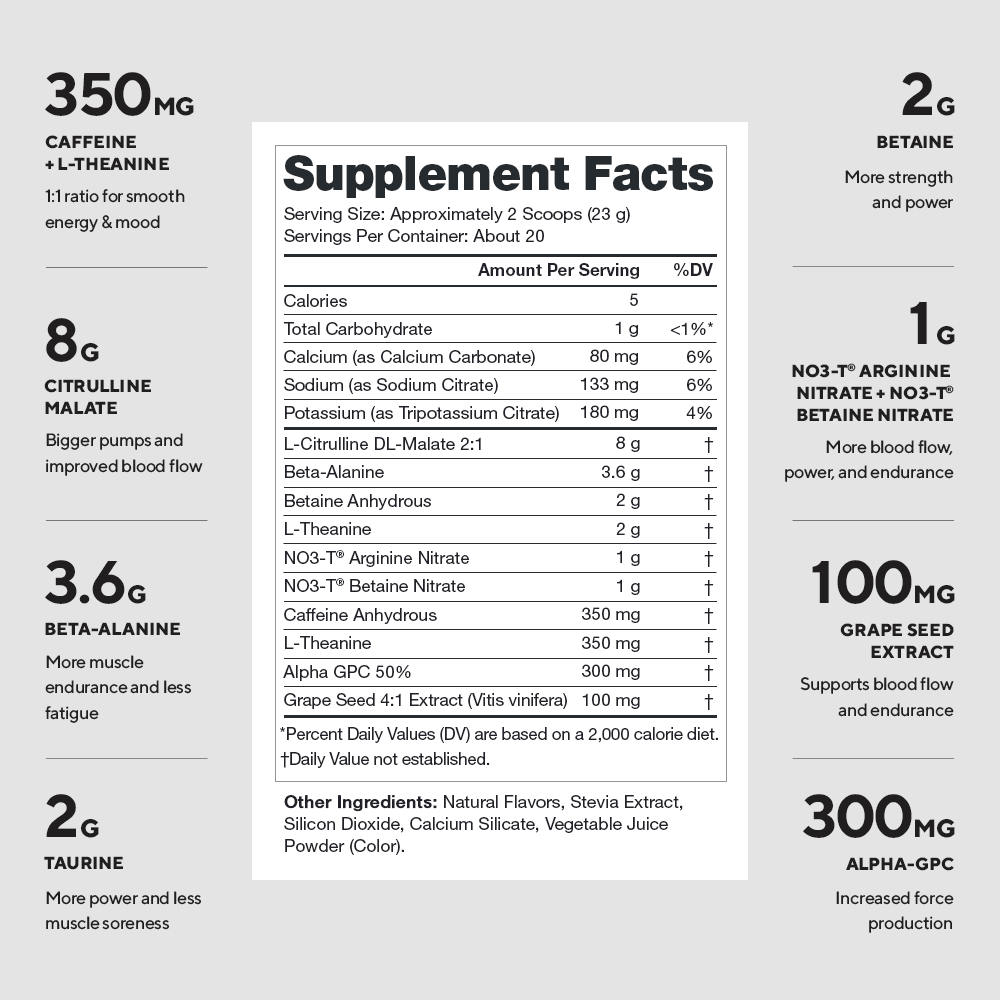
Legion Pulse+ Pump Ingredients (18.7 grams per serving)
Caffeine (350 milligrams per serving)
Caffeine is a naturally occurring substance found in many plants native to Africa, East Asia, and South America, including various kinds of tea, cocoa, and coffee.
Caffeine’s primary effects in the body are to stimulate the central nervous system and block the activity of another chemical—adenosine—that causes tiredness.
Research shows that supplementation with caffeine . . .
- Boosts mood and energy levels[6]
- Improves focus, drive, and wakefulness[7][8][9]
- Increases metabolic rate[10][11][12]
- Enhances strength and power[13][14][15][16][17][18][19]
- Boosts endurance[20][21][22][23][24]
- Improves anaerobic performance[25][26][27][28][29]
- Preserves power output during fatiguing workouts[30]
The clinically effective dose of caffeine for enhancing energy, focus, and performance is between 1 and 6 milligrams per kilogram of body weight.[31][32][33]
L-Theanine (350 milligrams per serving)
L-theanine is an amino acid mainly found in green tea. It supports relaxation and focus by interacting with neurotransmitters like glutamate, GABA, serotonin, and dopamine to lower excitatory brain signals and boost calming ones.
Research shows that supplementation with L-theanine . . .
- Improves memory and attention (when paired with caffeine)[34][35][36][37]
- Promotes relaxation and calmness[38][39]
- Improves mood[40]
The clinically effective dose of L-theanine when combined with caffeine is between a ratio of 1:1 and 2:1 theanine to caffeine.
Citrulline Malate (8 grams per serving)
Citrulline malate is a compound consisting of L-citrulline—an amino acid found in foods like watermelon, pumpkin, and cucumber—and malic acid, a naturally occurring component of many fruits and vegetables that supports energy production.
The body converts L-citrulline into the amino acid L-arginine, which increases the production of nitric oxide—a gas that widens blood vessels and improves circulation.[41][42]
This is why research shows that supplementation with citrulline malate . . .
- Improves muscle endurance[43][44][45][46]
- Increases strength and power[47]
- Relieves muscle soreness[48][49]
- Reduces perceived effort during exercise[50]
The clinically effective dose of citrulline malate is between 6 and 8 grams.
Beta-Alanine (3.6 grams per serving)
Beta-alanine is a naturally occurring amino acid that regulates the amount of the molecule carnosine that can be stored in the muscles.[51]
Carnosine reduces muscle acidity, which increases the amount of work that muscles can do before they become fatigued.[52]
This is why research shows that supplementation with beta-alanine . . .
- Improves muscle endurance, particularly during bouts of exercise lasting 1–4 minutes (like circuits or supersets)[53][54][55][56][57]
- Improves anaerobic exercise capacity[58][59][60][61][62][63][64]
- Reduces feelings of fatigue during exercise[65][66][67]
The clinically effective dose of beta-alanine is between 2.6 and 6.4 grams.
We chose to include 3.6 grams of beta-alanine per serving because it provides significant performance benefits while also minimizing the common and harmless side effect of a mild prickling, itching, or tingling of the skin.[68]
Taurine (2 grams per serving)
Taurine is an amino acid found mostly in seafood and meat. It helps protect cells from oxidative stress and supports normal heart and muscle function.[69][70]
It’s also a potent osmolyte, which is a substance that helps balance fluid levels inside and outside cells.[71]
Research shows that supplementation with taurine . . .
- Improves muscular endurance and power[72][73]
- Supports healthy blood pressure levels during exercise[74][75]
- Reduces post-exercise muscle soreness[76][77][78][79]
- Supports healthy blood vessel function[80][81]
The clinically effective dose of taurine is between 1 and 6 grams per day, with research showing the majority of benefits come from 1 to 3 grams.
Betaine (2 grams per serving)
Betaine (or trimethylglycine) is a compound derived from the amino acid glycine and found in foods like beets, spinach, and quinoa.
Betaine has three methyl groups—small chemical units containing one carbon and three hydrogen atoms that your body uses in essential processes like building DNA, breaking down fats, and producing energy.
Betaine’s also an osmolyte, which is a substance that helps balance fluid levels inside and outside cells.
These two properties are beneficial during times of physical stress, which is why studies show that supplementation with betaine . . .
The clinically effective dose of betaine is between 2 and 4 grams, with most studies using 2.5 grams.[84][85]
NO3-T® Arginine Nitrate (1 gram per serving)
Nitrate is a compound found naturally in leafy greens and beets. Your body converts it first into nitrite and then into nitric oxide, a gas that widens blood vessels, boosts blood flow, and improves muscular efficiency.[86][87][88][89]
A unique feature of nitrate is that it’s “activated” under conditions of fatigue and acidosis, meaning the benefits are strongest when your muscles are working hardest—such as the last few reps of a hard, high-rep set.
Nitrate quickly degrades unless it’s bound to another substance, however, which is why we use NO3-T® Arginine Nitrate, a patented combination of arginine and nitrate that reliably raises nitric oxide levels in your muscles.
Research shows that supplementation with nitrate . . .
- Increases muscular blood flow[90][91]
- Increases muscular power and stamina[92][93][94][95][96]
- Improves both high- and moderate-intensity endurance performance[97][98]
The clinically effective dose of nitrate is 6.4 to 12.9 milligrams per kilogram of body weight, with studies using fixed doses generally supporting 400 milligrams or more.
Each serving of Pulse+ Pump contains 1 gram of NO3-T® Arginine Nitrate, which provides 260 milligrams of nitrate. When combined with the next ingredient, NO3-T® Betaine Nitrate, this provides you with 610 milligrams of total nitrate per serving.
NO3-T® Betaine Nitrate (1 gram per serving)
NO3-T® Betaine Nitrate is a patented combination of betaine and nitrate, which reliably increases nitric oxide levels in your muscles in a manner similar to arginine nitrate.
Research shows that supplementation with nitrate . . .
- Increases blood flow to skeletal muscle[99][100]
- Increases maximum muscular power[101]
- Improves resistance training power and endurance[102][103][104][105]
- Improves both high- and moderate-intensity endurance performance[106][107]
The clinically effective dose of nitrate is 6.4 to 12.9 milligrams per kilogram of body weight, with studies using fixed doses generally supporting 400 milligrams or more.
Each serving of Pulse+ Pump contains 1 gram of NO3-T® Betaine Nitrate, which provides 350 milligrams of nitrate along with 650 milligrams of betaine.
Combined with the 260 milligrams of nitrate from NO3-T® Arginine Nitrate, this provides you with 610 milligrams of total nitrate per serving.
Alpha-GPC (300 milligrams per serving)
Alpha-glycerophosphocholine (also known as alpha-GPC and glycerophosphocholine) is a compound that contains two molecules known as choline and glycerophosphate.
Choline is a nutrient that’s vital for brain health and function, and glycerophosphate is a substance that helps transport choline to the brain.
When ingested, alpha-GPC increases the activity of a chemical in the brain known as acetylcholine, which is used by nerves to communicate with each other, and provides the brain with glycerophosphate, which can improve its health and function.
This is why research shows that supplementation with alpha-GPC . . .
- Increases power output[108][109]
- Supports cognitive health and performance[110]
- Increases force production[111]
The clinically effective dose of alpha-GPC is between 150 and 1,200 milligrams, with 250 to 500 milligrams sufficient for cognitive benefits.[112]
We chose to include 300 milligrams of alpha-GPC (50%) per serving because it’s enough to provide some benefit without eating up too much budget that we’d rather spend on other ingredients.
Furthermore, this dose reduces the likelihood of headaches in people who are using Pulse+ Pump and Ascend together.
Grape Seed Extract (100 milligrams per serving)
Grape seed extract is a substance derived from the ground-up seeds of red wine grapes, and it has long been used in European medicine.
It contains a powerful antioxidant known as procyanidin B2, which reduces oxidative stress in your circulatory system and raises levels of an enzyme called nitric oxide synthase, which increases blood flow to the muscles and improves the body’s ability to efficiently use oxygen during exercise.[113]
Research shows that supplementation with grape seed extract . . .
- Increases blood flow[114][115]
- Improves exercise efficiency and endurance[116]
- Reduces post-exercise muscle damage[117]
The clinically effective dose of grape seed extract is between 100 and 300 milligrams.
Naturally Sweetened and Flavored
We use natural sweeteners like stevia, allulose, and monk fruit instead as well as natural flavoring and coloring derived from fruits and other foods. Research shows that these ingredients are not only safe but can also confer several health benefits, such as supporting weight management, antioxidant activity, digestive health, and more.[118][119][120][121][122][123]
No Artificial Sweeteners, Flavors, or Fillers
While artificial sweeteners, food dyes, and fillers may not be as dangerous as some people claim, studies suggest that regular consumption of these chemicals may indeed be harmful to our health.[124][125][126][127][128]
That’s why we use natural coloring and flavoring derived from fruits and other foods as well as naturally derived ingredients for improving texture, enhancing shelf life, and facilitating the manufacturing process.
Third-Party Lab Tested for Purity and Accuracy
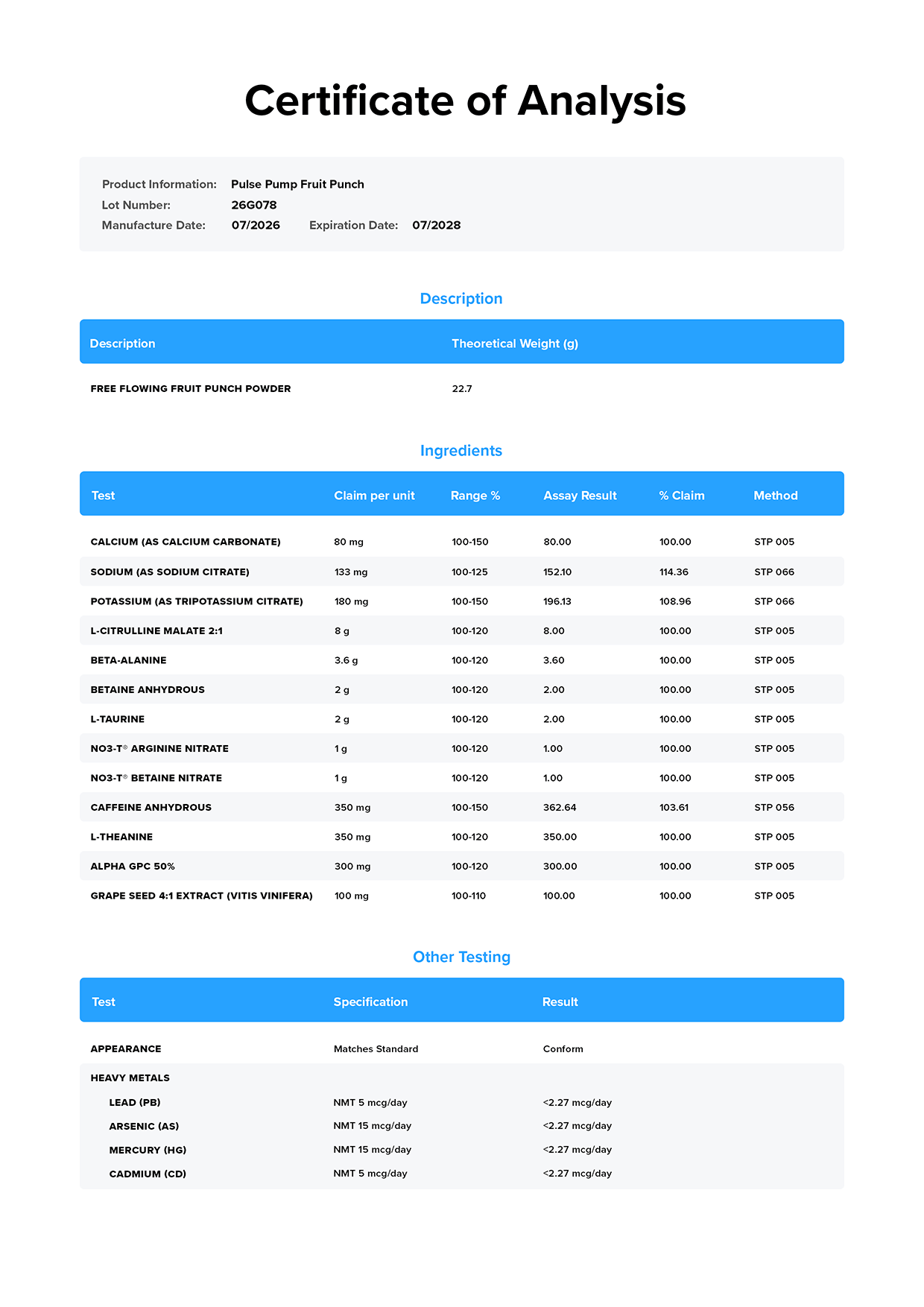
Pulse+ Pump is lab-tested for purity and accuracy and certified to meet or exceed FDA safety guidelines.[129]
Made in the USA with Globally Sourced Ingredients
If you want to ensure the supplements you’re swallowing every day are safe and effective, you want to buy from a company that:
- Sources ingredients from premium suppliers around the world (great supplements require great raw materials)
- Tests all products for purity and accuracy in accredited laboratories (to conclusively verify safety and efficacy)
- Manufactures in America, which has some of the strictest regulations in the world

See how Legion Pulse+ Pump compares to the rest.
- Active Ingredients Per Serving
- Caffeine Per Serving
- L-Theanine Per Serving
- Citrulline Malate Per Serving
- NO3-T® Nitrates Per Serving
- Beta-Alanine Per Serving
- Taurine Per Serving
- Naturally Sweetened & Flavored
- Third-Party Lab Tested for Purity & Accuracy
- Price Per Serving
-
Legion
Pulse+ Pump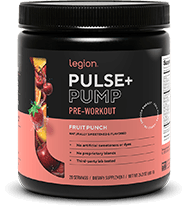

- 18,700 mg
- 350 mg
- 350 mg
- 8,000 mg
- 2,000 mg
- 3,600 mg
- 2,000 mg
-


-
-
Kaged
Pre-Workout Elite

- 26,652 mg
- 388 mg
-


- 10,000 mg
-
- 3,200 mg
- 2,000 mg
-
-

- $3.00
-
Ghost Pump
Pre-Workout

- 11,840 mg
-
-
- 6,000 mg
- 3,000 mg
-
- 2,000 mg
-
-
- $2.00
-
Cellucor C4 Ultimate
Pre-Workout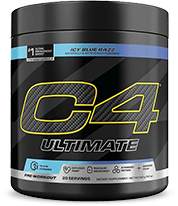

- 12,016 mg
- 300 mg
-
- 3,000 mg
- 1,000 mg
- 2,000 mg
-
-
-
- $2.49
The #1 brand of naturally sweetened and flavored sports supplements.
We’ve sold over 5 million bags and bottles to over 1 million customers in 169 countries who have left us over 55,000 5-star reviews.

Clinically Effective Ingredients and Doses
Every active ingredient, form, and dose in Pulse+ Pump is backed by peer-reviewed scientific research demonstrating clear benefits in healthy humans.

Total Label Transparency
We clearly list the dose of each ingredient on our Pulse+ Pump label—no proprietary blends or hidden ingredients—so you can verify our formulation’s validity and effectiveness.

Third-Party Lab Tested for Purity and Accuracy
Pulse+ Pump is lab-tested for purity and accuracy and certified to meet or exceed FDA safety guidelines.

Naturally Sweetened and Flavored
Pulse+ Pump is naturally sweetened and flavored with extracts from fruits, vegetables, plants, and other foods—no artificial sweeteners, flavors, food dyes, fillers, or other unnecessary junk.

Made in the USA
Pulse+ Pump is made in America with globally sourced ingredients in NSF-certified, FDA-inspected facilities that adhere to Current Good Manufacturing Practice (cGMP) standards.

100% Money-Back Guarantee
If you don't absolutely love Pulse+ Pump, you get a prompt and courteous refund. No forms or returns necessary.
Trusted by scientists, doctors, and everyday fitness folk alike.


The actual evidence? Real reviews from verified buyers.
Frequently Asked Questions
+References
While artificial sweeteners may not be as dangerous as some people claim, studies suggest that regular consumption of these chemicals may indeed be harmful to our health.
That’s why we use natural sweeteners like stevia, allulose, and monk fruit instead, which are scientifically shown to be safe and can confer several health benefits, including weight management, antioxidant activity, digestive health, and more.↑
3,388 peer-reviewed scientific studies support Pulse+ Pump’s ingredients and doses. That’s 37,301 pages of scientific research that show the ingredients and doses in Pulse+ Pump work the way we say they do.↑
Pulse+ Pump contains the exact ingredients, forms, and doses used in peer-reviewed scientific research demonstrating clear benefits in healthy humans.↑
View Supplement Facts↑
View Supplement Facts↑
Many supplement ingredients lack scientific validation in humans—we aren't large rodents, after all.
And even when ingredients have proven benefits, they're often used in doses too small to be effective.
That's why we exclusively use ingredients and doses shown to work in peer-reviewed scientific studies on healthy men and women.↑
Pulse+ Pump contains an equal amount of caffeine and L-theanine (350 milligrams of each).
This 1:1 ratio provides a focused, balanced boost in energy and performance without overwhelming stimulant effects or the negative side effects associated with high-caffeine/high-stim pre-workouts.↑
While artificial sweeteners, food dyes, and fillers may not be as dangerous as some people claim, studies suggest that regular consumption of these chemicals may indeed be harmful to our health.
That’s why we use naturally derived alternatives instead like stevia, allulose, monk fruit, and fruit extracts.↑
That’s 37,301 pages of scientific research that show the ingredients and doses in Pulse+ Pump work the way we say they do.↑
Did you know that some supplements contain dangerously high levels of toxins like lead, arsenic, and cadmium?
That’s why we rigorously test every batch and guarantee our products provide exactly what the labels claim—and nothing else.
With Legion, you can be certain that what you're putting into your body is truly safe and effective.
↑
Many supplement ingredients lack scientific validation in humans—we aren't large rodents, after all.
And even when ingredients have proven benefits, they're often used in doses too small to be effective.
That's why we exclusively use ingredients and doses shown to work in peer-reviewed scientific studies on healthy men and women.↑
While artificial sweeteners, food dyes, and fillers may not be as dangerous as some people claim, studies suggest that regular consumption of these chemicals may indeed be harmful to our health.
That’s why we use naturally derived alternatives instead like stevia, allulose, monk fruit, and fruit extracts.↑
Did you know that some supplements contain dangerously high levels of toxins like lead, arsenic, and cadmium?
That’s why we rigorously test every batch and guarantee our products provide exactly what the labels claim—and nothing else.
With Legion, you can be certain that what you're putting into your body is truly safe and effective.
↑
Spriet LL. Sports Med. 2014;44 Suppl 2(Suppl 2):S175-S184. doi:10.1007/s40279-014-0257-8.↑
McLellan TM, Caldwell JA, Lieberman HR.. Neurosci Biobehav Rev. 2016;71:294-312. doi:10.1016/j.neubiorev.2016.09.001.↑
Crawford C, Teo L, Lafferty L, et al. Nutr Rev. 2017;75(suppl_2):17-35. doi:10.1093/nutrit/nux007.↑
Kamimori GH, McLellan TM, Tate CM, Voss DM, Niro P, Lieberman HR. Psychopharmacology (Berl). 2015;232(12):2031-2042. doi:10.1007/s00213-014-3834-5.↑
Astrup A, Toubro S, Cannon S, Hein P, Breum L, Madsen J. Am J Clin Nutr. 1990;51(5):759-767. doi:10.1093/ajcn/51.5.759.↑
Conger SA, Tuthill LM, Millard-Stafford ML. Int J Sport Nutr Exerc Metab. 2022;33(2):112-120. Published 2022 Dec 10. doi:10.1123/ijsnem.2022-0131↑
Fernández-Sánchez J, Trujillo-Colmena D, Rodríguez-Castaño A, et al. Nutrients. 2024;16(2):207. Published 2024 Jan 8. doi:10.3390/nu16020207↑
Beck TW, Housh TJ, Schmidt RJ, et al. J Strength Cond Res. 2006;20(3):506-510. doi:10.1519/18285.1.↑
Warren GL, Park ND, Maresca RD, McKibans KI, Millard-Stafford ML.. Med Sci Sports Exerc. 2010;42(7):1375-1387. doi:10.1249/MSS.0b013e3181cabbd8.↑
Grgic J, Pickering C. J Sci Med Sport. 2019;22(3):353-360. doi:10.1016/j.jsams.2018.08.016.↑
Grgic J, Trexler ET, Lazinica B, Pedisic Z. J Int Soc Sports Nutr. 2018;15:11. Published 2018 Mar 5. doi:10.1186/s12970-018-0216-0.↑
Grgic J. Eur J Sport Sci. 2018;18(2):219-225. doi:10.1080/17461391.2017.1394371.↑
Grgic J, Mikulic P.Scand J Med Sci Sports. 2022;32(4):644-653. doi:10.1111/sms.14109↑
Grgic J, Varovic D.Nutrients. 2022;14(19):4155. Published 2022 Oct 6. doi:10.3390/nu14194155↑
Beck TW, Housh TJ, Schmidt RJ, et al. J Strength Cond Res. 2006;20(3):506-510. doi:10.1519/18285.1.↑
Warren GL, Park ND, Maresca RD, McKibans KI, Millard-Stafford ML. Med Sci Sports Exerc. 2010;42(7):1375-1387. doi:10.1249/MSS.0b013e3181cabbd8.↑
Polito MD, Souza DB, Casonatto J, Farinatti P. Sci Sports. 2016;31(3):119-128. doi:10.1016/J.SCISPO.2016.01.006.↑
Wang Z, Qiu B, Gao J, Del Coso J. Nutrients. 2022;15(1):148. Published 2022 Dec 28. doi:10.3390/nu15010148↑
Chen B, Ding L, Qin Q, Lei TH, Girard O, Cao Y. J Int Soc Sports Nutr. 2024;21(1):2363789. doi:10.1080/15502783.2024.2363789↑
Beck TW, Housh TJ, Schmidt RJ, et al.. J Strength Cond Res. 2006;20(3):506-510. doi:10.1519/18285.1.↑
Ganio MS, Klau JF, Casa DJ, Armstrong LE, Maresh CM. J Strength Cond Res. 2009;23(1):315-324. doi:10.1519/JSC.0b013e31818b979a.↑
Shen JG, Brooks MB, Cincotta J, Manjourides JD. J Sci Med Sport. 2019;22(2):232-238. doi:10.1016/j.jsams.2018.07.022.↑
Southward K, Rutherfurd-Markwick KJ, Ali A. [published correction appears in Sports Med. 2018 Aug 9;:]. Sports Med. 2018;48(8):1913-1928. doi:10.1007/s40279-018-0939-8.↑
Desbrow B, Biddulph C, Devlin B, Grant GD, Anoopkumar-Dukie S, Leveritt MD.. J Sports Sci. 2012;30(2):115-120. doi:10.1080/02640414.2011.632431.↑
Sun R, Sun J, Li J, Li S.. Brain Behav. 2022;12(4):e2529. doi:10.1002/brb3.2529.↑
Ganio MS, Klau JF, Casa DJ, Armstrong LE, Maresh CM. J Strength Cond Res. 2009;23(1):315-324. doi:10.1519/JSC.0b013e31818b979a.↑
McLellan TM, Caldwell JA, Lieberman HR. Neurosci Biobehav Rev. 2016;71:294-312. doi:10.1016/J.NEUBIOREV.2016.09.001.↑
Guest NS, VanDusseldorp TA, Nelson MT, et al. J Int Soc Sports Nutr. 2021;18(1). doi:10.1186/S12970-020-00383-4.↑
Bryan J. Nutr Rev. 2008;66(2):82-90. doi:10.1111/j.1753-4887.2007.00011.x.↑
Einöther SJ, Martens VE, Rycroft JA, De Bruin EA. Appetite. 2010;54(2):406-409. doi:10.1016/j.appet.2010.01.003.↑
Gomez-Ramirez M, Kelly SP, Montesi JL, Foxe JJ. Brain Topogr. 2009;22(1):44-51. doi:10.1007/s10548-008-0068-z.↑
Kahathuduwa CN, Dhanasekara CS, Chin SH, et al. Nutr Res. 2018;49:67-78. doi:10.1016/j.nutres.2017.11.002.↑
Rao TP, Ozeki M, Juneja LR. J Am Coll Nutr. 2015;34(5):436-447. doi:10.1080/07315724.2014.926153.↑
Williams JL, Everett JM, D'Cunha NM, et al. Plant Foods Hum Nutr. 2020;75(1):12-23. doi:10.1007/s11130-019-00771-5↑
Kimura K, Ozeki M, Juneja LR, Ohira H. Biol Psychol. 2007;74(1):39-45. doi:10.1016/j.biopsycho.2006.06.006.↑
Förstermann U, Sessa WC. Eur Heart J. 2012;33(7):829-837d. doi:10.1093/eurheartj/ehr304↑
Zhao Y, Vanhoutte PM, Leung SW. J Pharmacol Sci. 2015;129(2):83-94. doi:10.1016/j.jphs.2015.09.002↑
Pérez-Guisado J, Jakeman PM. J Strength Cond Res. 2010;24(5):1215-1222. doi:10.1519/JSC.0b013e3181cb28e0↑
Glenn JM, Gray M, Wethington LN, Stone MS, Stewart RW Jr, Moyen NE. Eur J Nutr. 2017;56(2):775-784. doi:10.1007/s00394-015-1124-6↑
Glenn JM, Gray M, Jensen A, Stone MS, Vincenzo JL. Eur J Sport Sci. 2016;16(8):1095-1103. doi:10.1080/17461391.2016.1158321↑
Vårvik FT, Bjørnsen T, Gonzalez AM. Int J Sport Nutr Exerc Metab. 2021;31(4):350-358. doi:10.1123/ijsnem.2020-0295↑
Trexler ET, Persky AM, Ryan ED, Schwartz TA, Stoner L, Smith-Ryan AE.. Sports Med. 2019;49(5):707-718. doi:10.1007/s40279-019-01091-z↑
Pérez-Guisado J, Jakeman PM. J Strength Cond Res. 2010;24(5):1215-1222. doi:10.1519/JSC.0b013e3181cb28e0↑
Rhim HC, Kim SJ, Park J, Jang KM.. J Sport Health Sci. 2020;9(6):553-561. doi:10.1016/j.jshs.2020.02.003↑
Rhim HC, Kim SJ, Park J, Jang KM. J Sport Health Sci. 2020;9(6):553-561. doi:10.1016/j.jshs.2020.02.003↑
Budzeń S, Rymaszewska J. Adv Clin Exp Med. 2013;22(5):739-744.↑
Budzeń S, Rymaszewska J.Adv Clin Exp Med. 2013;22(5):739-744.↑
Derave W, Ozdemir MS, Harris RC, et al. J Appl Physiol (1985). 2007;103(5):1736-1743. doi:10.1152/japplphysiol.00397.2007↑
Stout JR, Cramer JT, Zoeller RF, et al. Amino Acids. 2007;32(3):381-386. doi:10.1007/s00726-006-0474-z↑
Stout JR, Graves BS, Smith AE, et al. J Int Soc Sports Nutr. 2008;5:21. Published 2008 Nov 7. doi:10.1186/1550-2783-5-21↑
Hoffman JR, Ratamess NA, Faigenbaum AD, et al. Nutr Res. 2008;28(1):31-35. doi:10.1016/j.nutres.2007.11.004↑
Trexler ET, Smith-Ryan AE, Stout JR, et al.J Int Soc Sports Nutr. 2015;12:30. Published 2015 Jul 15. doi:10.1186/s12970-015-0090-y↑
Hill CA, Harris RC, Kim HJ, et al. Amino Acids. 2007;32(2):225-233. doi:10.1007/s00726-006-0364-4↑
Sale C, Saunders B, Hudson S, Wise JA, Harris RC, Sunderland CD. Med Sci Sports Exerc. 2011;43(10):1972-1978. doi:10.1249/MSS.0b013e3182188501↑
Walter AA, Smith AE, Kendall KL, Stout JR, Cramer JT. J Strength Cond Res. 2010;24(5):1199-1207. doi:10.1519/JSC.0b013e3181d82f8b↑
Smith AE, Walter AA, Graef JL, et al. J Int Soc Sports Nutr. 2009;6:5. Published 2009 Feb 11. doi:10.1186/1550-2783-6-5↑
Hobson RM, Saunders B, Ball G, Harris RC, Sale C. Amino Acids. 2012;43(1):25-37. doi:10.1007/s00726-011-1200-z↑
Georgiou GD, Antoniou K, Antoniou S, et al. Int J Sport Nutr Exerc Metab. 2024;34(6):397-412. Published 2024 Jul 19. doi:10.1123/ijsnem.2024-0027↑
Saunders B, Elliott-Sale K, Artioli GG, et al.. Br J Sports Med. 2017;51(8):658-669. doi:10.1136/bjsports-2016-096396↑
Stout JR, Cramer JT, Zoeller RF, et al. Amino Acids. 2007;32(3):381-386. doi:10.1007/s00726-006-0474-z↑
Stout JR, Graves BS, Smith AE, et al. J Int Soc Sports Nutr. 2008;5:21. Published 2008 Nov 7. doi:10.1186/1550-2783-5-21↑
Hoffman JR, Ratamess NA, Faigenbaum AD, et al. Nutr Res. 2008;28(1):31-35. doi:10.1016/j.nutres.2007.11.004↑
Beasley L, Smith L, Antonio J, Gordon D, Johnstone J, Roberts J. J Int Soc Sports Nutr. 2018;15(1):59. Published 2018 Dec 18. doi:10.1186/s12970-018-0266-3↑
Wu J, Prentice H. Journal of Biomedical Science. 2010;17(Suppl 1):S1-S1. doi: https://doi.org/10.1186/1423-0127-17-s1-s1.↑
Tsuchiya Y, Kawamata K. Anim Sci J. 2017;88(11):1763-1767. doi:10.1111/asj.12829.↑
Lambert IH. Neurochem Res. 2004;29(1):27-63. doi:10.1023/b:nere.0000010433.08577.96.↑
Waldron M, Patterson SD, Tallent J, Jeffries O. Sports Med. 2018;48(5):1247-1253. doi:10.1007/s40279-018-0896-2.↑
Souza DB, Del Coso J, Casonatto J, Polito MD. Eur J Nutr. 2017;56(1):13-27. doi:10.1007/s00394-016-1331-9.↑
Ulusoy KG, Kaya E, Karabacak K, et al. Korean J Physiol Pharmacol. 2017;21(6):617-623. doi:10.4196/kjpp.2017.21.6.617.↑
Sun Q, Wang B, Li Y, et al. Hypertension. 2016;67(3):541-549. doi:10.1161/HYPERTENSIONAHA.115.06624.↑
Kurtz JA, VanDusseldorp TA, Doyle JA, Otis JS. J Int Soc Sports Nutr. 2021;18(1):39. Published 2021 May 26. doi:10.1186/s12970-021-00438-0.↑
da Silva LA, Tromm CB, Bom KF, et al. Appl Physiol Nutr Metab. 2014;39(1):101-104. doi:10.1139/apnm-2012-0229.↑
Ra SG, Akazawa N, Choi Y, et al. Adv Exp Med Biol. 2015;803:765-772. doi:10.1007/978-3-319-15126-7_61.↑
McLeay Y, Stannard S, Barnes M. Antioxidants (Basel). 2017;6(4):79. Published 2017 Oct 17. doi:10.3390/antiox6040079.↑
Ulusoy KG, Kaya E, Karabacak K, et al. Korean J Physiol Pharmacol. 2017;21(6):617-623. doi:10.4196/kjpp.2017.21.6.617.↑
Sun Q, Wang B, Li Y, et al. Hypertension. 2016;67(3):541-549. doi:10.1161/HYPERTENSIONAHA.115.06624.↑
Trepanowski JF, Farney TM, McCarthy CG, Schilling BK, Craig SA, Bloomer RJ. T J Strength Cond Res. 2011;25(12):3461-3471. doi:10.1519/JSC.0b013e318217d48d↑
Zawieja E, Machek S, Zanchi NE, Cholewa J, Woźniewicz M. J Sports Sci. 2024;42(22):2131-2144. doi:10.1080/02640414.2024.2423578↑
Zawieja E, Machek S, Zanchi NE, Cholewa J, Woźniewicz M. J Sports Sci. 2024;42(22):2131-2144. doi:10.1080/02640414.2024.2423578↑
Ashtary-Larky D, Bagheri R, Ghanavati M, et al. Crit Rev Food Sci Nutr. 2022;62(23):6516-6533. doi:10.1080/10408398.2021.1902938↑
Förstermann U, Sessa WC. Eur Heart J. 2012;33(7):829-837, 837a-837d. doi:10.1093/eurheartj/ehr304.↑
Zhao Y, Vanhoutte PM, Leung SW. J Pharmacol Sci. 2015;129(2):83-94. doi:10.1016/j.jphs.2015.09.002.↑
Maughan RJ, Burke LM, Dvorak J, et al. Br J Sports Med. 2018;52(7):439-455. doi:10.1136/bjsports-2018-099027.↑
Jones AM. Sports Med. 2014;44(Suppl 1):S35-S45. doi:10.1007/s40279-014-0149-y.↑
Maughan RJ, Burke LM, Dvorak J, et al. Br J Sports Med. 2018;52(7):439-455. doi:10.1136/bjsports-2018-099027.↑
Jones AM. Sports Med. 2014;44(Suppl 1):S35-S45. doi:10.1007/s40279-014-0149-y.↑
Coggan AR, Baranauskas MN, Hinrichs RJ, Liu Z, Carter SJ. J Int Soc Sports Nutr. 2021;18(1):66. doi:10.1186/s12970-021-00463-z.↑
San Juan AF, Dominguez R, Lago-Rodríguez Á, Montoya JJ, Tan R, Bailey SJ. Nutrients. 2020;12(8):2227. doi:10.3390/nu12082227.↑
Mosher SL, Sparks SA, Williams EL, Bentley DJ, McNaughton LR. J Strength Cond Res. 2016;30(12):3520-3524. doi:10.1519/JSC.0000000000001437.↑
Williams TD, Martin MP, Mintz JA, Rogers RR, Ballmann CG. J Strength Cond Res. 2020;34(4):924-928. doi:10.1519/JSC.0000000000003509.↑
Ranchal-Sanchez A, Diaz-Bernier VM, De La Florida-Villagran CA, Llorente-Cantarero FJ, Campos-Perez J, Jurado-Castro JM. Nutrients. 2020;12(7):1912. doi:10.3390/nu12071912.↑
McMahon NF, Leveritt MD, Pavey TG. Sports Med. 2017;47(4):735-756. doi:10.1007/s40279-016-0617-7.↑
Domínguez R, Maté-Muñoz JL, Cuenca E, et al. J Int Soc Sports Nutr. 2018;15:2. doi:10.1186/s12970-017-0204-9.↑
Maughan RJ, Burke LM, Dvorak J, et al. Br J Sports Med. 2018;52(7):439-455. doi:10.1136/bjsports-2018-099027.↑
Jones AM. Sports Med. 2014;44(Suppl 1):S35-S45. doi:10.1007/s40279-014-0149-y.↑
Coggan AR, Baranauskas MN, Hinrichs RJ, Liu Z, Carter SJ. J Int Soc Sports Nutr. 2021;18(1):66. doi:10.1186/s12970-021-00463-z.↑
San Juan AF, Dominguez R, Lago-Rodríguez Á, Montoya JJ, Tan R, Bailey SJ. Nutrients. 2020;12(8):2227. doi:10.3390/nu12082227.↑
Mosher SL, Sparks SA, Williams EL, Bentley DJ, McNaughton LR. J Strength Cond Res. 2016;30(12):3520-3524. doi:10.1519/JSC.0000000000001437.↑
Williams TD, Martin MP, Mintz JA, Rogers RR, Ballmann CG. J Strength Cond Res. 2020;34(4):924-928. doi:10.1519/JSC.0000000000003509.↑
Ranchal-Sanchez A, Diaz-Bernier VM, De La Florida-Villagran CA, Llorente-Cantarero FJ, Campos-Perez J, Jurado-Castro JM. Nutrients. 2020;12(7):1912. doi:10.3390/nu12071912.↑
McMahon NF, Leveritt MD, Pavey TG. Sports Med. 2017;47(4):735-756. doi:10.1007/s40279-016-0617-7.↑
Domínguez R, Maté-Muñoz JL, Cuenca E, et al. J Int Soc Sports Nutr. 2018;15:2. doi:10.1186/s12970-017-0204-9.↑
Ziegenfuss T, Landis J, Hofheins J. J Int Soc Sports Nutr. 2008;5(Suppl 1):P15. doi:10.1186/1550-2783-5-S1-P15.↑
Marcus L, Soileau J, Judge LW, Bellar D. Journal of the International Society of Sports Nutrition. 2017;14:39. doi:10.1186/s12970-017-0196-5.↑
Kerksick CM. Nutrients. 2024;16(23):4240. doi:10.3390/nu16234240.↑
Bellar D, LeBlanc NR, Campbell B. J Int Soc Sports Nutr. 2015;12:42. doi:10.1186/s12970-015-0103-x.↑
Marcus L, Soileau J, Judge LW, Bellar D. Journal of the International Society of Sports Nutrition. 2017;14:39. doi:10.1186/s12970-017-0196-5.↑
Nho H, Kim KA. Int J Environ Res Public Health. 2022;19(21):14223. Published 2022 Oct 31. doi:10.3390/ijerph192114223↑
Nho H, Kim KA. Int J Environ Res Public Health. 2022;19(21):14223. doi:10.3390/ijerph192114223.↑
Kim JK, Kim KA, Choi HM, Park SK, Stebbins CL. J Med Food. 2018;21(5):445-453. doi:10.1089/jmf.2017.0133.↑
Nho H, Kim KA. Int J Environ Res Public Health. 2022;19(21):14223. doi:10.3390/ijerph192114223.↑
Kim J, So WY. J Exerc Sci Fit. 2019;17(2):77-79. doi:10.1016/j.jesf.2019.01.001.↑
Abou-Donia MB, El-Masry EM, Abdel-Rahman AA, McLendon RE, Schiffman SS. J Toxicol Environ Health A. 2008;71(21):1415-1429. doi:10.1080/15287390802328630↑
Qin X. Can J Gastroenterol. 2011;25(9):511. doi:10.1155/2011/451036↑
Schernhammer ES, Bertrand KA, Birmann BM, Sampson L, Willett WC, Feskanich D. [published correction appears in Am J Clin Nutr. 2013 Aug;98(2):512]. Am J Clin Nutr. 2012;96(6):1419-1428. doi:10.3945/ajcn.111.030833.↑
Fowler SP, Williams K, Resendez RG, Hunt KJ, Hazuda HP, Stern MP. Obesity (Silver Spring). 2008;16(8):1894-1900. doi:10.1038/oby.2008.284↑
Sylvetsky A, Rother KI, Brown R. Pediatr Clin North Am. 2011;58(6):1467-xi. doi:10.1016/j.pcl.2011.09.007.↑
Yang Q. Neuroscience 2010. Yale J Biol Med. 2010;83(2):101-108.↑
Feng J, Cerniglia CE, Chen H. Front Biosci (Elite Ed). 2012;4(2):568-586. Published 2012 Jan 1. doi:10.2741/e400↑
Kanarek RB. Nutr Rev. 2011;69(7):385-391. doi:10.1111/j.1753-4887.2011.00385.x↑
Nigg JT, Lewis K, Edinger T, Falk M. J Am Acad Child Adolesc Psychiatry. 2012;51(1):86-97.e8. doi:10.1016/j.jaac.2011.10.015↑
McCann D, Barrett A, Cooper A, et al. [published correction appears in Lancet. 2007 Nov 3;370(9598):1542]. Lancet. 2007;370(9598):1560-1567. doi:10.1016/S0140-6736(07)61306-3↑
Gao Y, Li C, Shen J, Yin H, An X, Jin H.. J Food Sci. 2011;76(6):T125-T129. doi:10.1111/j.1750-3841.2011.02267.x↑
Did you know that some supplements contain dangerously high levels of toxins like lead, arsenic, and cadmium?
That’s why we rigorously test every batch and guarantee our products provide exactly what the labels claim—and nothing else.
With Legion, you can be certain that what you're putting into your body is truly safe and effective.
↑