
Back and triceps workouts get less attention than pairings like back and biceps or chest and triceps, but they’re a smart combination for most lifters.
The reason comes down to how the two muscle groups interact—or rather, how they don’t.
Back exercises and triceps exercises train entirely different muscles, so you can do both in the same workout without fatigue from one compromising your performance on the other.
This matters because the fresher each muscle is when you train it, the heavier the weights you can lift and the more reps you can perform—and lifting heavier weights for more reps over time is what drives muscle and strength gain.
The pairing also makes sense because both muscle groups are central to upper-body development.
A strong back underpins nearly every lift you do. It keeps you upright in the squat, prevents your spine from rounding in the deadlift, and creates a solid base during the bench press. And strong triceps are essential in every pressing movement you’ll ever do—you can’t build an impressive bench or overhead press without them.
Both muscle groups also shape how your upper body looks.
Most people assume the biceps are what make arms look big, but the triceps actually account for about two-thirds of your upper arm, so if you want your arms to stand out, they’re the muscle to prioritize.
A developed back, meanwhile, builds the width that gives you the strong, V-shaped silhouette many gymgoers want.
In this article, you’ll learn everything you need to train back and triceps on the same day effectively, including the best workout, best exercises, and how to get the most out of your back and triceps training.
Key Takeaways
- Exercises that train the back generally don’t train the triceps and vice versa. Thus, combining them in the same workout means fatigue from one doesn’t compromise your performance on the other.
- To get the most out of your back and triceps workouts, it’s best to do about 6–10 hard sets per workou—which is what you’ll find in the workout below.
- You can reduce the length of your back and triceps workouts by 40% if you turn them into a superset. Pair the lat pulldown with the overhead triceps extension and the one-arm dumbbell row with the skullcrusher.
Table of Contents
+
The Best Back and Triceps Workout Routine for Size & Strength
Here’s a back and triceps workout routine that’ll help you gain muscle and strength as efficiently as possible:
- Deadlift: 3 sets | 4–6 reps | 3–5 min rest
- Lat Pulldown: 3 sets | 4–6 reps | 3–5 min rest
- One-Arm Dumbbell Row: 3 sets | 6–8 reps | 2–3 min rest
- Overhead Triceps Extension: 3 sets | 6–8 reps | 2–3 min rest
- Skullcrusher: 3 sets | 6–8 reps | 2–3 min rest
Why This Routine Works
Most back and triceps workouts you find online have two problems: they include too much volume (too many sets), and they contain the wrong exercises in the wrong order.
Unpublished research shows that the sweet spot for volume is about 6–10 hard sets in a single workout.1 Doing more sets than this offers very little additional muscle gain but significantly more fatigue and wear and tear. Here’s what this looks like in graph form:
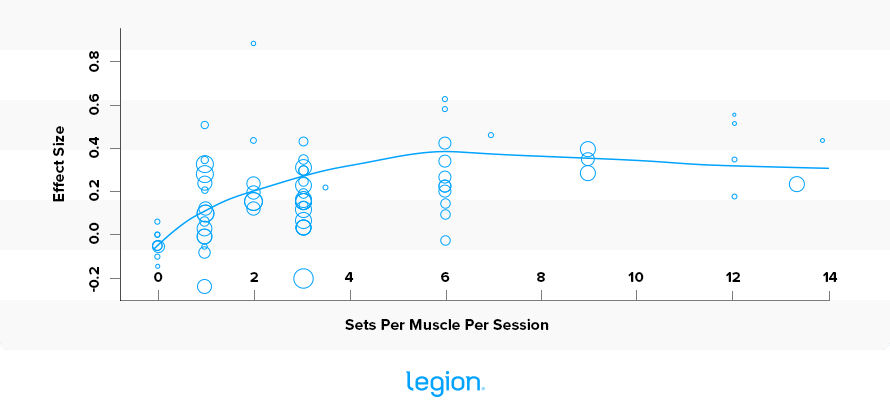
This routine consists of 9 hard sets for your back and 6 for your triceps, which lands squarely in the effective range for both muscle groups.
The back exercises are all compound lifts you can safely load with heavy weight and progressively overload over time, which is the most reliable way to build size and strength.
They also train multiple back muscles at once—your lats, traps, rhomboids, and rear delts all get worked across the session—so you develop your entire back.
The triceps exercises are isolation movements, but they’re chosen to train all the “parts” of the triceps—the long, lateral, and medial heads—to ensure you develop the whole triceps rather than just one part of it.
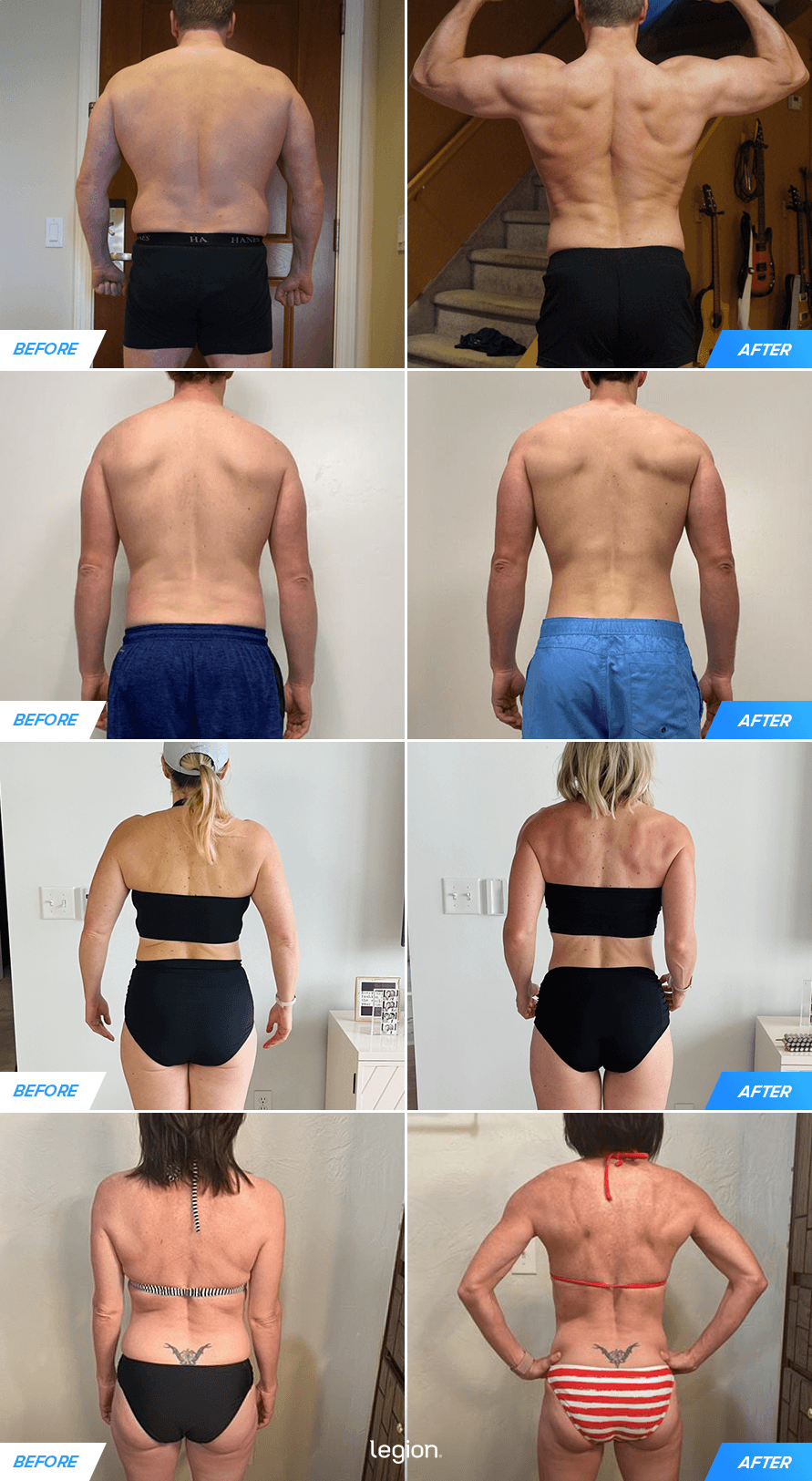
These same principles—appropriate volume, well-chosen exercises, and consistent progression—are the foundation of the workouts we build for clients in Legion’s body transformation coaching service, and the results speak for themselves:
Back and Triceps Exercises: Complete Guide
Here are the five exercises that make up this workout, why they’re so effective, and how to perform them.
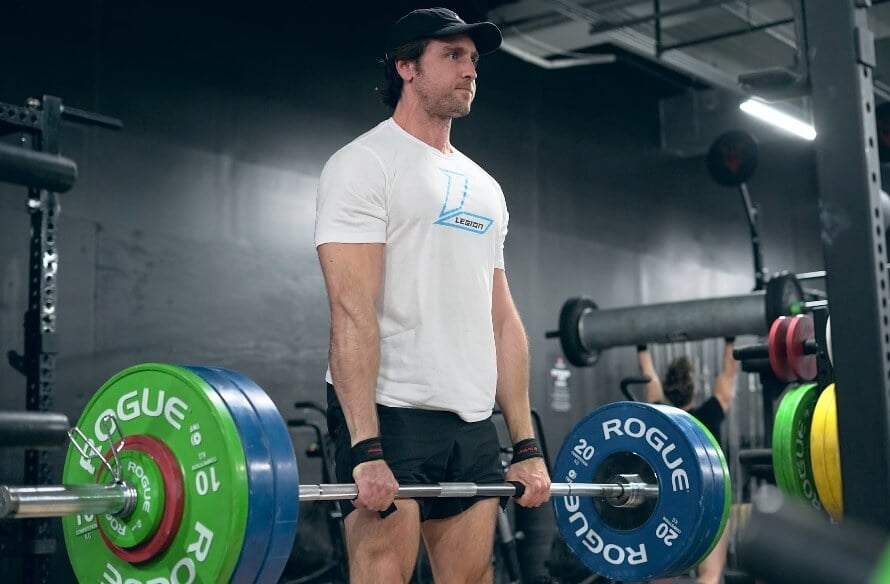
Deadlift
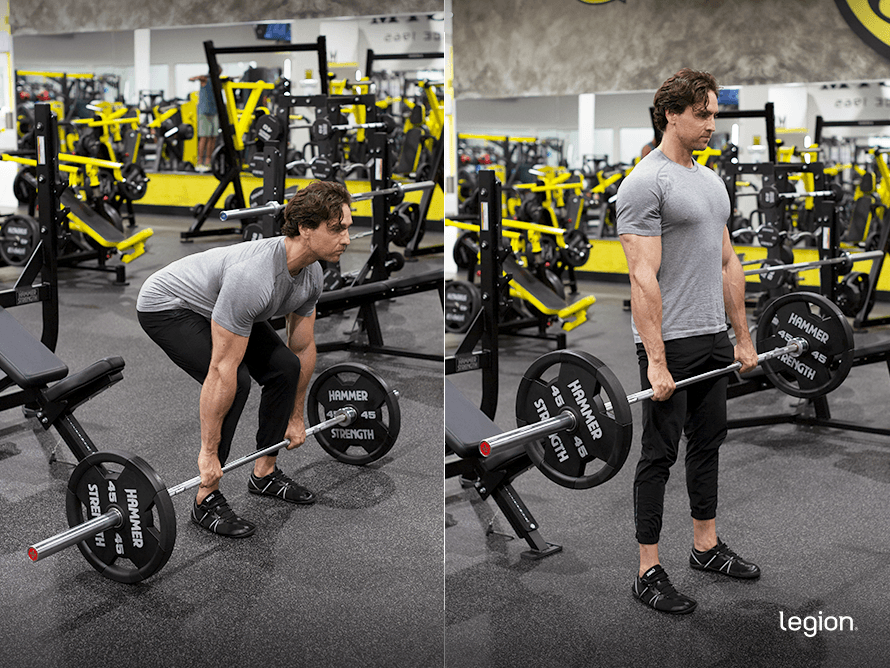
Why: “The deadlift is a horrible exercise for people who aren’t strength athletes,” said someone who was full of shit.
The deadlift trains your entire back—especially your spinal erectors, rhomboids, and traps—and because it involves so many large muscles, you can lift heavier weights than with any other back exercise. That makes it easy to add load over time, which is one of the main reasons it’s so effective for gaining size and strength.
It’s also the most fatiguing exercise in the routine, which is why it’s the one you do first. Beginning your workout with the deadlift means you can attack it when you’re freshest.
How to:
- Stand with your feet shoulder-width apart and the bar over your midfoot.
- Grab the bar just outside your legs and flatten your back.
- Push through your heels and stand up with the weight.
- Reverse the movement and return to the starting position.
Expert Tip: Before you pull, squeeze your upper arms into your sides like you’re trying to crush oranges in your armpits. This “switches on” your lats, which helps prevent your upper back from rounding and makes it easier to lift heavier weights more efficiently and safely.
Muscles Worked: Erector spinae, rhomboids, mid and upper traps.
Alternatives:
READ MORE: How to Deadlift with Proper Technique
Lat Pulldown
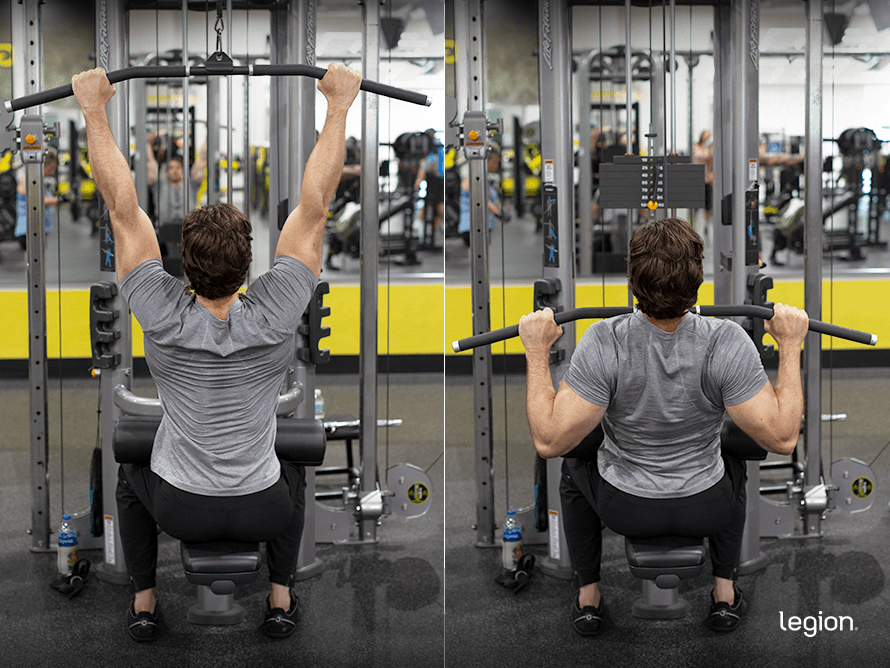
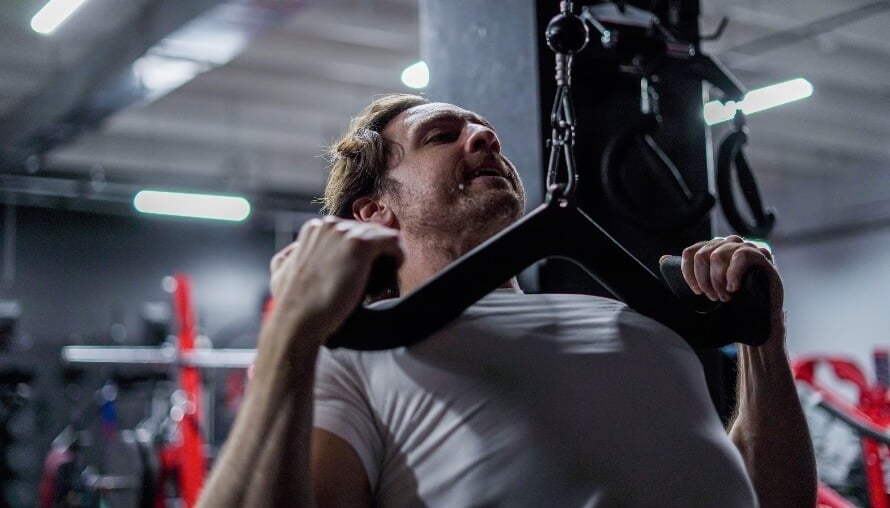
Why: The lat pulldown trains your entire back, but it’s especially effective for training your lats, which the deadlift hits less directly. It’s also the perfect exercise to follow the deadlift—you perform it sitting down, which gives your lower back a break after heavy deadlifting.
How to:
- Sit at a lat pulldown machine and secure your thighs under the pads.
- Grab the bar with a slightly wider-than-shoulder-width grip and sit upright.
- Pull the bar down toward your upper chest while keeping your torso mostly vertical.
- Reverse the movement and return to the starting position.
Expert Tip: As you pull, imagine driving your elbows into the floor or trying to tuck them into your back pockets. This helps you pull with your lats instead of letting your biceps do most of the work.
Muscles Worked: Lats, teres major, mid traps, rear delts.
Alternatives:
READ MORE: How to Do the Lat Pulldown: Form, Benefits, & Variations
One-Arm Dumbbell Row
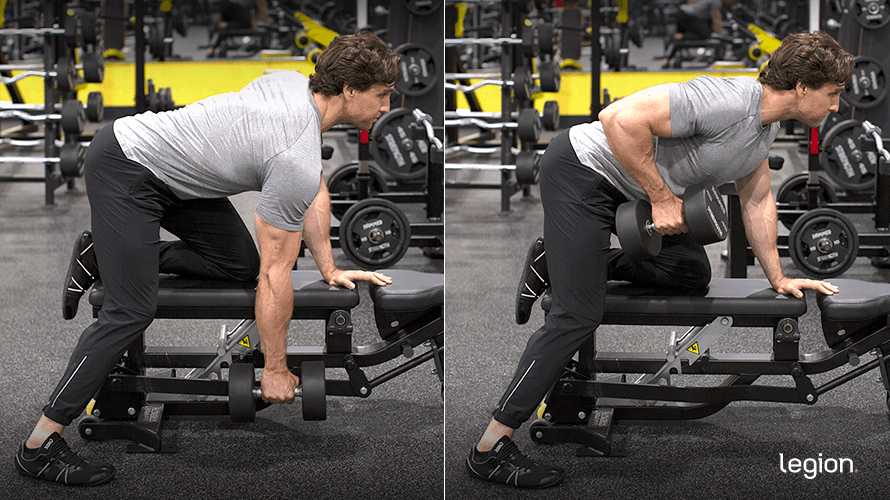
Why: The one-arm dumbbell row lets you train each side of your back independently, which helps you build balanced size and strength. It also trains your back through a different range of motion than the lat pulldown—horizontal pulling instead of vertical pulling—which may help overall muscle development.23
How to:
- Hold a dumbbell in one hand and place the opposite hand and knee on a bench for support.
- Let the dumbbell hang straight down beneath your shoulder.
- Pull the dumbbell toward your torso while keeping your back flat.
- Reverse the movement and return to the starting position.
Expert Tip: Allow your shoulder blades to slide toward the floor as you lower the dumbbell—this incorporates more muscles from your upper back into the exercise and stimulates more muscle growth with each rep.
Muscles Worked: Lats, traps, rhomboids, teres muscles, rear delts.
Alternatives:
READ MORE: How to Do the Bent-Over Dumbbell Row
Overhead Triceps Extension
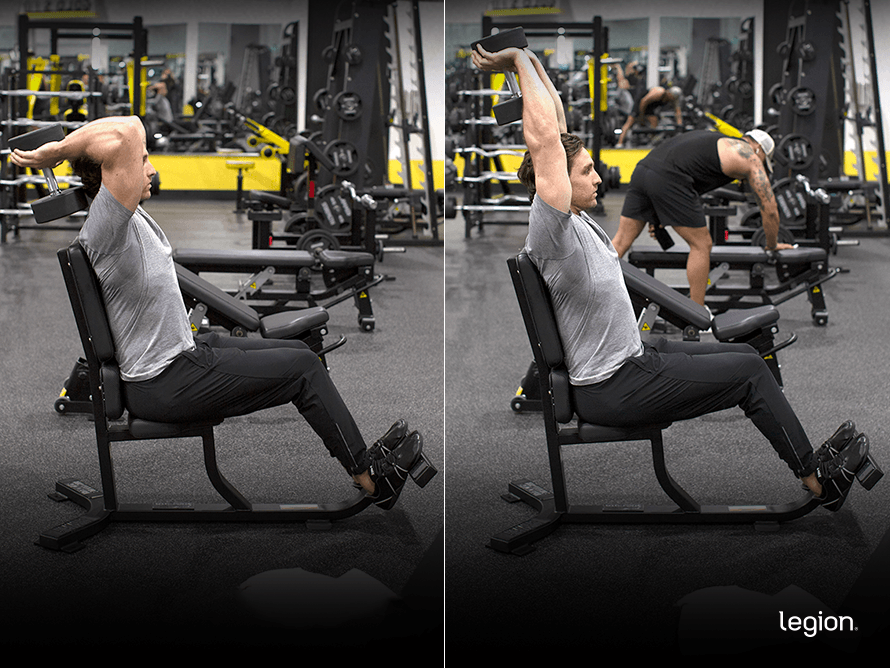
Why: The overhead triceps extension is one of the best exercises for training the triceps long head.4 This matters because the long head is the largest part of the triceps, so developing it is key for adding size to your upper arms.
How to:
- Sit upright on a bench.
- Grip one end of a dumbbell and lift it overhead.
- Lower the weight until it’s behind your head by bending at the elbow.
- Extend your elbows and return to the starting position.
Expert Tip: Minimize your upper-arm movement during the exercise, as shifting your arms increases the chances of knocking your noggin with the dumbbell.
Muscles Worked: Triceps
Alternatives:
- JM press
- Cable overhead triceps extension
- Triceps pushdown
READ MORE: How to Do the Overhead Triceps Extension: Benefits, Form, & Alternatives
Skullcrusher
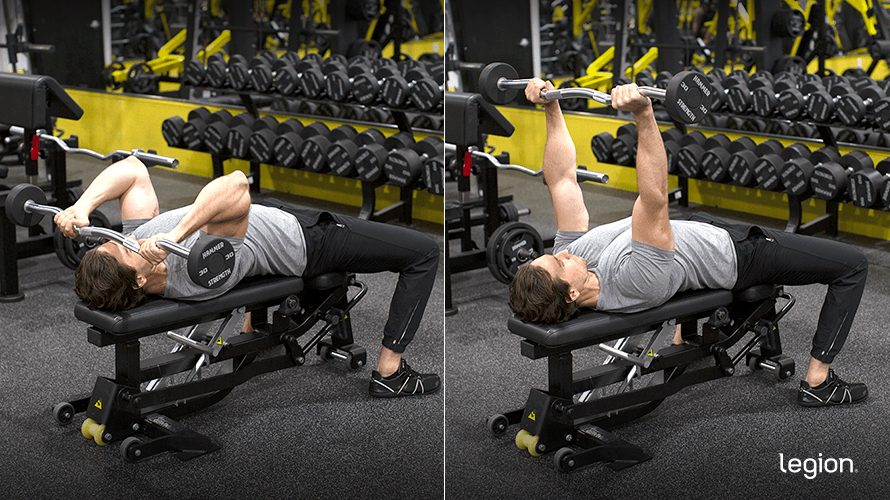
Why: The skullcrusher trains all three heads of the triceps through a full range of motion and lets you handle heavier weights than most triceps exercises, so it’s excellent for building all-around triceps size and strength.
It also trains your triceps from a different angle than the overhead triceps extension, which likely benefits overall growth.5
How to:
- Lie on a flat bench and hold an EZ Bar above your chest with a shoulder-width grip.
- Bring the bar down to your forehead by bending at the elbow.
- Extend your arms and return to the starting position.
Expert Tip: To make it more of a long head triceps exercise, increase the range of motion and lower the bar behind your head until it’s almost touching the bench.
Muscles Worked: Triceps
Alternatives:
- Dip
- Dumbbell skullcrusher
- Triceps pushdown
READ MORE: How to Do the Skullcrusher: Form, Benefits, and Variations
How to Use Supersets in Your Back and Triceps Workout
To shave time off this workout, turning it into a back and triceps superset workout is an excellent option. In this case, that would mean performing a set of a back exercise followed immediately by a set of a triceps exercise, then resting before repeating.
A 2025 meta-analysis of 19 studies found that training this way reduces total session time by around 37% without compromising muscle or strength gain.6
A couple of notes on how to apply this to the workout above:
- Don’t superset anything with the deadlift. The deadlift is a full-body exercise that’s highly demanding on your cardiovascular system. Pairing it with another exercise—even one that doesn’t train the same muscles—will compromise your performance and recovery on both. Always do your deadlifts in “straight sets” (one set of deadlifts, rest, then repeat).
- For the other exercises, pair the lat pulldown with the overhead triceps extension and the one-arm dumbbell row with the skullcrusher. These pairings are the most practical—for example, you can use the lat pulldown seat to perform the overhead triceps extension, instead of having to switch between a lat pulldown machine and a cable machine that may not be near each other.
Here’s how the routine changes when you incorporate supersets:
1. Deadlift: 3 sets | 4–6 reps | 3–5 min rest
2A: Lat Pulldown: 3 sets | 4–6 reps
2B: Overhead Triceps Extension: 3 sets | 6–8 reps
Rest 2–3 minutes after each superset
3A: One-Arm Dumbbell Row: 3 sets | 6–8 reps
3B: Skullcrusher: 3 sets | 6–8 reps
Rest 2–3 minutes after each superset
That said, supersets aren’t for everyone. The same meta-analysis found that supersets tend to feel harder than straight sets, even when you do the same amount of total work. If you find them too taxing or you prefer the rhythm of straight sets, stick with straight sets. The gains will be the same.
Can You Do a Back and Triceps Workout with Dumbbells?
Yes—you’ll need to swap a few exercises, but the workout still works well with just dumbbells. Here’s what it looks like:
- Dumbbell Deadlift: 3 sets | 8–10 reps | 3–5 min rest
- One-Arm Dumbbell Row: 3 sets | 8–10 reps | 3–5 min rest
- Dumbbell Pullover: 3 sets | 8–10 reps | 2–3 min rest
- Overhead Triceps Extension: 3 sets | 8–10 reps | 2–3 min rest
- Dumbbell Skullcrusher: 3 sets | 8–10 reps | 2–3 min rest
A few notes on this version:
First, the dumbbell deadlift is a decent replacement for the barbell deadlift. That said, some people find it awkward to perform because the dumbbells can be hard to control and you have to be careful not to bang them into your knees.
If you don’t want to do the dumbbell deadlift, the dumbbell Romanian deadlift is a good substitute. It still trains your lower and upper back, but it’ll be far more taxing on your glutes and hamstrings, so you may find your sets end when those muscles tire rather than your back—and that isn’t ideal for back development.
Second, the dumbbell pullover replaces the lat pulldown because it’s an excellent lat exercise and one of the best substitutes when you don’t have a cable machine.
The only thing to bear in mind is that the pullover also taxes the long head of the triceps, which means it isn’t an ideal candidate for supersetting with a triceps exercise.
So, if you want to use supersets in the dumbbell version of the routine, pair the one-arm dumbbell row with the overhead triceps extension. Once you’ve finished that superset, perform the dumbbell pullover and the dumbbell skullcrusher as straight sets.
As with the main workout, always do your deadlifts in straight sets, too.
How to Progress Your Back and Triceps Workouts
Progress drives muscle growth—if you don’t gradually challenge your muscles more, you won’t get stronger or grow.
To progress your back and triceps workouts, focus on two things: training hard enough and gradually increasing the difficulty.
First, finish most sets 1–2 reps shy of “failure”—the point where you can’t complete another rep with good form.
A simple way to judge this is to ask yourself at the end of each set, “How many more reps could I have done?” If the answer is more than two, increase the weight or reps on your next set to make it more challenging.
Second, increase the weight or reps over time.
For example, if your workout calls for 4–6 reps of the deadlift and you complete 6 reps in a set, increase the weight by 10 pounds for your next set.
If you do 3 reps or fewer in subsequent sets, reduce the load by 5 pounds to stay in the 4–6 rep range.
Apply this approach consistently, and you’ll continue to get bigger and stronger over time.
Supplements to Support Your Back and Triceps Workouts
You don’t need supplements to build back and triceps muscle. That said, the right ones can make the process easier. Here are three worth considering:
- Protein powder: Eating enough protein is essential for building muscle. Protein powders like Whey+, Casein+ and Egg+ make hitting your target easier.
- Creatine: Creatine boosts muscle and strength gain, improves anaerobic endurance, and reduces muscle damage and soreness.78 For a natural source of creatine, try Legion’s creatine monohydrate powder, creatine gummies, creatine capsules, or post-workout Recharge.
- Pre-workout: A quality pre-workout helps you train harder by boosting energy, focus, and athletic performance. Legion’s Pulse is available with or without caffeine.
Want even more specific supplement advice? Take the Legion Supplement Finder Quiz to learn exactly what supplements are right for you.
Want More Content Like This?
Check out these articles:
- The Best Back and Shoulder Workouts for Upper-Body Width and Mass
- The Best Back and Biceps Workout for Upper-Body Width & Size
- The Best Back and Biceps Workout for Women (45-Minute Routine)
Scientific References +
- ↩ Krieger J. Set Volume for Muscle Size: The Ultimate Evidence Based Bible. Weightology. Published November 20, 2017.
- ↩ Burke R, Piñero A, Mohan AE, et al. Exercise selection differentially influences lower body regional muscle development. J Sci Sport Exerc. 2025;7:449-459.
- ↩ Zabaleta-Korta A, Fernández-Peña E, Torres-Unda J, et al. Regional Hypertrophy: The Effect of Exercises at Long and Short Muscle Lengths in Recreationally Trained Women. J Hum Kinet. 2023;87:259-270.
- ↩ Maeo S, Jessee MB, Counts BR, et al. Muscle Specificity of Resistance Training Methods: Regional Hypertrophy and Muscle Architecture. Sports Med. 2022;52(11):2667-2681.
- ↩ Schoenfeld BJ, Grgic J, Ogborn D, et al. Effects of Resistance Training Frequency on Measures of Muscle Hypertrophy: A Systematic Review and Meta-Analysis. Sports Med. 2019;49(11):1687-1697.
- ↩ Zhang X, Weakley J, Li H, et al. Superset versus traditional resistance training prescriptions: a systematic review and meta-analysis exploring acute and chronic effects on mechanical, metabolic, and perceptual variables. Sports Med. 2025;55(5):953-975.
- ↩ Eckerson JM, Stout JR, Moore GA, et al. Effect of creatine phosphate supplementation on anaerobic working capacity and body weight after two and six days of loading in men and women. J Strength Cond Res. 2005;19(4):756-763.
- ↩ Bassit RA, Pinheiro CHJ, Vitzel KF, et al. Effect of short-term creatine supplementation on markers of skeletal muscle damage after strenuous contractile activity. Eur J Appl Physiol. 2010;108(5):945-955.